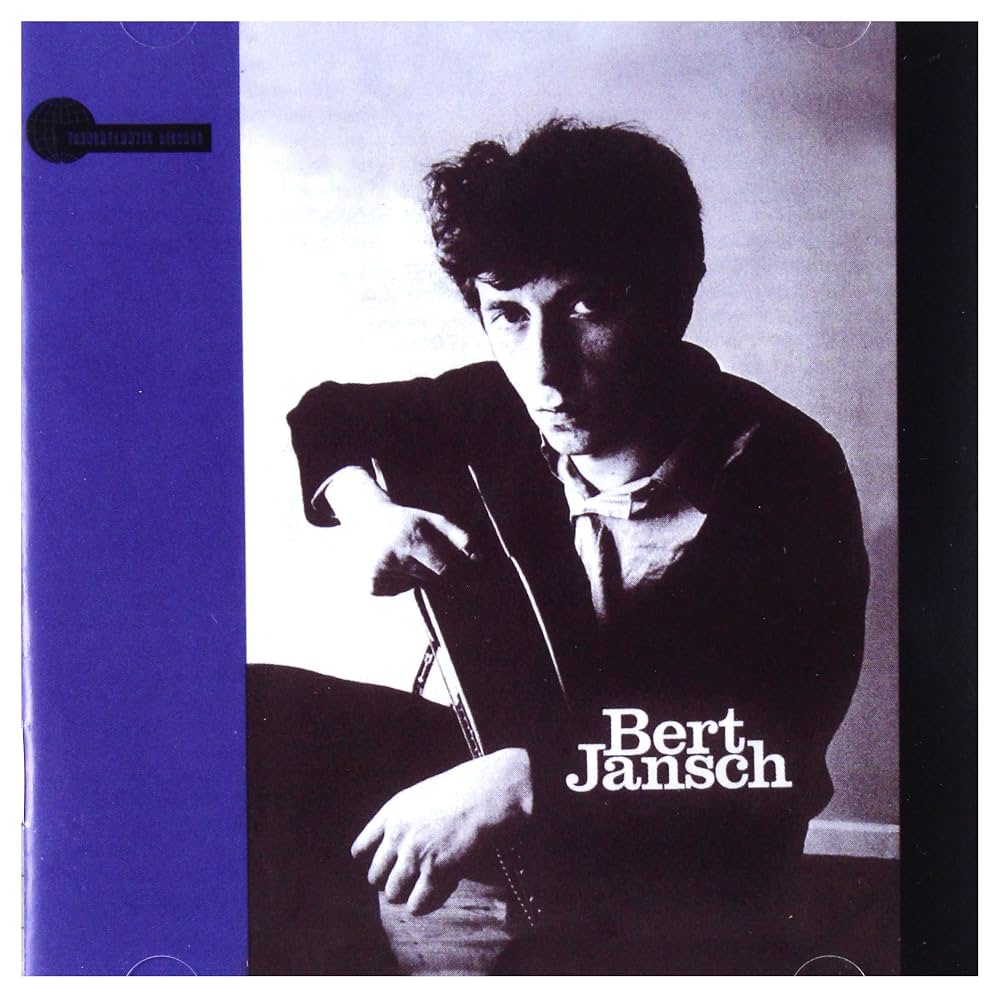
In April 1965, a young Scottish troubadour walked into a London flat with a borrowed guitar and recorded an album that would permanently rewrite the vocabulary of the acoustic instrument. Bert Jansch’s self-titled debut, captured on a portable reel-to-reel tape recorder for a mere one hundred pounds, arrived with no commercial fanfare, yet it struck the British folk revival like a lightning bolt. At a time when the folk scene was strictly divided between rigid traditionalists singing ancient ballads and American-influenced blues revivalists, Jansch presented a stunning, unprecedented synthesis. By intertwining the modal patterns of British traditional music with the syncopated rhythms of jazz and the raw emotionality of country blues, Jansch birthed “folk baroque”—a revolutionary musical movement that transformed the acoustic guitar from a simple accompanying tool into a fierce, autonomous voice of modernist expression.
The impact of Bert Jansch was immediate and profoundly destabilizing to the existing musical order. Up until its release, acoustic fingerpicking in Britain was largely polite, linear, and predictable. Jansch introduced an element of danger, violence, and intense psychological interiority to the instrument. His playing was not merely technically proficient; it was physically aggressive, characterized by sharp note-bendings, unexpected rhythmic shifts, and a biting, percussive attack that sounded as if he were wrenching the music directly out of the wood and steel. Coupled with his deadpan, melancholic vocal delivery, the album offered a stark, unvarnished portrait of urban alienation, bohemian desperation, and artistic genius operating completely outside the boundaries of mainstream pop commerce.
The Alchemy of Folk Baroque Technique
To grasp the architectural brilliance of this record, one must dissect the mechanics of Jansch’s revolutionary fingerstyle technique. He abandoned the clean, textbook approaches favored by the folk establishment, opting instead for a highly idiosyncratic style that merged clawhammer precision with loose, improvisational jazz sensibilities. Jansch used his thumb to drive a heavy, syncopated bassline while simultaneously plucking, snapping, and brushing the treble strings with his fingers, frequently incorporating percussive string-dampening and sudden accents that gave his arrangements a complex, multi-layered momentum.
This technical alchemy is anchored in Jansch’s unique harmonic sensibility. Rather than adhering to standard major and minor chord shapes, he leaned heavily into modal tunings and complex, unresolved jazz chords, creating an atmospheric tension that mirrored the gray, rain-slicked streets of mid-1960s London. He combined the traditional clawhammer technique of old-time banjo players with the sophisticated, fluid modal runs of saxophonist John Coltrane and the blues phrasing of Big Bill Broonzy. This cross-pollination generated a dense, polyphonic texture where the bass notes, mid-range chordal fragments, and sharp treble melodies constantly conversed, clashed, and resolved around his vocals, creating the illusion of an entire ensemble playing within a single acoustic guitar.
The Haunting Poetics of the Urban Underground
Lyrically and thematically, Bert Jansch stands as a fierce, uncompromised document of the mid-sixties bohemian underground. Moving far away from the idealized pastoralism of traditional folk or the literal, didactic protest songs of the American Greenwich Village scene, Jansch wrote about the immediate, often harrowing realities of his own environment. His songs deal with the crushing weight of poverty, the transience of relationships in the city, the paranoia of isolation, and the devastating encroaching shadow of hard drug addiction.
The absolute emotional center of the record is “Needle of Death,” an agonizingly beautiful eulogy for Jansch’s friend, folk singer Buck Polly, who died of a heroin overdose. The song is a masterclass in understatement; Jansch rejects the moralizing, sensationalist tone typical of anti-drug songs of the era, opting instead for a tender, heartbreakingly intimate portrait of human vulnerability. The guitar accompaniment is delicate and fragile, built around a weeping, descending modal line that mirrors the sorrow of the lyrics. When Jansch sings in his detached, wounded voice, “One grain of sand to the bitter end / To the dark side of the world / To the dying world,” the effect is profoundly devastating. It remains one of the most honest, poetically resonant indictments of addiction ever recorded, capturing the quiet, lonely tragedy of a life slipping away in a cold room.
Jansch explores a different facet of urban disillusionment on “Smokey River,” a brooding, melancholic instrumental that evokes the industrial decay and atmospheric gloom of post-war British cities. The track shifts between somber, minor-key strums and sudden, aggressive flurries of notes that mimic the unpredictable currents of a dark river. Through his choice of phrasing and dynamics, Jansch transforms a simple acoustic composition into a heavy, cinematic tone poem, proving that his guitar could convey complex narrative themes and deep, existential dread entirely on its own, without the aid of a single spoken lyric.
Technical Masterpieces and Reimagined Traditions
Beyond his original compositions, the album showcases Jansch’s unparalleled ability to deconstruct and rebuild established musical texts, transforming them into vital, modern declarations. His interpretation of Davey Graham’s iconic instrumental “Angie” (often spelled “Anji”) stands as the definitive rendition of a track that became the ultimate rite of passage for an entire generation of acoustic guitarists.
Jansch’s version of the composition is faster, punchier, and far more menacing than Graham’s original. He infuses the jazz-inflected descending chord progression with a fierce, bluesy grit, incorporating sharp, snapped bass notes, microtonal string bends, and an unyielding, percussive drive that pushes the track to the brink of collapse. His performance is a breathtaking display of physical virtuosity, turning a sophisticated acoustic exercise into a volatile, high-stakes thrill ride. It was a performance so formidable that it sent shockwaves through the British music community, forcing every serious guitar player in London to radically re-evaluate the limits of their own instrument.
This reconstructive brilliance extends to his treatment of traditional material, such as his take on the Irish anti-war ballad “Rambling’s Going to Defile Me” (retitled here as “Ramblin’ Man”). Rather than performing the song with the jaunty, collective energy common in folk clubs, Jansch isolates the track, turning it into a lonely, rhythmic meditation on the psychological trauma of the wandering soldier. His guitar accompaniment relies on a droning, open-string bass note that grounds the song in an ancient, timeless space, while his modern, blues-inflected treble fills dart in and out of the melody like anxious thoughts. It is a stunning fusion of the ancient and the avant-garde, breathing new, urgent life into a centuries-old narrative.
The Blueprint for the Guitar Gods
The historical legacy of Bert Jansch is woven directly into the fabric of classic rock and modern alternative music. The album served as an essential textbook for the young musicians who would go on to define the sonic landscapes of the late 1960s and 1970s. Its influence on the architects of the British rock explosion cannot be overstated.
Jimmy Page was famously obsessed with this record, adopting Jansch’s unique fingerstyle techniques, modal choices, and percussive attack as the foundational building blocks for Led Zeppelin’s acoustic side. The intricate, cascading guitar work on tracks like “Babe I’m Gonna Leave You” and the Eastern-influenced modal textures of “Black Mountain Side” are direct, unvarnished descendants of the vocabulary Jansch established on his debut album. Beyond Page, Neil Young frequently cited Jansch as a major creative touchstone, famously noting that Jansch did for the acoustic guitar what Jimi Hendrix did for the electric. The sparse, hauntingly beautiful acoustic tapestries of Nick Drake, the baroque-pop experimentations of Donovan, and the modern, intricate fingerstyle movements of artists like Fleet Foxes and Iron & Wine all flow directly from the creative doors Jansch unlocked in 1965.
Conclusion: The Timeless Authority of Steel and Wood
Bert Jansch remains an extraordinary, vital masterpiece because it achieves total artistic transcendence through the most minimalist means possible. It is an album completely stripped of studio trickery, overdubs, or commercial concessions—just one man, a borrowed acoustic guitar, and a collection of uncompromisingly honest songs captured in a single room.
It demands to be listened to as a singular, monumental pivot point in the evolution of popular music—the exact moment where folk music shed its antiquarian skin and confronted the modern world with raw, unshielded emotion. In a landscape increasingly defined by overproduction and algorithmic safety, Jansch’s debut stands as a timeless reminder of the power of human touch, artistic courage, and the infinite expressive possibilities contained within six steel strings. It is an absolute, genre-defining classic that remains as sharp, haunting, and beautiful today as it was the day the tape machine started rolling.
Final Score: 10 / 10
This post has already been read 60 times!