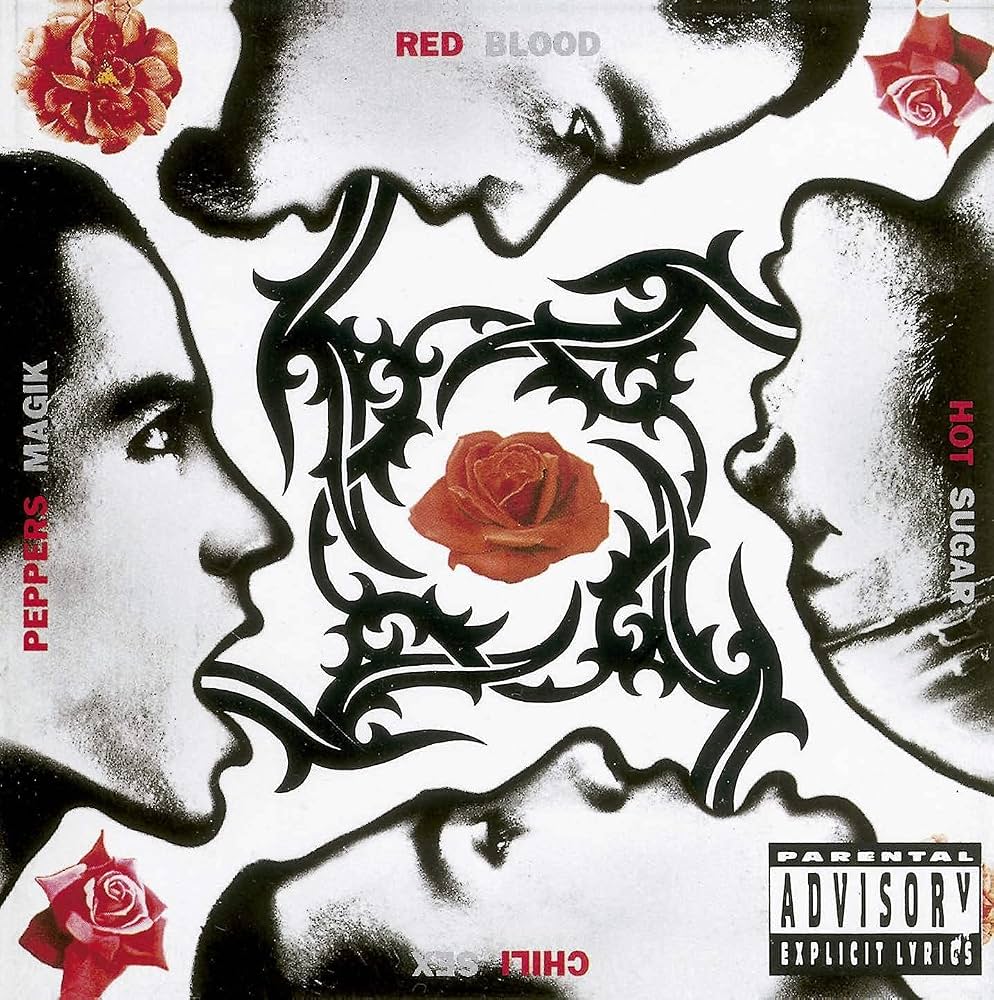
By 1991, the Red Hot Chili Peppers had spent nearly a decade building a reputation as one of the most explosive live bands in rock. Their albums had showcased flashes of brilliance, blending punk, funk, rap, and hard rock into a sound unlike anyone else, but they had yet to create a record that fully captured their potential. Personnel changes, tragedy, and inconsistent songwriting kept them from breaking into the mainstream despite a fiercely loyal fan base.
Everything changed with Blood Sugar Sex Magik.
Released on September 24, 1991, the album transformed the Red Hot Chili Peppers from cult favorites into one of the biggest rock bands on the planet. Working with producer Rick Rubin for the first time, the band stripped away much of the glossy production that had characterized late-’80s rock in favor of a warmer, more organic sound. The result was a record that balanced raw funk, alternative rock, punk energy, introspective songwriting, and infectious hooks with remarkable confidence.
More than three decades later, Blood Sugar Sex Magik remains one of the defining albums of the alternative rock explosion of the early 1990s. It is funky without becoming gimmicky, emotional without becoming sentimental, and adventurous without sacrificing accessibility. Few albums have expanded a band’s audience so dramatically while remaining true to its identity.
Album Overview
Blood Sugar Sex Magik was recorded in an old mansion in Los Angeles that had reportedly been haunted, an unconventional setting that encouraged the band to live together throughout the sessions. Whether or not the house contributed to the creative atmosphere, the chemistry between Anthony Kiedis, Flea, John Frusciante, and Chad Smith reached an extraordinary level.
Rick Rubin understood that the band didn’t need elaborate studio tricks. Instead, he emphasized live performances, spacious arrangements, and dynamic interplay between the musicians. Every instrument has room to breathe, allowing Flea’s bass lines and Frusciante’s inventive guitar work to complement one another rather than compete for attention.
The album moves effortlessly between styles. Funk dominates many tracks, but hard rock, psychedelic influences, hip-hop rhythms, melodic ballads, and punk all find a place within the running order. Despite these shifts, the record never feels disjointed because the band approaches every style with complete conviction.
Clocking in at over 70 minutes, the album is undeniably ambitious. Remarkably, it maintains its momentum through most of its lengthy runtime, a testament to both the songwriting and sequencing.
Songwriting
One of the album’s greatest strengths is its unpredictability. No two songs sound exactly alike, yet they all contribute to a coherent whole.
“The Power of Equality” opens the record with a burst of energy, combining politically charged themes with an irresistible funk groove. It immediately announces that the band has matured both musically and lyrically.
“If You Have to Ask” showcases the effortless chemistry between Flea and Chad Smith. The rhythm section creates an irresistible foundation while Frusciante adds colorful textures rather than overwhelming the mix.
Breaking through with “Give It Away,” the band delivers one of the most recognizable funk-rock songs ever recorded. Built around a hypnotic bass line and Kiedis’ rapid-fire vocal delivery, the song became an anthem without sacrificing its quirky personality.
The album’s emotional centerpiece arrives with “Under the Bridge.” Inspired by Anthony Kiedis’ feelings of loneliness and isolation, it reveals a vulnerability that few expected from the band. Frusciante’s delicate guitar work, the restrained arrangement, and Kiedis’ heartfelt vocal transform the song into one of rock’s most enduring ballads.
“Suck My Kiss” counters that introspection with pure aggression, delivering crushing riffs and explosive energy.
Tracks like “Breaking the Girl,” “I Could Have Lied,” “Sir Psycho Sexy,” and “Apache Rose Peacock” reveal the band’s growing confidence as songwriters. They are willing to slow things down, experiment with different moods, and trust subtle arrangements when the material calls for it.
The album also contains several overlooked gems. “Mellowship Slinky in B Major” is a masterclass in funk interplay, while “My Lovely Man” serves as a moving tribute to original guitarist Hillel Slovak, whose death profoundly shaped the band’s future.
The only minor criticism is that a few songs in the latter portion of the album occasionally feel less essential than the classics that surround them. At over an hour, the record could arguably lose one or two tracks without sacrificing its impact.
Performance
Every member of the band performs at an astonishing level.
Anthony Kiedis delivers the strongest vocal performance of his career up to that point. While never considered a technically gifted singer, his confidence, phrasing, and emotional honesty improve dramatically throughout the album. Whether delivering energetic rap-inspired verses or heartfelt melodies, he sounds fully invested in every performance.
Flea cements his status as one of rock’s greatest bass players. His ability to move between slap bass pyrotechnics, melodic grooves, and understated accompaniment gives the album much of its personality. Every note serves the song while remaining instantly recognizable.
John Frusciante’s arrival transformed the band’s sound. Rather than relying solely on distortion and speed, he emphasizes texture, melody, and atmosphere. His guitar work is inventive without being self-indulgent, creating memorable hooks that often become as important as the vocal melodies themselves.
Chad Smith provides exactly what the music requires. His drumming combines power with remarkable restraint, shifting effortlessly between hard rock, funk, and subtle ballad accompaniment.
Together, the four musicians achieve a level of chemistry that few rock bands ever attain.
Production
Rick Rubin’s production remains one of the album’s greatest assets.
Instead of chasing contemporary trends, Rubin focused on capturing the band as naturally as possible. The result is a warm, dynamic recording that still sounds fresh decades later.
The bass is prominent without overwhelming the mix. The guitars remain crisp and expressive. The drums sound enormous while retaining their natural character. Most importantly, the production never sacrifices musical interplay for volume or studio polish.
Unlike many rock albums released during the early 1990s, Blood Sugar Sex Magik avoids becoming trapped by the sonic fashions of its era. It feels timeless because it prioritizes musicianship over production gimmicks.
Standout Tracks
“Under the Bridge”
A career-defining masterpiece. Vulnerable, beautifully arranged, and emotionally devastating, it remains one of alternative rock’s greatest ballads.
“Give It Away”
An explosive celebration of funk, groove, and individuality. One of the band’s signature songs and an essential part of 1990s rock history.
“Breaking the Girl”
A remarkably delicate composition that demonstrates the band’s expanding musical range and Frusciante’s melodic brilliance.
“Suck My Kiss”
Heavy, aggressive, and relentlessly energetic, this track showcases the band’s harder edge while maintaining an infectious groove.
“If You Have to Ask”
A perfect example of everything that makes this lineup special: outstanding rhythm work, inventive guitar playing, and infectious songwriting.
Weak Points
The album’s greatest flaw is simply its length.
At over seventy minutes, Blood Sugar Sex Magik occasionally stretches beyond what is necessary. While even the lesser tracks remain enjoyable, a tighter running time may have elevated the record from exceptional to nearly flawless.
Anthony Kiedis’ lyrics can also be uneven. His stream-of-consciousness style sometimes produces brilliant imagery, but other moments lean toward abstract phrases that prioritize rhythm over clarity.
These are relatively minor issues within an album overflowing with creativity and memorable performances.
Legacy
Few albums had a greater impact on alternative rock during the 1990s.
Blood Sugar Sex Magik helped redefine what mainstream rock could sound like. It proved that funk, punk, hip-hop influences, and emotional songwriting could coexist without compromise. The album opened doors for countless alternative bands while inspiring musicians across multiple genres.
Its success also elevated the Red Hot Chili Peppers into international superstars, establishing a lineup that many fans still consider the band’s definitive incarnation. Although John Frusciante departed shortly after the album’s release, his contributions here remain among the most influential guitar performances of the era.
Songs like “Under the Bridge” and “Give It Away” continue to receive heavy radio play, while younger generations regularly discover the album as an introduction to alternative rock’s golden age.
Very few records manage to be commercially successful, critically acclaimed, musically adventurous, and endlessly replayable. Blood Sugar Sex Magik accomplished all four.
Final Score: 9.5/10
Blood Sugar Sex Magik is the album where every piece of the Red Hot Chili Peppers finally clicked into place. Outstanding musicianship, adventurous songwriting, Rick Rubin’s timeless production, and a perfect balance between explosive funk and emotional vulnerability make it one of the defining rock albums of the 1990s. Its lengthy runtime keeps it just shy of absolute perfection, but the sheer number of classic songs and the extraordinary chemistry between the band members secure its place among the greatest alternative rock albums ever recorded.
This post has already been read 51 times!