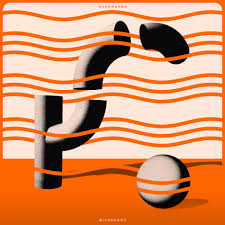
Reinvention can be risky, especially for a band that has already carved out a distinctive identity. During their first two albums, Hookworms built a loyal following with an explosive blend of psychedelic rock, krautrock rhythms, noise, and post-punk intensity. Their music was loud, relentless, and often overwhelming in the best possible way. A dramatic stylistic shift could easily have alienated the audience they had spent years cultivating.
Instead, it produced the finest album of their career.
Released on February 2, 2018, Microshift sees the Leeds band embracing synthesizers, electronic textures, dance rhythms, and more expansive songwriting without abandoning the restless energy that defined their earlier work. Influenced in part by frontman MJ’s recovery from severe hearing loss and tinnitus, the album explores transformation, resilience, uncertainty, and adaptation through music that feels simultaneously uplifting and anxious.
Rather than sounding like a band chasing trends, Hookworms expand their sound naturally, creating a record that is more melodic, emotionally engaging, and adventurous than anything they had previously released.
It remains one of the most overlooked alternative rock albums of the late 2010s.
Album Overview
The title Microshift perfectly reflects the album’s philosophy.
Rather than making a dramatic stylistic break, Hookworms subtly alter nearly every aspect of their music. Synthesizers become more prominent, rhythms grow increasingly danceable, and the songwriting places greater emphasis on melody while retaining the hypnotic repetition and intensity that always defined the band’s work.
The production, handled by MJ, is exceptional.
Electronic elements blend seamlessly with guitars, bass, live drums, and layered vocals, creating arrangements that feel rich without becoming cluttered. Every sound appears carefully positioned within the mix, allowing the album’s dense textures to remain remarkably clear.
The pacing also deserves praise.
Energetic tracks are balanced with more reflective moments, giving the record emotional variety without disrupting its momentum.
By the final song, the album feels like a complete journey rather than simply a collection of impressive individual tracks.
Songwriting
Hookworms take a significant leap forward as songwriters on Microshift.
“Negative Space” immediately introduces the album’s expanded sonic palette, combining pulsing synthesizers with driving rhythms and one of MJ’s strongest vocal performances.
“Static Resistance” builds around an irresistible groove, demonstrating how comfortably the band incorporates electronic influences without sacrificing urgency.
“Ullswater” is among the album’s finest moments, pairing shimmering melodies with intricate production that gradually reveals new details over repeated listens.
“The Soft Season” balances warmth and melancholy beautifully, while “Opener” injects fresh energy through relentless rhythmic momentum.
“Each Time We Pass” introduces one of the album’s most emotionally affecting choruses, showing a level of melodic confidence absent from earlier releases.
The closing “Reunion” provides a thoughtful conclusion that captures the album’s central themes of healing and transformation.
Although the record lacks an obvious breakout single, its consistency is exceptional.
Every song contributes meaningfully to the overall experience.
Performance
MJ delivers his strongest vocal performances to date.
His voice remains understated, but greater melodic confidence allows him to communicate emotion more effectively than on previous albums. Rather than competing with the dense instrumentation, his vocals become another carefully integrated layer within the arrangements.
The band performs with remarkable precision throughout.
Drummer JN continues providing hypnotic rhythmic foundations, while the guitars and synthesizers constantly intertwine without becoming overly busy. Bass lines quietly anchor even the album’s most expansive passages.
Perhaps most impressive is the group’s chemistry.
Every musical decision feels collaborative, reflecting a band fully committed to its evolving artistic direction.
Production
The production is arguably Microshift‘s greatest achievement.
MJ creates a sonic landscape that feels simultaneously warm, expansive, and highly detailed. Analog synthesizers, shimmering guitars, driving percussion, and subtle electronic textures constantly interact without ever competing for attention.
The mix is beautifully balanced.
Unlike many albums blending rock and electronic music, neither element dominates. Instead, they reinforce one another naturally, creating a sound that feels organic rather than artificially hybridized.
Repeated listening reveals countless hidden production details, making the album continually rewarding.
It is one of the best-produced alternative rock records of its decade.
Standout Tracks
“Static Resistance”
An exhilarating fusion of post-punk, electronic music, and krautrock grooves featuring one of the album’s strongest melodies.
“Ullswater”
A beautifully layered composition that perfectly captures the band’s expanded sonic ambitions.
“Negative Space”
A confident opener that immediately announces Hookworms’ artistic evolution.
“Each Time We Pass”
Emotionally resonant songwriting paired with one of the album’s finest vocal performances.
“The Soft Season”
A gorgeous balance of melancholy, hope, and shimmering production.
Weak Points
The album’s understated approach occasionally works against its memorability.
Unlike many alternative rock classics, Microshift doesn’t contain an immediately iconic single capable of introducing casual listeners to the band. Its strengths emerge through experiencing the album as a whole.
Additionally, MJ’s restrained vocal style, while emotionally appropriate, occasionally lacks the commanding presence found in some of the genre’s greatest frontmen.
These are relatively minor concerns within such a cohesive artistic statement.
Legacy
Although Microshift received widespread critical acclaim, it remains one of the great overlooked alternative albums of the late 2010s.
Its seamless fusion of psychedelic rock, electronic music, post-punk, and krautrock demonstrated that Hookworms were capable of far more than simply refining their earlier sound.
Sadly, the album also became the band’s final full-length release before they went on hiatus, giving it additional emotional weight in retrospect.
Even so, Microshift stands comfortably on its own merits.
It is a thoughtful, adventurous record that deserves a far larger audience and continues to reward listeners willing to spend time with its rich sonic world.
Final Score: 8.5/10
Microshift is a bold and beautifully crafted reinvention that finds Hookworms expanding their sound without losing their identity. Outstanding production, confident songwriting, and subtle emotional depth combine to create one of the most underrated alternative rock albums of the 2010s. While its understated nature and lack of an obvious signature anthem may prevent it from reaching the highest tier of modern classics, its consistency and artistic ambition make it an exceptional record that deserves far more recognition.
This post has already been read 53 times!