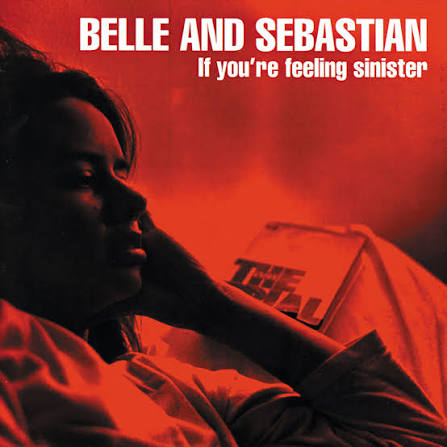
Not every great album announces itself with volume. Some whisper instead.
Released on November 18, 1996, If You’re Feeling Sinister is the kind of record that slowly works its way into your life rather than demanding immediate attention. At a time when Britpop was still dominating the UK charts with oversized guitars and stadium-sized choruses, Belle and Sebastian arrived with something almost defiantly understated. Their songs were intimate, literary, and quietly observant, favoring delicate melodies and character-driven storytelling over bombast.
The Glasgow collective, led by Stuart Murdoch, had already earned critical acclaim with their debut Tigermilk, but its limited pressing meant relatively few people had actually heard it. If You’re Feeling Sinister became the album that introduced Belle and Sebastian to a wider audience and established them as one of the defining indie bands of the late 1990s.
It also became one of indie music’s most beloved cult classics.
Built around warm acoustic arrangements, gentle orchestration, and Murdoch’s remarkably empathetic songwriting, the album feels less like a collection of songs and more like a novel filled with memorable characters searching for meaning, connection, and purpose. It rewards patience, repeated listening, and careful attention to detail.
Three decades later, If You’re Feeling Sinister remains one of the finest examples of chamber pop and indie folk ever recorded.
Album Overview
Belle and Sebastian’s greatest strength lies in their restraint.
Rather than overwhelming listeners with elaborate production or technical showmanship, the band creates spacious, inviting arrangements where every instrument serves the songs. Acoustic guitars, pianos, strings, flutes, gentle percussion, and subtle keyboards intertwine naturally, creating an atmosphere that feels warm without becoming overly sentimental.
Producer Tony Doogan wisely avoids excessive polish. The performances retain a homemade intimacy that perfectly complements Murdoch’s songwriting. Nothing feels rushed or overproduced.
The pacing is equally remarkable.
Despite rarely exceeding a conversational volume, the album never becomes sleepy. Each track introduces new emotional shades, from bittersweet nostalgia to quiet optimism, playful humor, and moments of genuine melancholy.
The result is an album that feels cohesive without becoming repetitive.
Songwriting
Stuart Murdoch’s songwriting is among the album’s greatest achievements.
Rather than writing autobiographical confessionals, he creates vivid fictional characters whose lives feel astonishingly real. His songs observe ordinary people with extraordinary compassion, finding beauty, humor, and heartbreak in everyday experiences.
“The Stars of Track and Field” opens the album with graceful confidence, introducing listeners to Murdoch’s distinctive style of storytelling.
“Seeing Other People” combines infectious melodies with sharp social observation, demonstrating how effortlessly Belle and Sebastian balance wit and emotional honesty.
“Me and the Major” injects subtle humor while maintaining the album’s reflective tone.
The title track, “If You’re Feeling Sinister,” serves as the emotional centerpiece. Built around one of Murdoch’s finest melodies, it explores uncertainty, spirituality, identity, and loneliness with remarkable sensitivity. It remains one of the band’s defining songs.
“Mayfly” offers one of the album’s most immediately charming melodies, while “The Boy Done Wrong Again” quietly captures disappointment without descending into self-pity.
“Get Me Away from Here, I’m Dying” is arguably the album’s masterpiece. Its soaring chorus, bittersweet optimism, and unforgettable melody create one of indie music’s greatest anthems without ever raising its voice.
The closing “Judy and the Dream of Horses” provides a gentle, dreamlike conclusion that lingers long after the album ends.
Every song contributes something meaningful. There are no obvious weak links.
Performance
Belle and Sebastian have never been a band interested in virtuosity.
Instead, their performances succeed because of subtlety and emotional intelligence.
Stuart Murdoch’s vocals are soft, conversational, and deeply expressive. He sings less like a traditional frontman and more like someone quietly sharing personal stories across a kitchen table. His understated delivery becomes one of the album’s defining characteristics.
Isobel Campbell’s occasional vocal contributions provide beautiful contrast, adding warmth and fragility whenever she enters the mix.
Instrumentally, the band demonstrates remarkable discipline. No musician fights for attention. Acoustic guitars, keyboards, strings, and woodwinds constantly support one another, creating arrangements that feel carefully balanced without becoming sterile.
This collective approach allows the songs themselves to remain the true stars of the record.
Production
The production perfectly complements the band’s aesthetic.
Tony Doogan captures the performances with warmth and remarkable clarity. Every acoustic guitar resonates naturally, every piano note feels intimate, and the occasional string arrangements enhance rather than overwhelm the songs.
Unlike many albums from the mid-1990s, If You’re Feeling Sinister avoids fashionable studio techniques that might have dated it. There are no unnecessary effects or attempts to modernize the music through production tricks.
Instead, the album sounds timeless.
The mix also leaves generous space between instruments, allowing listeners to discover new details with repeated listens. Small melodic flourishes, subtle harmonies, and understated instrumental textures gradually reveal themselves over time.
It is an album that rewards careful listening.
Standout Tracks
“Get Me Away from Here, I’m Dying”
One of indie pop’s greatest songs. Heartbreaking, uplifting, and melodically perfect, it remains Belle and Sebastian’s defining achievement.
“If You’re Feeling Sinister”
A beautifully written title track that captures the album’s emotional core through compassionate storytelling and elegant arrangement.
“The Stars of Track and Field”
A graceful opening that immediately establishes the band’s gentle, literary approach.
“Seeing Other People”
An infectious melody paired with sharp observations about relationships and identity.
“The Boy Done Wrong Again”
Simple, understated, and emotionally devastating without ever becoming melodramatic.
Weak Points
The album’s quiet nature naturally limits its accessibility.
Listeners expecting dramatic climaxes, aggressive instrumentation, or instantly memorable hooks may initially find the record too restrained. Its greatest rewards emerge gradually through repeated listening rather than immediate impact.
A few arrangements also remain intentionally minimal, occasionally making individual tracks blend together during early listens.
However, these characteristics are central to the album’s identity rather than genuine shortcomings.
Legacy
Although it was never a massive commercial success, If You’re Feeling Sinister became one of the defining albums of indie pop.
Its influence can be heard throughout generations of singer-songwriters and indie bands who embraced intimate storytelling, chamber-pop arrangements, and understated emotional expression. Artists across indie folk, twee pop, and alternative music have cited Belle and Sebastian as a major inspiration.
The album also demonstrated that deeply personal, literate songwriting could build an intensely devoted audience without relying on commercial trends or radio-friendly production.
Over time, its reputation has only grown stronger.
Today, it is routinely regarded as one of the greatest indie albums ever made and remains the benchmark against which much of Belle and Sebastian’s celebrated catalog is measured.
Its quiet confidence has proven remarkably enduring.
Final Score: 9.5/10
If You’re Feeling Sinister is a masterpiece of understated songwriting and one of the greatest indie pop albums ever recorded. Stuart Murdoch’s compassionate storytelling, elegant melodies, warm production, and the band’s beautifully restrained performances create a listening experience that grows richer with every revisit. While its gentle pace may not immediately appeal to everyone, those willing to spend time with it will discover an album of extraordinary emotional depth and lasting beauty. Few records have whispered so softly while leaving such a profound impact.
This post has already been read 56 times!