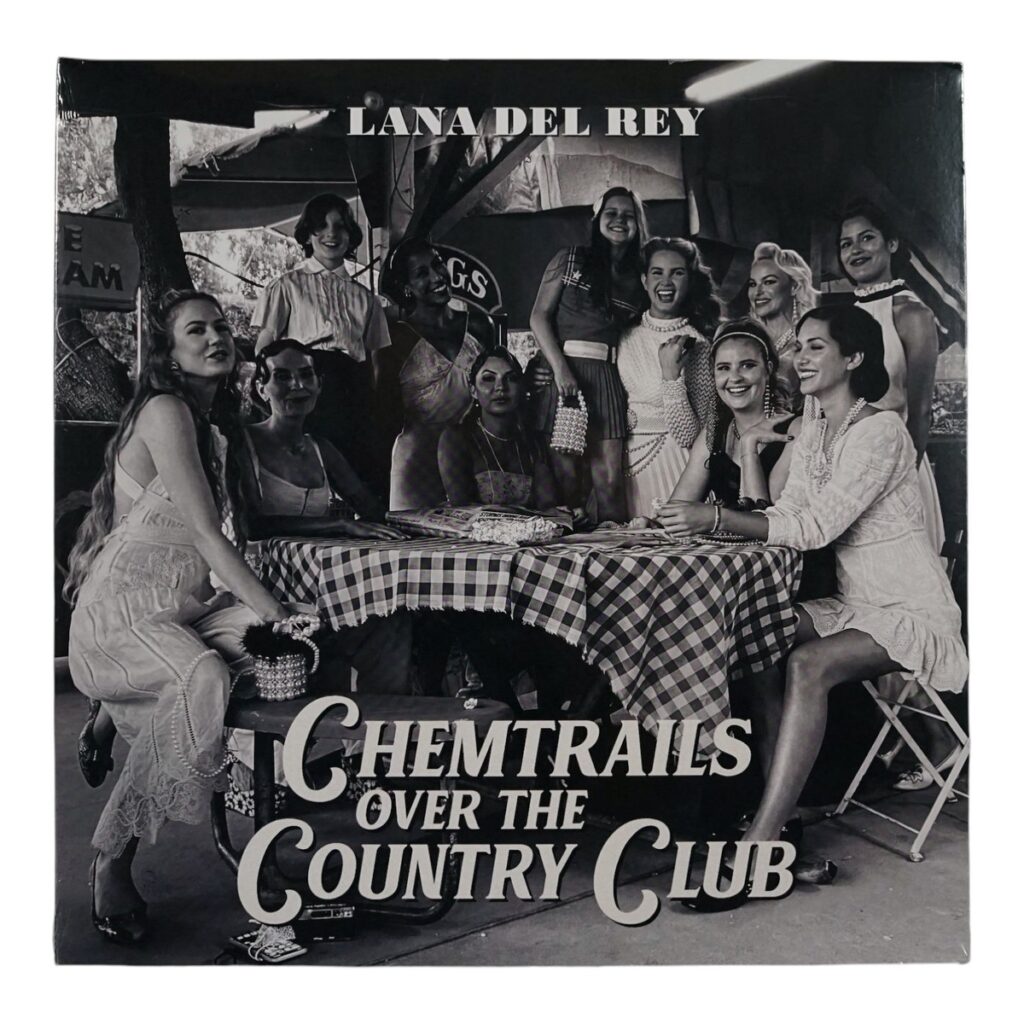
Following the enormous critical success of Norman F**ing Rockwell!*, Lana Del Rey faced an unusually difficult challenge. The 2019 album had been hailed as a career-defining masterpiece, elevating her from a polarizing pop star to one of the most respected songwriters of her generation. Rather than trying to outdo its sweeping ambition, she chose a quieter path.
Released on March 19, 2021, Chemtrails Over the Country Club strips away much of the grandeur that characterized its predecessor in favor of intimacy and reflection. The cinematic strings and dramatic climaxes remain, but they are used more sparingly. Instead, the album leans heavily on folk, country, soft rock, and understated Americana, creating one of the most relaxed and personal records in Lana Del Rey’s catalog.
Its title initially suggested another sprawling examination of modern America, yet the album is far more inward-looking than political. Themes of friendship, domesticity, identity, fame, and finding peace gradually replace the doomed romance and Hollywood mythology that defined much of her earlier work.
It may not command attention as immediately as its predecessor, but its quiet beauty becomes increasingly rewarding with time.
Album Overview
Chemtrails Over the Country Club is built on subtlety.
Produced primarily by Jack Antonoff alongside Lana Del Rey, the album favors warm acoustic guitars, delicate piano, brushed percussion, gentle strings, and understated vocal harmonies. The arrangements rarely become elaborate, allowing Lana’s voice and lyrics to remain the emotional center of every song.
The pacing is deliberately unhurried.
Rather than chasing obvious singles, the album unfolds like a series of personal reflections, each connected by a shared atmosphere of calm introspection. The result is one of the most cohesive listening experiences in her catalog.
Country influences appear throughout without overwhelming the music, while traces of jazz, folk, dream pop, and classic singer-songwriter traditions give the album remarkable warmth.
The production creates an inviting, almost pastoral atmosphere that perfectly suits the record’s themes.
Songwriting
Lana Del Rey continues to mature as a songwriter.
“White Dress” opens the album with one of her most vulnerable performances, reflecting on youth and changing identity with surprising emotional directness.
The title track is among the album’s finest moments. Floating over shimmering instrumentation, it captures the tension between ordinary life and celebrity with effortless elegance.
“Tulsa Jesus Freak” introduces subtle electronic textures while maintaining the album’s dreamy atmosphere.
“Wild at Heart” revisits familiar themes of escape and longing, but approaches them with greater emotional maturity than many of her earlier songs.
“Dark but Just a Game” quietly examines fame and its consequences through one of the album’s strongest lyrical narratives.
“Yosemite,” originally written years earlier, finally finds its proper home here, offering a gentle meditation on enduring love and loyalty.
The closing cover of Joni Mitchell’s “For Free,” performed alongside Weyes Blood and Zella Day, provides a graceful conclusion that perfectly complements the album’s reflective tone.
Although the songwriting rarely reaches the breathtaking heights of Norman F**ing Rockwell!*, it remains consistently thoughtful and emotionally engaging.
Performance
Lana Del Rey delivers one of the most restrained vocal performances of her career.
Rather than relying on dramatic shifts in tone, she sings with remarkable softness and confidence. Her understated delivery allows the emotional nuances of the lyrics to emerge naturally.
The supporting vocalists contribute beautiful harmonies throughout the album, particularly during the closing track, while the instrumental performances remain tasteful and never distract from the songs.
Jack Antonoff’s collaborative instincts deserve particular praise.
He consistently knows when to expand the arrangements and when to leave space, allowing Lana’s voice to remain the focal point.
The performances throughout the record reflect quiet confidence rather than theatrical ambition.
Production
Jack Antonoff’s production perfectly complements the album’s intimate nature.
The acoustic instrumentation sounds warm and organic, while pianos, strings, and subtle electronic textures gently enrich the arrangements without overwhelming them.
Unlike many contemporary pop albums, Chemtrails Over the Country Club leaves considerable dynamic space within the mix. Every instrument breathes naturally, creating an atmosphere that feels comforting and timeless.
The production also avoids chasing current trends, which has allowed the album to age gracefully.
Its elegance lies in its restraint.
Standout Tracks
“White Dress”
An intimate and emotionally revealing opener featuring one of Lana Del Rey’s most compelling vocal performances.
“Chemtrails Over the Country Club”
Dreamlike, elegant, and beautifully produced, it perfectly captures the album’s atmosphere.
“Dark but Just a Game”
A thoughtful meditation on fame that pairs some of the album’s strongest lyrics with one of its most engaging arrangements.
“Wild at Heart”
Warm melodies and understated songwriting create one of the album’s most comforting moments.
“Yosemite”
A quietly beautiful reflection on lasting devotion that rewards repeated listening.
Weak Points
The album’s greatest strength—its subtle consistency—can also become its biggest limitation.
Several songs occupy similar tempos and emotional spaces, occasionally causing portions of the middle section to blur together during casual listening.
Listeners expecting the dramatic songwriting and unforgettable hooks of Norman F**ing Rockwell!* may also find this record comparatively understated.
Additionally, while the album is consistently good, it contains fewer truly career-defining songs than some of Lana Del Rey’s strongest releases.
Legacy
Although Chemtrails Over the Country Club initially lived somewhat in the shadow of its predecessor, its reputation has steadily improved.
Many fans have come to appreciate its understated songwriting, intimate production, and emotional honesty, recognizing it as an important transitional record that bridges the lush ambition of Norman F**ing Rockwell!* with the folk-inspired direction of Blue Banisters.
The album also demonstrated Lana Del Rey’s willingness to resist commercial expectations, continuing to evolve as a songwriter rather than repeating formulas that had already proven successful.
While it may never rank among her most iconic releases, it remains one of the most personal and quietly rewarding chapters in her catalog.
Final Score: 8.5/10
Chemtrails Over the Country Club is a graceful, introspective album that finds Lana Del Rey embracing subtlety over spectacle. Beautiful songwriting, warm production, and understated performances create an immersive listening experience that grows richer with repeated plays. Although it lacks the consistent brilliance and unforgettable peaks of Norman F**ing Rockwell!*, its emotional sincerity and cohesive atmosphere make it one of the stronger singer-songwriter albums of the early 2020s and another impressive entry in Lana Del Rey’s evolving body of work.
This post has already been read 81 times!