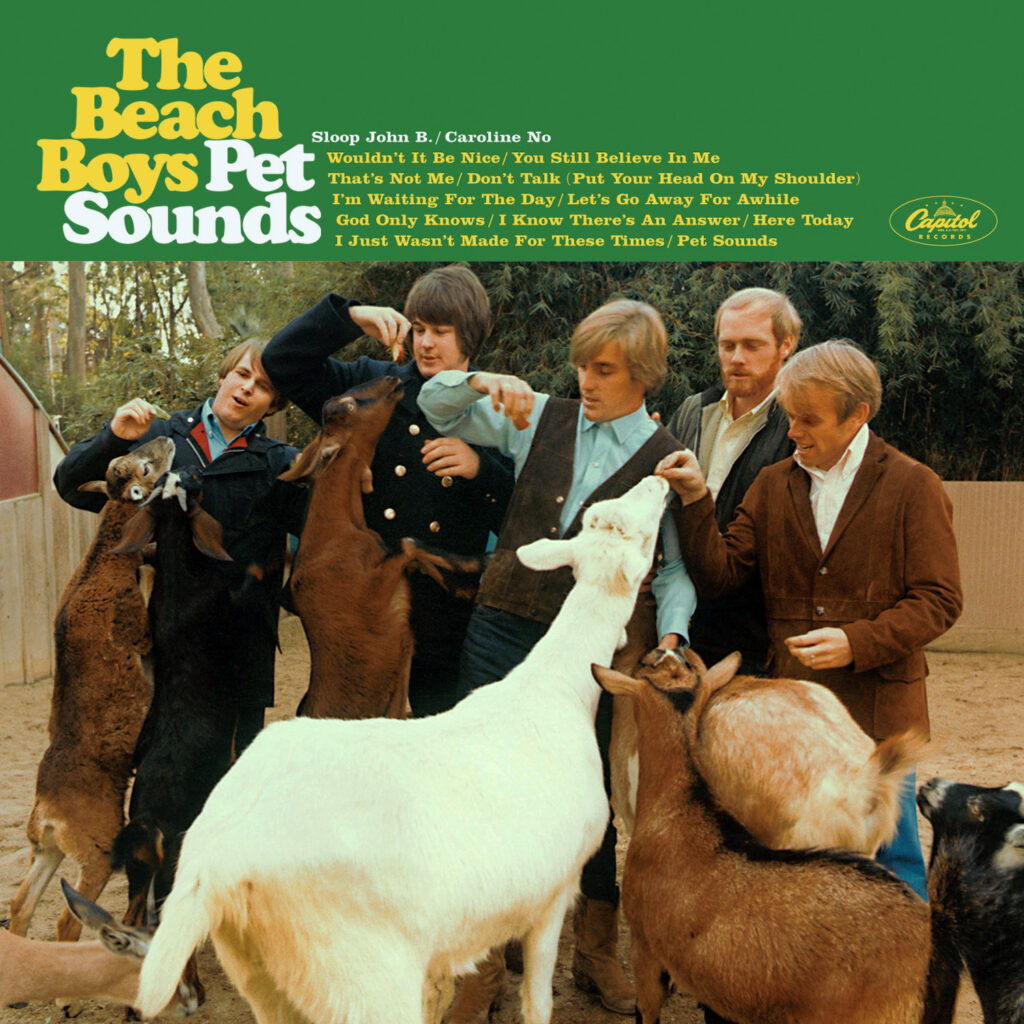
There is a distinct, agonizing beauty in the moment an artist outgrows their own mythology. By 1966, The Beach Boys were the undisputed architects of the American mythos of eternal youth. They had successfully sold a sun-drenched, utopian vision of California to a generation eager for escape—a world populated entirely by pristine beaches, hot rods, drag races, and uncomplicated teenage romance. It was a highly lucrative, beautifully harmonized fantasy. But beneath the surfboards and the striped shirts lay a volatile, fragile musical genius named Brian Wilson. While his bandmates were touring Japan, singing the praises of a lifestyle they were rapidly outgrowing, Wilson remained locked in the studio, haunted by a terrifying truth: the sun was setting on the post-war American dream, and his own psyche was fracturing.
The result of that isolation was Pet Sounds, an album that did not merely break the mold of popular music—it shattered the very concept of what a pop record could achieve. Released in May 1966, it was met with commercial confusion in the United States and immediate, holy reverence across the Atlantic. Decades later, it stands not just as Brian Wilson’s masterpiece, but as one of the most singular, emotionally devastating, and structurally complex achievements in the history of recorded sound. It is an album that engineered a monumental shift from the collective optimism of the early 1960s to the deeply insular, psychological paranoia of the late-twentieth century.
The Sonic Subversion of the Wrecking Crew
To understand the sheer audacity of Pet Sounds, one must look at how it was constructed. Wilson abandoned the standard rock-and-roll instrumentation that had defined the era. He treated the recording studio not as a room to capture a live performance, but as a giant, singular instrument to be manipulated. Utilizing the legendary collective of session musicians known as The Wrecking Crew, Wilson began building an intricate, multi-layered wall of sound that bypassed traditional arrangement choices entirely.
Instead of relying on the standard pop blueprint of guitar, bass, drums, and vocals, the Wilsonian soundscape favored an avant-garde orchestral approach. He mapped out dense tracking sessions that seamlessly merged harpsichords, French horns, theremins, and bicycle bells with electro-theremins, dog whistles, and deeply layered orchestrations.
The sonic textures of Pet Sounds are famously eccentric, yet completely necessary to the emotional weight of the songs. Wilson juxtaposed standard pop melodies with:
-
Baroque Orchestrations: The heavy integration of harpsichords, cellos, and elegant French horns.
-
Found Sounds: The deliberate inclusion of bicycle bells, coca-cola cans, barking dogs, and roaring train whistles.
-
Exotic Instrumentation: The unsettling, ethereal wail of the Electro-Theremin and deep, buzzing bass harmonica.
In the opening track, “Wouldn’t It Be Nice,” this sonic subversion is on full display. The song begins with a delicate, sparkling harp-like introduction on a 12-string guitar, evoking a classic, fairytale innocence. But when the drums violently kick in, the fidelity shifts into a massive, booming mono mix that feels heavy, almost suffocating. The track bounces with an infectious, upbeat rhythm, but beneath the joyful veneer are layers of timpani, accordions, and multiple saxophones creating a dense, melancholic pressure. Wilson was weaponizing joy, using the bright templates of pop music to deliver a profound sense of yearning that the listener can feel in their chest before they even process the lyrics.
The Loss of Innocence and Lyre-Struck Melancholy
Lyrically, Pet Sounds is a concept album about the painful, inevitable transition from adolescence to adulthood. Collaborating with lyricist Tony Asher, Wilson stripped away the superficial signifiers of youth culture to write a deeply vulnerable, psychological diary. The songs do not detail specific events; instead, they capture abstract emotional states—disorientation, intense longing, the paralyzing fear of abandonment, and the profound isolation of feeling entirely misunderstood.
The thematic core of the album rests squarely on side one with “You Still Believe in Me.” Sung in a fragile, childlike falsetto by Wilson, the track is a devastating confession of inadequacy. The song opens with the sound of a piano string being plucked directly inside the instrument’s frame, sounding like a ghostly music box. As the band’s trademark harmonies swell around him, Wilson sings to a lover who refuses to abandon him despite his constant failures. The arrangement is stately, almost religious, borrowing the cadences of sacred church music to deliver an apology that feels uncomfortably intimate. It is the sound of a man clinging to an idealized love because his internal world is actively collapsing.
This theme of romantic disillusionment reaches its peak on “Caroline, No,” the album’s tragic closing track. The song stands as a eulogy for a girl—and an era—that has lost its purity. The sweeping, jazz-inflected arrangement is anchored by a deep, mourning bass harmonica and muted percussion. When Wilson sings, “Where did your long hair go? / Where is the girl I used to know?”, he isn’t just lamenting a broken relationship; he is mourning the death of innocence itself. The track fades out into the stark, lonely sound of a passing train and barking dogs, leaving the listener stranded in a cold, unvarnished reality. The California dream was officially dead.
The Holy Grail of Vocal Harmony
While the instrumentation of Pet Sounds was revolutionary, the vocal arrangements remain the album’s absolute crowning achievement. When the rest of The Beach Boys returned from their tour, they were notoriously shocked by the music Wilson had prepared. Mike Love famously dismissed the complex tracking as “ego music,” worried it would alienate their core audience. Yet, when they stepped up to the microphones, they delivered the most jaw-dropping, intricate vocal performances ever recorded.
Wilson treated human voices like orchestral woodwinds, weaving complex contrapuntal lines, unexpected modulations, and dense, shifting chords that defied the basic rules of pop harmony. The absolute pinnacle of this technique is “God Only Knows.”
In the architectural breakdown of the track’s vocal counterpoint, Carl Wilson takes the lead with a pure, understated foundational delivery. Above him, Brian tracks a high, piercing falsetto counter-melody to capture the psychological yearning, while the lower ensemble provides a harmonic bed of shifting, jazz-inflected chords that build immense emotional tension.
Sung with breathtaking restraint, the track is widely considered one of the greatest songs ever written. It is a masterpiece of harmonic tension; the song constantly hovers in a state of musical suspension, refusing to land on its root chord until the absolute end of the phrase. During the song’s legendary vocal coda, the voices stack on top of one another in an intricate, three-part round, repeating the phrase “God only knows what I’d be without you” like a secular hymn. It is a moment of pure, transcendent beauty that transforms a simple pop song into an existential prayer.
The Architectural Bridge to Modern Pop
The release of Pet Sounds fundamentally rewrote the rules of the music industry, establishing a permanent line of demarcation between the singles-driven market of the early 1960s and the album-as-art-form era that followed. It was the record that directly inspired Paul McCartney and The Beatles to create Sgt. Pepper’s Lonely Hearts Club Band, sparking an historic, transatlantic creative arms race that pushed popular music to its absolute artistic zenith.
This line of direct creative inspiration formed a bridge from 1966 straight to the modern indie art-pop movement. The structural and emotional DNA of the record traveled through the psych-rock explosions of the late 60s and directly informed the soundscapes of 21st-century acts like Radiohead, Fleet Foxes, and Animal Collective.
Beyond its immediate historical context, the album’s architectural legacy remains vibrantly alive in modern music. The concept of “bedroom pop” and the hyper-stylized, melancholic indie rock of today can be traced directly back to Wilson’s obsession with isolation. These bands have built entire careers on the sonic foundations laid down in Western Studios in 1966—specifically the use of unconventional instruments, dense vocal stacking, and the juxtaposition of beautiful melodies with deep, psychological dread.
Conclusion: A Masterpiece Frozen in Time
Pet Sounds remains an extraordinary, haunting artifact because it captures a brilliant mind at its absolute peak, right before the darkness closed in. It is an album born from immense pressure—the pressure to compete with The Beatles, the pressure to maintain a multi-million-dollar corporate empire, and the pressure of a fragile psyche trying to communicate its isolation to a world that just wanted another surf song.
It is a record that demands to be listened to in its entirety, mixed in its original, punchy monaural format as Brian Wilson intended. In an era where music is increasingly focus-grouped, sanitized, and algorithmically engineered for instant gratification, Pet Sounds stands as a monumental reminder of what pop music looks like when it is treated as high art. It is a pristine, timeless monument to human vulnerability—an immaculate, beautifully harmonized document of the exact moment a boy had to face the terrifying realization that he was entirely alone in the world.
Final Score: 10 / 10
This post has already been read 55 times!