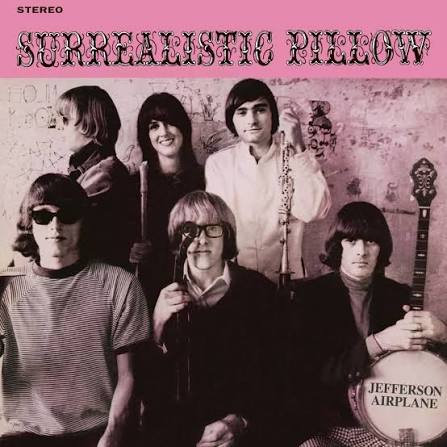
The Summer of Love was not merely a cultural phenomenon; it was a carefully curated audio experience, and few records defined the sonic trajectory of that movement as potently as Surrealistic Pillow. Released in February 1967, this album captured the precise moment San Francisco’s burgeoning Haight-Ashbury underground scene burst into the global pop consciousness. Jefferson Airplane, initially a moderately successful folk-rock act, underwent a radical transformation with the recruitment of powerhouse vocalist Grace Slick and drummer Spencer Dryden. Under the sonic guidance of producer Rick Jarrard, the band abandoned the rigid constraints of their earlier sound to craft a record that balanced pristine, radio-friendly pop structures with the sprawling, hallucinogenic improvisation that would soon define the psychedelic era.
Musically, the album operates as a masterful, high-wire act of dualities. It pairs the bright, harmonically complex folk-rock roots of guitarist Paul Kantner and singer Marty Balin with the dark, improvisational, and decidedly electrified influence of Slick and lead guitarist Jorma Kaukonen. The result is a recording that feels both intimately familiar and dangerously unmoored, utilizing the studio to weave layers of reverberating electric guitars, complex vocal counterpoints, and atmospheric tape manipulation. Surrealistic Pillow stands as a pivotal document, capturing a band at the exact point of creative combustion, bridging the gap between the clean, folk-influenced optimism of 1966 and the wild, unvarnished improvisational chaos that would dominate the festival circuit by 1967.
The Vocal Architecture of Psych-Pop
At the core of the album’s massive success is the interplay of its three distinct lead vocalists: Grace Slick, Marty Balin, and Paul Kantner. Unlike many of their contemporaries who relied on a single focal point, the Airplane utilized a democratic, multi-textured approach that allowed for complex, choral-like arrangements and high-contrast emotional shifts.
The album’s dual, massive radio hits, “White Rabbit” and “Somebody to Love,” serve as perfect bookends for this vocal strategy. “White Rabbit,” written by Slick, is a chilling, bolero-tempo masterpiece of psychological tension. Built around a repetitive, menacing bassline and a snare-drum pattern that steadily increases in intensity, the track features Slick’s vocal performance as a cool, detached, and increasingly urgent guide through a nightmare-version of Lewis Carroll’s wonderland. It is a stunning, lean composition that rejects the over-saturated instrumental clutter of many psych-rock tracks, opting instead for a singular, rising crescendo that mirrors the onset of a hallucinogenic state.
In stark contrast, “Somebody to Love” provides the album’s raucous, high-voltage heart. Driven by a slashing, distorted guitar riff from Kaukonen and a driving, straight-eight rhythm, the song features a powerhouse vocal performance from Slick that completely obliterated the polite expectations for female pop singers in 1967. The harmonies provided by Balin and Kantner during the chorus provide a bright, soaring lift that balances the song’s underlying, gritty frustration. It remains one of the most vital, aggressive, and perfectly crafted pop-rock anthems of the decade, capturing the desperate, restless energy of a generation actively searching for emotional anchoring amidst a rapidly shifting cultural landscape.
The Improvisational Blueprint of the San Francisco Sound
While the hit singles provided the record’s commercial framework, the deeper, sprawling tracks reveal the band’s true experimental ambition. The album’s instrumental and mid-tempo cuts demonstrate a band actively pushing against the boundaries of traditional song structure, incorporating long, weaving guitar lines and atmospheric textures that pointed toward the future of improvisational rock music.
Tracks like “Today” and “Embryonic Journey” highlight the band’s ability to move between quiet, delicate introspection and expansive, tonal exploration. “Today,” a fragile, beautifully orchestrated ballad, features a lush, horn-supported arrangement that emphasizes Balin’s emotive, yearning vocal. It is a rare, tender moment of romantic clarity on an album otherwise defined by its surrealist ambiguity. Conversely, Kaukonen’s solo acoustic instrumental “Embryonic Journey” serves as a breathtaking, virtuosic pivot point. Its intricate, finger-picked structure owes a direct debt to the folk-baroque revolution occurring in London, showcasing a level of technical precision and tonal clarity that provided a sharp, acoustic counterpoint to the album’s otherwise heavy, electric atmosphere.
This tension between the composed and the improvised is pushed to its absolute limit on tracks like “Plastic Fantastic Lover.” Driven by a fast, syncopated rhythm and a biting, ironic lyric from Balin, the song features a wild, swirling electric guitar solo that feels like a precursor to the extended, psychedelic jamming that would soon take over the band’s live sets. The layering of reverb and the slight, deliberate off-kilter timing of the rhythm section give the track an uneasy, almost unstable energy that perfectly reflects the psychedelic lyricism. It was a performance that showed the Airplane were not just a pop-radio act; they were an improvisational powerhouse that was already looking far beyond the confines of the three-minute song.
The Legacy of the Hallucinogenic Standard
The historical fallout of Surrealistic Pillow permanently altered the structural DNA of the late-1960s music industry. By achieving massive commercial success while simultaneously championing an avant-garde, psychedelic, and deeply countercultural aesthetic, the record provided an essential, highly visible blueprint for the entire San Francisco rock movement.
The album’s influence on the broader industry cannot be overstated; it provided the commercial legitimacy required for major labels to gamble on the wild, improvisational sounds coming out of the Haight-Ashbury underground. The record established a permanent creative template for the psychedelic-pop era, directly shaping the sonic identities of bands like The Grateful Dead, Quicksilver Messenger Service, and Big Brother and the Holding Company. By successfully synthesizing the literate, acoustic-based folk tradition with a hard, aggressive, and highly experimental electric energy, Jefferson Airplane permanently expanded the structural parameters of rock and roll, proving that popular music could be as intellectually demanding, aesthetically surreal, and atmospherically complex as the wildest dreams of the generation that listened to it.
Conclusion: A Masterpiece of Transitional Energy
Surrealistic Pillow remains an extraordinary, vital masterpiece because it captures the precise moment a local, underground experiment collided with the massive, hungry machinery of the mainstream pop industry. It is an album that feels perfectly balanced between its accessible pop hooks and its dark, searching ambition, standing as a timeless monument to the spirit of the psychedelic era.
It demands to be experienced in its original, punchy, and highly dynamic monaural mix—the exact way the engineers balanced the voices and the biting electric guitars to ensure the band’s harmonies and improvisations functioned as a singular, unified force. In a historical landscape that often treats the late-1960s as a monolithic wave of psychedelic noise, this record stands as a fierce, necessary reminder of the power of the song—the ability to pack a massive, hallucinogenic punch into a perfectly constructed, three-minute pop package. It is an flawless, genre-defining classic that remains as intricate, haunting, and beautiful today as it was the moment the needle first dropped.
Final Score: 9 / 10
This post has already been read 61 times!