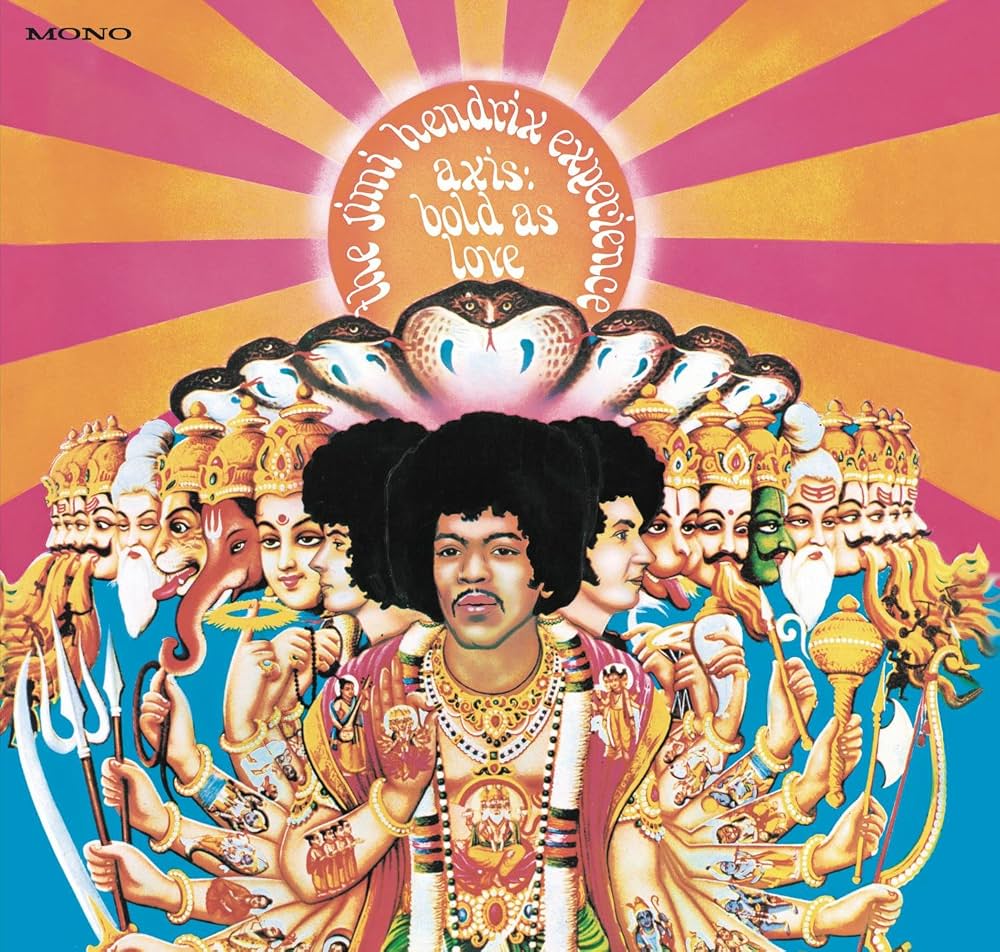
Following the explosive, revolutionary debut of Are You Experienced, The Jimi Hendrix Experience faced the monumental task of evolving their sound without losing the raw, electrified vitality that had captured the global imagination. Axis: Bold as Love, released in late 1967, serves as the definitive document of this maturation. While the debut was an aggressive, front-loaded assault of pure rock energy, Axis finds Hendrix retreating into the sanctuary of the recording studio to treat the album as a cohesive, highly nuanced soundscape. It is a record characterized by its remarkable tonal diversity, showcasing Hendrix not just as the ultimate guitar iconoclast, but as a sophisticated songwriter, colorist, and arranger who used the studio to weave delicate, atmospheric tapestries that felt entirely distinct from the heavy, psychedelic noise of his peers.
This evolution was fueled by the band’s deep commitment to pushing the physical limits of the recording console. Under the obsessive guidance of producer Chas Chandler and engineer Eddie Kramer, the sessions for Axis became a laboratory for experimental stereo panning, phase shifting, and creative overdubbing. Hendrix began using his guitar to mimic a vast, impossible orchestra, layering multiple tracks of phased electric leads, clean, chorus-drenched rhythm parts, and complex, jazz-inflected chord structures. The resulting sound is remarkably fluid—a shimmering, multi-layered experience that prioritizes texture, dynamics, and melodic grace over the blunt-force trauma of his earlier work. It is an exquisite, highly disciplined document that effectively captured the moment the power-trio format transcended its own raw physicality to become a vehicle for high-art atmospheric pop.
The Masterclass of Studio Coloration
At the heart of the album’s brilliance is Hendrix’s newfound obsession with the recording studio as an autonomous musical instrument. Abandoning the straight-to-tape immediacy of his debut, Hendrix spent countless hours with Kramer, exploring the creative potential of panning and studio effects to create a sense of three-dimensional space within the mix.
The centerpiece of this sonic exploration is the title track, “Bold as Love,” a sprawling, six-minute journey that stands as one of the most sophisticated compositions in his entire catalog. The track is a breathtaking display of studio artifice, featuring a complex, phasing-heavy guitar arrangement that moves across the stereo field in a way that feels almost liquid. Hendrix’s lead work here is a revelation; he utilizes his volume knob and pickup selection to transition seamlessly between clean, bell-like tones and deep, saturated sustain, layering multiple parts that weave together into a singular, iridescent texture. It is a stunning, emotionally resonant piece of writing that manages to link the personal, messy reality of love with the expansive, celestial scale of the cosmos, proving that Hendrix could operate as a composer of immense, panoramic vision.
This commitment to studio coloration is equally evident on the hypnotic “Little Wing.” A short, structurally perfect masterclass in economic songwriting, the track is built around a light, shimmering, and rhythmically complex guitar part that sounds as if it were plucked from the air itself. By utilizing his signature thumb-over-the-neck technique to hammer on and pull off around a central chord, Hendrix creates a delicate, harp-like foundation that allows his lead melodies to float effortlessly above the rhythm section. It is a composition of rare, fragile beauty—a masterpiece of understated dynamics that highlights Hendrix’s ability to find immense, overwhelming emotional power within the most minimalist, refined instrumental framework.
The Fusion of Soul, Jazz, and Psychedelic Rhythm
While the record is defined by its atmospheric, studio-based polish, it also demonstrates the band’s deepening engagement with the complex, syncopated rhythms of soul and jazz music. Moving beyond the standard twelve-bar blues frameworks, Axis sees the Experience integrating multi-layered rhythmic textures and intricate, jazz-inflected chord voicings that significantly broadened the band’s melodic vocabulary.
The driving, high-voltage energy of “Spanish Castle Magic” offers a brilliant, kinetic example of this structural evolution. Built around a heavy, descending riff that feels like a darker, more menacing take on the rhythm-and-blues standard, the track utilizes a series of rapid, syncopated stops and starts that force the rhythm section into a state of constant, volatile tension. Noel Redding’s bass playing is noticeably more melodic and interactive here, playing off Hendrix’s jagged guitar runs with a sense of playful, improvisational daring. It is a hard, aggressive, and perfectly crafted rock track that showcases the band’s ability to maintain their explosive, live-wire energy even as they navigated the more complex, cerebral arrangements required by Hendrix’s increasingly sophisticated songwriting.
This rhythmic ingenuity finds a different, far more surreal outlet on “Up from the Skies.” A cool, jazz-inflected mid-tempo track, it features a laid-back, swing-like groove and a wah-wah-drenched guitar part that feels distinctly atmospheric and detached. Hendrix’s vocal is delivered in a soft, contemplative croon, providing a stark, intimate counterpoint to the song’s swirling, echo-laden instrumentation. The lyric, told from the perspective of an alien visitor observing the confusion of modern humanity, is both socially observant and slightly detached, highlighting Hendrix’s ability to inhabit different, unexpected narrative perspectives. It remains a uniquely sophisticated, genre-blurring moment that highlights the band’s willingness to abandon the standard rock-and-roll hierarchy in favor of something far more adventurous, experimental, and atmospheric.
The Legacy of the Tonal Benchmark
The long-term historical impact of Axis: Bold as Love is etched into the very foundation of the hard-rock, blues-rock, and neo-psychedelic movements. By proving that a recording could be a densely constructed, meticulously layered, and deeply nuanced atmospheric statement, Hendrix provided a definitive roadmap for generations of artists who prioritized technical tonal innovation and studio-based sound design over simple, live-take intensity.
The album’s influence on the late-1960s and 1970s guitar-hero boom cannot be overstated. The delicate, multi-tracked guitar textures and the innovative use of studio effects pioneered by Hendrix and Kramer served as the primary creative benchmark for artists ranging from Robin Trower to Eddie Van Halen. Later generations, including the expansive, textured soundscapes of Prince, the intricate, atmospheric guitar work of Radiohead, and the blues-rooted experimentalism of modern psychedelic acts like Khruangbin, are all direct descendants of the structural and tonal DNA codified on this record. Hendrix proved that the guitar could function not just as an instrument of rhythm or lead, but as a primary source of atmospheric color—a discovery that remains the definitive operating principle for any musician who wishes to explore the infinite expressive possibilities of the electric instrument.
Conclusion: A Masterpiece of Harmonic Grace
Axis: Bold as Love remains an extraordinary, vital masterpiece because it captures the Jimi Hendrix Experience at the exact moment they mastered the art of studio-based storytelling. It is an album that feels perfectly composed, elegantly contained, and remarkably forward-thinking, standing as a timeless monument to the power of harmonic innovation, tonal discipline, and deeply observant, panoramic lyricism.
It demands to be experienced in its original, high-fidelity monaural mix—the exact way the engineers balanced the voices to ensure the band’s intricate, layered arrangements functioned as a singular, unified, and shimmering force. In a historical landscape that often prioritizes the louder, more aggressive, and more visceral psych-rock experiments of the mid-1960s, this record stands as a fierce, necessary reminder of the power of nuance, color, and the immense, expansive potential of the electric instrument when pushed into the hands of a true visionary. It is a flawless, genre-defining classic that remains as intricate, haunting, and beautiful today as it was the moment the final chord faded into the ether.
Final Score: 9.5 / 10
This post has already been read 55 times!