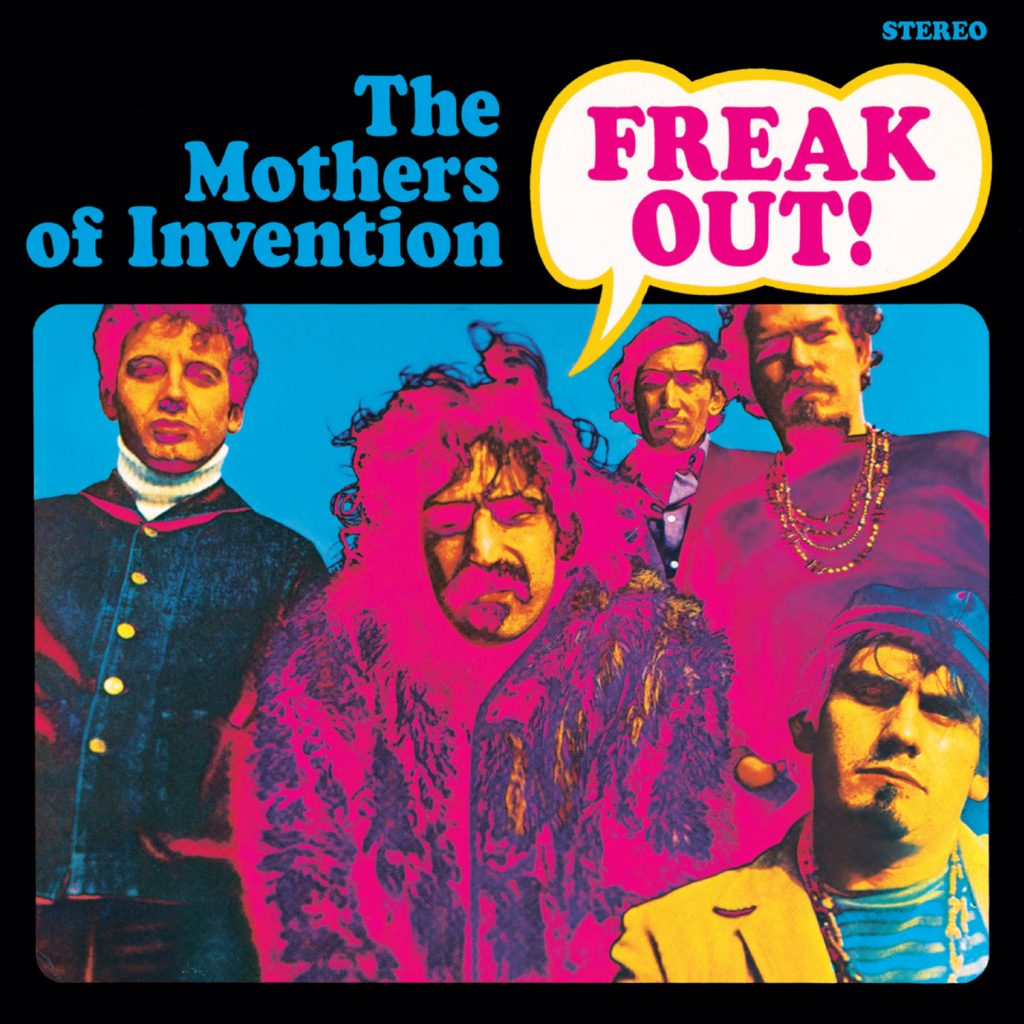
The pristine, overly commercialized facade of American pop culture faced an unprecedented, highly calculated structural assault in June 1966. While the burgeoning counterculture of the mid-sixties was busy romanticizing itself through folk-rock earnestness and early psychedelic escapism, a group of self-described freaks from Los Angeles stepped forward to aggressively mock both the straight establishment and the underground itself. The Mothers of Invention’s debut masterpiece, Freak Out!, stands as a monumental landmark in the history of recorded sound—not only as rock music’s very first ambitious double debut album, but as the moment popular song was permanently forced to collide with Dadaist theater, musique concrète, and blistering socio-political satire. Under the obsessive, hyper-disciplined direction of twenty-five-year-old multi-instrumentalist Frank Zappa, the record completely bypassed standard rock-and-roll cliches to establish an entirely new, highly volatile artistic taxonomy.
Recorded at Sunset Sound Studios under the bewildered supervision of veteran jazz producer Tom Wilson, the album functions as a savage, panoramic interrogation of mid-century American life. Zappa took the basic elements of doo-wop, rhythm and blues, and garage rock, and systematically ran them through a highly sophisticated, avant-garde meat grinder. Freak Out! did not merely offer a collection of catchy singles; it was a carefully curated, long-form assault on conformity, superficiality, and institutionalized brainwashing. By combining flawless, multi-layered vocal arrangements with dense, experimental tape manipulations and complex orchestral excursions, Zappa shattered the boundaries of what a rock band could conceptually achieve, creating a foundational blueprint that directly transformed the landscape of art-rock and progressive music forever.
The Subversion of Doo-Wop and the R&B Blueprint
To fully understand the radical genius of Freak Out!, one must look at how Zappa manipulated his deepest musical love: 1950s vocal doo-wop and rhythm and blues. Rather than simply mimicking these forms, Zappa used them as a Trojan horse, pairing incredibly catchy, melodic, and hyper-authentic street-corner vocal arrangements with deeply transgressive, cynical, and politically loaded lyrics.
The tracking across the first half of the record operates on a fascinating level of sonic double-think. Songs like “Go Cry on Somebody Else’s Shoulder” and “You Didn’t Try to Call Me” feature gorgeous, cascading vocal harmonies from Ray Collins and intricate, soulful horn lines that perfectly mirror the romantic vulnerability of classic R&B. Yet, the vocal delivery is pushed to an almost parodic extreme, with Zappa injecting low, mocking spoken-word commentary and deliberate harmonic dissonances that actively dismantle the sentimentality of the genre. Zappa was weaponizing nostalgia, utilizing the comforting formulas of his youth to expose the hollow, commercialized illusions of teenage romance, forcing the listener to confront the artificiality of pop-music escapism while simultaneously grooving to its rhythm.
This satirical subversion reaches its apex on the brilliant “Hungry Freaks, Daddy.” Driven by a heavy, fuzzy, and distinctly distorted guitar riff from Zappa that explicitly mimics the opening of The Rolling Stones’ “Satisfaction,” the track immediately establishes a dark, confrontational tone. The song completely discards traditional romantic subject matter to deliver a blistering, panoramic indictment of the American educational system and the conformist, middle-class suburban lifestyle. Zappa pairs a driving, garage-rock groove with a chaotic tapestry of kazoos, orchestral percussion, and frantic acoustic strums, creating a dense, overwhelming sonic texture that perfectly captures the underlying paranoia of the era.
The Masterclass of Cynical Prophesy
As the album progresses, the pop veneer begins to rapidly decay, giving way to a series of increasingly experimental, dark, and politically charged compositions that established Zappa as the ultimate, clear-eyed prophet of counterculture disillusionment.
In “Trouble Every Day,” Zappa delivers what is arguably the most searing, unvarnished piece of social commentary recorded in the 1960s. Written in direct response to the 1965 Watts riots, the track abandons all satirical irony for a raw, driving, and heavily syncopated blues-rock assault. Driven by a relentless harmonica groove, a pounding bassline, and a stinging, overdriven guitar solo, Zappa delivers a rapid-fire, near-spoken-word vocal that systematically eviscerates the sensationalist mainstream news media for corporate exploitation and racial instigation. When he sings, “You know the hole in the sky / Is a space in your head / If you don’t care to think / You’re as good as dead,” he wasn’t just predicting the media landscape of the late-twentieth century; he was mapping out a cold, philosophical defense of intellectual autonomy that became the defining core of his entire career.
This biting critical gaze is turned directly toward the plastic conformity of the youth culture itself on “Who Are the Brain Police?” The track stands as one of the most genuinely terrifying, avant-garde pop songs ever committed to tape. Built around a slow, weeping, and heavily delayed waltz rhythm, the song features a deeply unsettling, filtered vocal delivery that drips with psychological dread. As the music moves from a somber croon to sudden, explosive walls of industrial noise, screaming instruments, and chaotic tape speed alterations, Zappa forces the listener to confront the terrifying reality of state-sponsored psychological control and collective intellectual surrender. It was a bleak, monolithic piece of psych-rock that offered absolutely no comfort to a generation looking for a simple, drug-fueled escape.
The Cacophony of the Ritual Freak-Out
The entire conceptual framework of the album culminates on the unprecedented, monumental second disc, where Zappa completely abandons traditional song structures to deliver a radical, side-long exploration of pure avant-garde noise and performance art.
The ultimate climax arrives with “Return of the Son of Monster Magnet,” a twelve-minute epic that occupies the entirety of Side Four. This track is an absolute, jaw-dropping subversion of commercial music history, constructed around a massive, late-night studio session where Zappa invited dozens of members of the Los Angeles underground scene to pick up auxiliary percussion, scream, groan, and chant rhythmically into a forest of highly sensitive studio microphones. Zappa then took these raw, chaotic recordings and spent weeks meticulously editing, overdubbing, and filtering the tapes, utilizing early electronic music techniques, extreme stereo panning, and the complex structural editing philosophies of avant-garde composer Edgar Varèse.
The resulting soundscape is an incredible, terrifying, and completely chaotic collage of concrete music. The track moves through dense movements of polyrhythmic drumming, unhinged vocal hysteria, electronic squeals, and sudden, deep chasms of absolute silence. It was a performance that completely rejected the established rules of melody, rhythm, and harmony, turning the recording studio into a high-stakes sonic laboratory. Zappa was proving that noise itself could function as legitimate organization, crafting a visceral, chaotic monument that documented the pure, unmediated energy of the L.A. underground freak scene right before it was sanitized and repackaged for corporate consumption.
The Architectural Blueprint for Experimental Rock
The historical and cultural fallout of Freak Out! permanently altered the artistic parameters of global popular music, establishing a direct line of creative heredity that completely rewrote the possibilities of the studio album format. By organizing a double album around a singular, cohesive, and deeply satirical conceptual framework, The Mothers of Invention proved that rock music could operate as a sophisticated vehicle for high art and avant-garde philosophy.
The record served as an essential, world-shifting textbook for the absolute peak of the 1960s rock revolution. Paul McCartney was famously transfixed by this record, repeatedly citing Freak Out! as the direct, primary creative inspiration behind the unified, conceptual architecture of Sgt. Pepper’s Lonely Hearts Club Band. Beyond The Beatles, the album’s fearless embrace of concrete music, noise, and studio experimentation laid down the foundational structural DNA for the entire Krautrock movement, the dark art-punk of Velvet Underground, the theatrical industrialism of Alice Cooper, and later generations of avant-garde experimentalists from Sonic Youth to Captain Beefheart. Zappa proved that pop culture could be turned inside out, using its own financial and technical machinery to construct a permanent monument of absolute artistic subversion.
Conclusion: A Masterpiece of Sovereign Disruption
Freak Out! remains an extraordinary, white-hot artifact of music history because its radical, confrontational brilliance has lost absolutely none of its razor-sharp edge. It is an album born from an intense, immediate need to dismantle social complacency, standing as a timeless monument to the necessity of intellectual independence, technical discipline, and fearless creative execution.
It demands to be experienced in its original, punchy, and highly dynamic monaural mix—the exact way Zappa meticulously organized the frequencies to ensure that the satirical vocal harmonies and the chaotic avant-garde noise collided with maximum visceral impact. In a historical landscape that often romanticizes the mid-1960s through a soft lens of peaceful optimism, this record stands as a fierce, necessary reminder of rock-and-roll’s capacity for dangerous, high-concept intellectual disruption. It is an flawless, genre-defining classic that remains the ultimate Rosetta Stone for any artist who dares to step up to a microphone and use noise to make the world think.
Final Score: 10 / 10
This post has already been read 60 times!