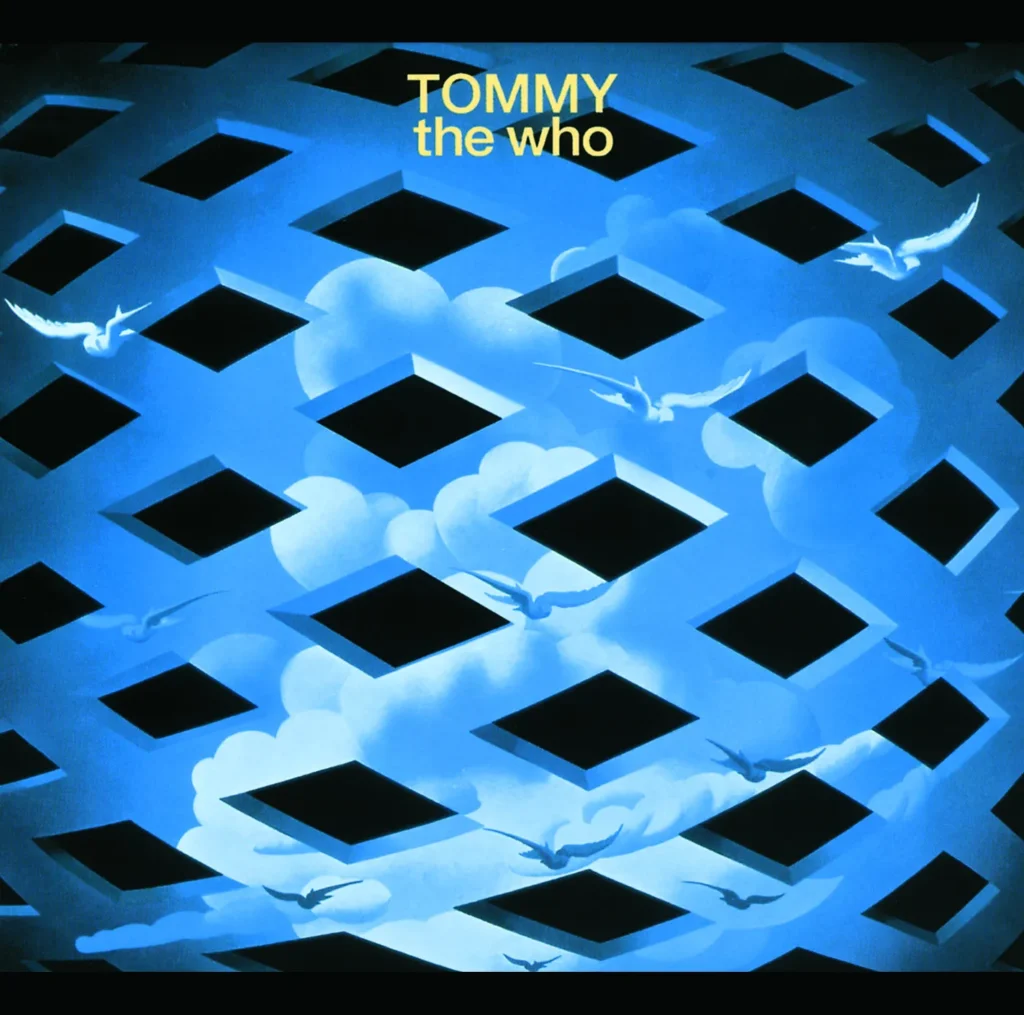
Released in May 1969, Tommy stands as a watershed moment in the history of popular music, representing the first true, fully realized rock opera. While bands like The Beatles and The Rolling Stones had toyed with conceptual cohesion, Pete Townshend—fueled by an intense, singular artistic vision—crafted an expansive, double-album narrative that demanded rock music be taken seriously as a vessel for complex, operatic storytelling. At a time when the counterculture was fracturing under the weight of its own excess, The Who retreated into the studio to create a dense, highly disciplined exploration of trauma, sensory perception, and the nature of salvation. It was a massive, high-stakes gamble that permanently shattered the limitations of the pop format, forcing the industry to acknowledge that an album could function not just as a collection of songs, but as a unified, narrative-driven work of art.
The production, masterminded by the band alongside Kit Lambert, is a testament to the power of ambition over traditional constraints. The band successfully navigated the transition from their raw, mod-era roots into a sophisticated, chamber-rock ensemble, utilizing acoustic guitars, intricate piano arrangements, and theatrical vocal layering to support the sprawling narrative of the titular “deaf, dumb, and blind” boy. Tommy remains a pivotal document, capturing a group at the absolute apex of their creative and technical synergy, bridging the gap between high-art classical aspirations and the explosive, primal energy of the arena-rock they would soon pioneer.
The Masterclass of Narrative Ambitition
At the core of the album’s success is Pete Townshend’s relentless, uncompromising commitment to his conceptual narrative. Moving beyond the standard romantic or protest themes of the era, the story of Tommy—a child who experiences a traumatic event and subsequently retreats into a catatonic state, only to find enlightenment through the unlikely medium of pinball—is daring, bizarre, and profoundly human. Townshend treated his lyrics as a libretto, utilizing recurrent motifs, character-specific perspectives, and an intricate, leitmotif-based structure that tied the album together with the logic of a stage production.
The undisputed centerpiece of this narrative drive is “Pinball Wizard.” A masterclass in rhythmic precision and melodic hook-writing, the track serves as the album’s primary cultural touchstone, showcasing the band’s ability to condense complex, thematic narrative into a tight, accessible, and radio-friendly package. The acoustic guitar intro—a soaring, frantic strumming pattern that establishes the track’s manic energy—serves as a perfect counterpoint to the powerful, explosive drums of Keith Moon and the driving, melodic bass of John Entwistle. It is an exhilarating, perfectly executed piece of rock storytelling that managed to break through the narrative density of the album to become a standalone classic, demonstrating that conceptual high art could still exist within the framework of popular song.
This narrative commitment is matched by the band’s ability to seamlessly weave in moments of profound, quiet introspection, such as the haunting “See Me, Feel Me” / “Listening to You.” Serving as the album’s spiritual resolution, the track builds from a fragile, vocal-led ballad into a powerful, anthemic crescendo that perfectly captures the sense of transcendent, communal enlightenment at the narrative’s climax. The layering of choral-like backing vocals, surging organ lines, and Roger Daltrey’s raw, commanding delivery creates an atmosphere of immense, emotional gravity, proving that The Who could operate with the narrative scope and complexity of a theatrical work of art without ever sacrificing their essential, muscular rock identity.
The Fusion of Classical Structure and Arena Power
While the album is defined by its sprawling, ambitious concept, the record’s brilliance is equally evident in its ability to synthesize classical orchestral movements with cutting-edge, power-pop studio experimentation. The band utilized the recording studio to breathe new, vital life into musical styles that were often considered disparate, effectively creating a modern, operatic rock language that felt both culturally grounded and entirely future-forward.
The iconic, instrumental “Overture” remains one of the most remarkable, genre-defying experiments in the band’s career. It introduces the primary themes and character motifs that will be explored throughout the narrative, weaving them together with a precision and a level of melodic sophistication that feels distinctly classical in its construction. The arrangement is a masterclass in dynamic tension, utilizing shifting time signatures, sudden, explosive shifts in volume, and complex, layered instrumentation to create a sonic landscape that is as structurally rigorous as it is emotionally immediate. It is a stunning, deeply sincere piece of composition that proved rock music could incorporate symphonic, non-linear musical traditions without losing its visceral, rhythmic efficacy.
This fusion of the classical and the theatrical is pushed to its absolute, joyful extreme on “I’m Free.” Inspired by the narrative’s central themes of liberation and discovery, the track utilizes a bright, upbeat, and rhythmically precise pop-rock arrangement to recreate the sense of ecstatic relief that accompanies Tommy’s sensory awakening. The band recorded the track with a focus on melodic clarity, utilizing sharp, punctuating guitar stabs and a driving, infectious rhythm that emphasizes the song’s themes of movement and openness. It remains a brilliantly effective, highly evocative piece of high-concept studio art, showcasing the band’s willingness to abandon the heavy, distorted sound of their earlier work in favor of an atmospheric, theatrical experience that served the specific, visual requirements of the song’s narrative.
The Legacy of the Rock Opera Standard
The historical fallout of Tommy permanently altered the structural DNA of the late-1960s and early-1970s music industry. By achieving massive commercial success while simultaneously championing an avant-garde, concept-driven, and deeply ambitious aesthetic, the record provided the essential, highly visible blueprint for the entire progressive and concept-driven pop movement.
The album’s influence on the broader industry cannot be overstated; it provided the commercial legitimacy required for major labels to prioritize long-form, artist-driven statements over the standard, short-term hit-single model. The record established a permanent creative template for the “album era,” directly shaping the sonic identities of bands like Pink Floyd, Yes, and Genesis. By successfully synthesizing the sophisticated, melodic tradition of the pop song with a dense, experimental studio aesthetic, The Who permanently expanded the parameters of what popular music could conceptually achieve, proving that the recording studio was not merely a place to capture a song, but an essential, collaborative instrument in the creation of a definitive, modern work of art.
Conclusion: A Masterpiece of Transformative Ambition
Tommy remains an extraordinary, vital masterpiece because it captures the group at the exact moment they realized the infinite, expansive potential of the studio to manifest their inner world. It is an album that feels perfectly composed, elegantly contained, and remarkably forward-thinking, standing as a timeless monument to the power of melodic grace, studio innovation, and deeply observant, panoramic lyricism.
It demands to be experienced in its original, high-fidelity mix—the exact way the band balanced the instruments to ensure the complex, layered arrangements functioned as a singular, unified force. In a historical landscape that often prioritizes the louder, more visceral rock experiments of the late-1960s, this record stands as a fierce, necessary reminder of the power of songcraft, tonal discipline, and the immense potential of the rock album as a definitive work of artistic expression. It is a flawless, genre-defining classic that remains as intricate, haunting, and beautiful today as it was the moment the final chord faded into the ether.
Final Score: 9.5 / 10
This post has already been read 65 times!