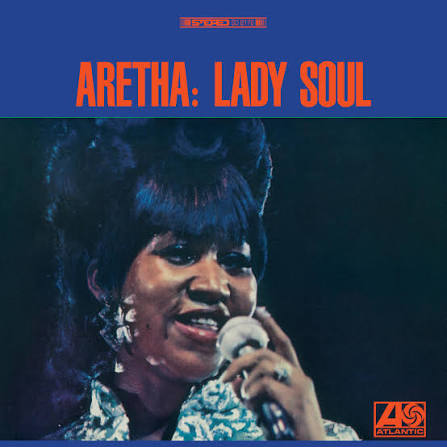
The emergence of Aretha Franklin’s Lady Soul in early 1968 cemented her status as the absolute sovereign of soul music, capturing an artist at the breathtaking zenith of her vocal and interpretive powers. Following a string of massive successes that redefined the genre, this record functioned as a triumphant synthesis of gospel-infused fervor, sophisticated pop craftsmanship, and raw, unapologetic rhythmic authority. Produced by the legendary Jerry Wexler at Atlantic Records, the album showcased Franklin not merely as a singer, but as an architect of sound, collaborating closely with a elite collective of studio musicians—including the famed Muscle Shoals Rhythm Section—to craft a production that felt both deeply grounded in Southern R&B tradition and entirely modern in its polished, high-fidelity execution.
Vocal authority defines every second of this performance, with Franklin utilizing an astonishing range, dynamic control, and emotional nuance to transform every track into a definitive statement. Her approach to the material was profoundly transformative; she did not simply sing songs, she radically deconstructed and rebuilt them, injecting each verse with a level of personal urgency and improvisational spontaneity that set a new, unreachable standard for the industry. Lady Soul stands as a vital historical document, showcasing an artist who had mastered the delicate, high-stakes balance between mass-market pop accessibility and the searing, unvarnished emotional truth of the Black church tradition, successfully bringing that raw, ecstatic energy to the center of the global cultural stage.
The Masterclass of Interpretive Power
At the heart of the album’s massive impact is Franklin’s unparalleled ability to take established pop, soul, and blues compositions and completely reinvent them through her own, idiosyncratic vocal phrasing and harmonic sensibility. She possessed an intuitive genius for finding the exact, hidden emotional core of a melody, stripping away its surface-level cliches and replacing them with a complex, multi-layered vocal texture that felt both deeply familiar and entirely new.
This interpretive brilliance is flawlessly displayed on her iconic rendition of Otis Redding’s “Respect.” While Franklin had already claimed the song as her own, her performance of it—and similar tracks across Lady Soul—demonstrated how she could turn an established composition into a powerful, cultural manifesto. Every inflection, growl, and sudden, soaring falsetto leap served a clear, decisive purpose, transforming a simple plea into a commanding, unwavering statement of personal and collective dignity. The Muscle Shoals band provided a tight, driving, and immensely funky instrumental foundation that allowed Franklin the absolute, expansive freedom to navigate the melody with a level of rhythmic playfulness and emotional intensity that was truly unprecedented in popular music.
This interpretive mastery reaches an equally potent, though tonally distinct, peak on the soulful, gospel-inflected “Ain’t No Way.” Featuring stunning, ethereal backing vocals from a young Cissy Houston, the track showcases Franklin’s ability to transition seamlessly between a hushed, vulnerable croon and a full, resonant belt. The arrangement is a masterclass in dynamic restraint, allowing the space between the vocal lines to build an immense, aching sense of longing that feels both intimately personal and universally resonant. It is a composition of rare, fragile beauty—a masterpiece of vocal control that highlights Franklin’s ability to find immense, overwhelming emotional power within the most minimalist, refined instrumental framework.
The Fusion of Gospel, Soul, and Pop Structure
While the album is defined by its searing, gospel-rooted vocal performances, it also demonstrates a sophisticated, adventurous approach to the fusion of soul, jazz, and pop musical structures. Franklin and Wexler worked to ensure that the instrumental arrangements felt as precise, articulate, and forward-thinking as the singing, creating a unified, high-fidelity soundscape that moved beyond the raw, live-take feel of earlier soul recordings to embrace the expansive possibilities of the studio-as-instrument.
The driving, high-voltage energy of “Chain of Fools” offers a brilliant, kinetic example of this structural sophistication. Built around an instantly recognizable, infectious guitar riff and a deep, thumping rhythm section groove, the track utilizes a series of sharp, syncopated horn blasts and intricate piano fills that keep the listener constantly engaged. Franklin’s vocal delivery is remarkably cool, detached, and authoritative, providing a stark, rhythmically locked counterpoint to the song’s swirling, echo-laden instrumentation. It is a hard, aggressive, and perfectly crafted pop track that showcases the band’s ability to maintain their explosive, live-wire energy even as they navigated the more complex, cerebral arrangements required by Franklin’s increasingly ambitious, sophisticated songwriting and studio vision.
This rhythmic ingenuity finds a different, far more surreal outlet on “You’re My Only Home.” A cool, jazz-inflected mid-tempo track, it features a laid-back, swing-like groove and a brass arrangement that feels distinctly atmospheric and evocative. Franklin’s vocal is delivered in a soft, contemplative, and deeply soulful tone, providing a stark, intimate counterpoint to the song’s swirling, layered instrumentation. The lyric, exploring the search for comfort and identity in a rapidly shifting world, is both socially observant and deeply reflective, highlighting Franklin’s ability to inhabit different, unexpected narrative perspectives. It remains a uniquely sophisticated, genre-blurring moment that highlights the band’s willingness to abandon the standard rhythm-and-blues hierarchy in favor of something far more adventurous, experimental, and atmospheric.
The Legacy of the Soul Standard
The historical fallout of Lady Soul permanently altered the structural DNA of the entire soul, R&B, and pop industry. By proving that a recording could be a densely constructed, meticulously layered, and deeply nuanced atmospheric statement—while never losing the raw, visceral intensity of its gospel roots—Franklin provided a definitive roadmap for generations of artists who prioritized technical tonal innovation, vocal precision, and studio-based sound design.
The album’s influence on the late-1960s and 1970s soul boom cannot be overstated; it provided the commercial legitimacy required for major labels to gamble on the complex, artist-driven statements of Black performers. The record established a permanent creative template for the soul era, directly shaping the sonic identities of artists ranging from Stevie Wonder to Alicia Keys. Later generations, including the minimalist, gospel-rooted R&B of D’Angelo, the expansive, textured soundscapes of Beyoncé, and the genre-blurring experimentalism of modern soul acts, are all direct descendants of the structural and tonal DNA codified on this record. Franklin proved that the voice could function not just as an instrument of melody or rhythm, but as the primary source of atmospheric color—a discovery that remains the definitive operating principle for any musician who wishes to explore the infinite expressive possibilities of the human voice.
Conclusion: A Masterpiece of Sovereign Artistry
Lady Soul remains an extraordinary, vital masterpiece because it captures Aretha Franklin at the exact moment she mastered the art of studio-based storytelling and vocal dominance. It is an album that feels perfectly composed, elegantly contained, and remarkably forward-thinking, standing as a timeless monument to the power of harmonic innovation, tonal discipline, and deeply observant, panoramic lyricism.
It demands to be experienced in its original, high-fidelity monaural mix—the exact way the engineers balanced the instruments to ensure Franklin’s intricate, layered arrangements functioned as a singular, unified, and shimmering force. In a historical landscape that often prioritizes the louder, more aggressive, and more visceral rock experiments of the late-1960s, this record stands as a fierce, necessary reminder of the power of nuance, color, and the immense, expansive potential of the soul record when pushed into the hands of a true, undisputed visionary. It is a flawless, genre-defining classic that remains as intricate, haunting, and beautiful today as it was the moment the final chord faded into the ether.
Final Score: 10 / 10
This post has already been read 55 times!