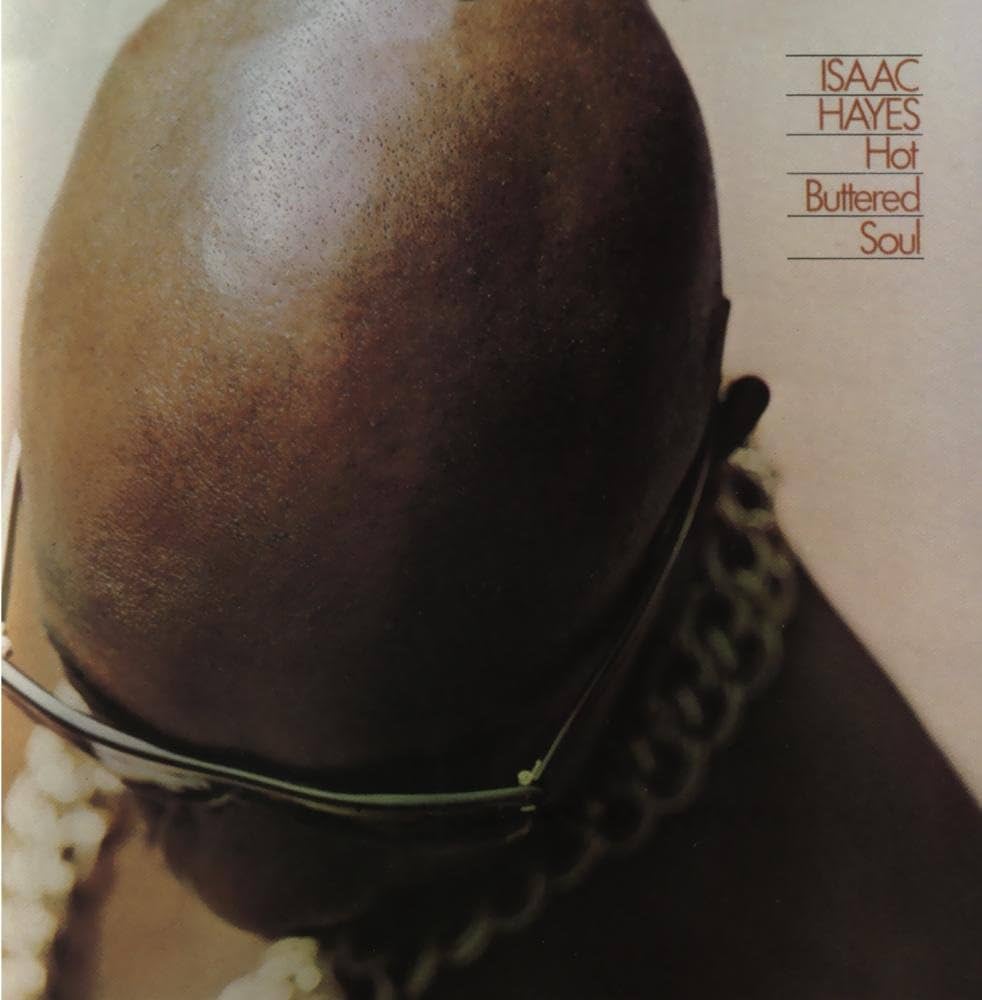
The release of Isaac Hayes’ Hot Buttered Soul in 1969 fundamentally reshaped the architecture of soul music, effectively pioneering the concept of the long-form, cinematic, and deeply orchestral soul album. Departing from the standard three-minute radio-single format, Hayes utilized the recording studio as an autonomous tool to construct expansive, dramatic arrangements that prioritized atmospheric depth, slow-burning rhythmic intensity, and a highly polished, sophisticated aesthetic. By seamlessly integrating classical orchestration with the raw, rhythmic power of Memphis soul, Hayes established a permanent creative template that expanded the parameters of popular music, demonstrating that the soul album could be as intellectually demanding, aesthetically surreal, and atmospherically complex as the wildest, art-rock experiments of its era.
The Masterclass of Orchestral Soul
At the heart of the album’s brilliance is Hayes’s unparalleled capacity to craft long-form, multi-part compositions that function less like traditional songs and more like dramatic, cinematic journeys. He dismantled the conventional boundaries of R&B, incorporating lavish, sweeping horn arrangements and lush, symphonic string sections that provided a luxurious, cinematic bed for his own deep, spoken-word monologues and emotive, gravelly vocal delivery.
This cinematic ambition is perfectly embodied in the album’s opening, 18-minute interpretation of “Walk On By.” Hayes systematically deconstructs the pop standard, slowing the tempo to an agonizing, hypnotic crawl and rebuilding it as a slow-burning, dramatic suite that emphasizes the raw, psychological weight of heartbreak. The arrangement is a masterclass in dynamic control, utilizing expansive orchestral swells and delicate, space-filled guitar interplay to build a monumental sense of emotional tension that lingers, undisturbed, for the entirety of the track’s runtime. It remains one of the most stunning, definitive achievements in soul music history, showcasing Hayes’s ability to take the familiar and elevate it through technical discipline and orchestral vision into something haunting, universal, and profoundly timeless.
This commitment to atmospheric precision is equally evident on the closing, 12-minute epic “By the Time I Get to Phoenix,” which features a characteristic, lengthy spoken-word introduction that sets a moody, evocative scene before the song ever begins. Hayes utilized the track’s extensive duration to explore the complex, shifting emotional landscape of the narrative, allowing the rhythm section and the orchestral elements to interact in a slow, improvisational dance that mirrors the speaker’s internal, unfolding realization. It is a composition of rare, fragile beauty—a masterpiece of vocal and instrumental patience that highlights Hayes’s ability to find immense, overwhelming emotional power within the most minimalist, refined instrumental framework, proving that pop-based music could operate with the narrative scope and complexity of a theatrical work of art.
The Fusion of Cinematic Texture and Rhythmic Power
While Hot Buttered Soul is defined by its sweeping, orchestral ambition, the record’s brilliance is equally evident in its foundational engagement with the tight, punchy, and rhythmically authoritative sound of Stax-era Memphis soul. Hayes worked to ensure that the instrumental arrangements—anchored by the legendary Bar-Kays—felt as articulate, funky, and rhythmically precise as the vocal performances, creating a unified, high-fidelity soundscape that embraced the expansive, orchestral possibilities of the studio without ever losing the raw, visceral intensity of his roots.
The driving, high-voltage energy of “Hyperbolicsyllabicsesquedalymistic” offers a brilliant, kinetic example of this structural sophistication. Built around a hard-hitting, funky keyboard riff and a relentless, thumping rhythm section, the track utilizes sharp, punchy horn blasts and intricate, syncopated drum fills that keep the listener constantly engaged throughout its nine-minute duration. Hayes’s vocal delivery is remarkably authoritative and rhythmically locked, providing a stark, cool counterpoint to the song’s swirling, echo-laden instrumentation. It is a hard, aggressive, and perfectly crafted track that showcases the band’s ability to maintain their explosive, live-wire energy even as they navigated the more complex, cerebral arrangements required by Hayes’s increasingly ambitious, sophisticated studio vision.
This rhythmic ingenuity finds a different, far more surreal outlet on “One Woman,” a mid-tempo track that features a smooth, swing-like groove and a brass arrangement that feels distinctly atmospheric and evocative. Hayes’s vocal is delivered in a soft, contemplative, and deeply soulful tone, providing a stark, intimate counterpoint to the song’s swirling, layered instrumentation. The lyric, exploring the search for loyalty and identity, is both socially observant and deeply reflective, highlighting Hayes’s ability to inhabit different, unexpected narrative perspectives. It remains a uniquely sophisticated, genre-blurring moment that highlights the production team’s willingness to abandon the standard rhythm-and-blues hierarchy in favor of something far more adventurous, experimental, and atmospheric.
The Legacy of the Cinematic Soul Standard
The historical fallout of Hot Buttered Soul permanently altered the structural DNA of the entire soul, R&B, and pop industry. By proving that a recording could be a densely constructed, meticulously layered, and deeply nuanced orchestral statement—while never losing the raw, visceral intensity of its Stax roots—Hayes provided a definitive roadmap for generations of artists who prioritized technical tonal innovation, atmospheric precision, and studio-based sound design.
The album’s influence on the late-1960s and 1970s soul boom cannot be overstated; it provided the commercial legitimacy required for major labels to gamble on the complex, artist-driven statements of Black performers. The record established a permanent creative template for the soul era, directly shaping the sonic identities of artists ranging from Curtis Mayfield to Barry White. Later generations, including the minimalist, gospel-rooted R&B of D’Angelo, the expansive, textured soundscapes of Beyoncé, and the genre-blurring experimentalism of modern soul acts, are all direct descendants of the structural and tonal DNA codified on this record. Hayes proved that the soul album could function not just as a collection of hits, but as a primary source of atmospheric color and narrative scope—a discovery that remains the definitive operating principle for any musician who wishes to explore the infinite expressive possibilities of the studio.
Conclusion: A Masterpiece of Sovereign Artistry
Hot Buttered Soul remains an extraordinary, vital masterpiece because it captures Isaac Hayes at the exact moment he mastered the art of studio-based storytelling and orchestral dominance. It is an album that feels perfectly composed, elegantly contained, and remarkably forward-thinking, standing as a timeless monument to the power of harmonic innovation, tonal discipline, and deeply observant, panoramic lyricism.
It demands to be experienced as a definitive, high-fidelity historical document—the exact way the engineers balanced the instruments to ensure Hayes’s intricate, layered arrangements functioned as a singular, unified, and shimmering force. In a historical landscape that often prioritizes the louder, more aggressive, and more visceral rock experiments of the late-1960s, this record stands as a fierce, necessary reminder of the power of nuance, color, and the immense, expansive potential of the soul record when pushed into the hands of a true, undisputed visionary. It is a flawless, genre-defining classic that remains as intricate, haunting, and beautiful today as it was the moment the final chord faded into the ether.
Final Score: 10 / 10
This post has already been read 53 times!