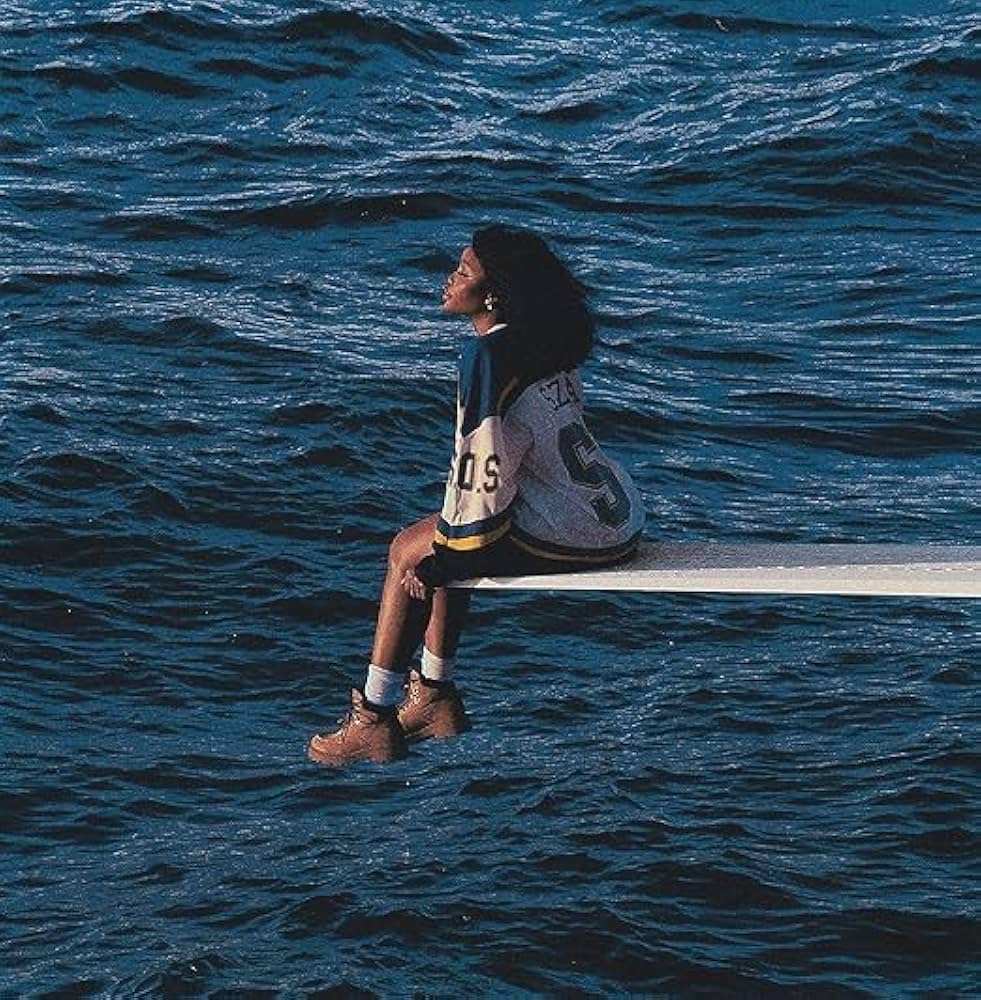
Waiting five years to follow a critically acclaimed debut is a dangerous game. Expectations grow, trends change, and every new song is scrutinized against what came before. After Ctrl established SZA as one of the most compelling voices in contemporary R&B, the pressure surrounding its successor became enormous. Fortunately, SOS doesn’t try to duplicate its predecessor. Instead, it expands SZA’s musical world in almost every direction imaginable.
Released on December 9, 2022, SOS is an ambitious, genre-blurring album that refuses to stay in one lane. While contemporary R&B remains its foundation, the record comfortably incorporates pop, alternative rock, hip-hop, folk, indie, trap, soul, and even touches of country. Rather than sounding unfocused, those stylistic detours reinforce the emotional instability at the heart of the album.
Lyrically, SZA continues exploring insecurity, love, revenge, loneliness, self-worth, jealousy, heartbreak, and personal growth with a level of honesty that few mainstream artists consistently achieve. She is rarely interested in presenting herself as either victim or hero. Instead, she embraces contradiction, allowing flawed emotions and conflicting impulses to exist side by side.
The result is one of the defining pop and R&B albums of the 2020s.
Album Overview
At over an hour in length and spanning twenty-three tracks, SOS could easily have become bloated.
Remarkably, it maintains momentum through constant stylistic variety.
Working with producers including Carter Lang, Rob Bisel, ThankGod4Cody, Benny Blanco, Babyface, and others, SZA constructs an album where intimate acoustic ballads coexist with hard-hitting hip-hop, dreamy R&B, distorted guitars, and lush pop production.
The sequencing plays a significant role in its success.
High-energy tracks frequently interrupt quieter moments before the listener becomes too comfortable, giving the album an unpredictable quality that mirrors its emotional themes.
Even when individual songs explore familiar topics, the changing musical palette prevents repetition from becoming a problem.
Songwriting
SZA’s songwriting has become noticeably sharper since Ctrl.
“SOS” opens the album with confidence and urgency, immediately establishing the emotional volatility that follows.
“Kill Bill” became the record’s signature hit for good reason. Built around a deceptively relaxed groove, it transforms jealousy into darkly humorous storytelling without losing its emotional authenticity.
“Seek & Destroy” blends vulnerability with alternative rock textures, while “Low” delivers one of the album’s most infectious rhythmic performances.
“Love Language” and “Blind” reveal SZA’s gift for emotionally nuanced songwriting, balancing tenderness with uncertainty.
“Nobody Gets Me” strips away much of the production, becoming one of the album’s most affecting moments through its simplicity and sincerity.
“Ghost in the Machine,” featuring Phoebe Bridgers, explores emotional isolation with remarkable subtlety, while “Shirt” and “Good Days” continue showcasing SZA’s ability to write melodies that linger long after the songs end.
Although a handful of tracks in the latter half don’t reach the extraordinary standard of the album’s highlights, the overall level of songwriting remains consistently impressive.
Performance
SZA delivers one of the strongest vocal performances of her career.
Her voice possesses an unusual flexibility, moving effortlessly between airy falsettos, conversational phrasing, soulful melodies, and rapid-fire rhythmic passages. Rather than striving for technical perfection, she prioritizes emotional honesty, allowing vulnerability to shape nearly every performance.
Her phrasing remains particularly distinctive.
Small vocal inflections, unexpected melodic turns, and conversational delivery make even relatively simple lines feel deeply personal.
The guest appearances are also used effectively.
Phoebe Bridgers provides haunting contrast on “Ghost in the Machine,” while Don Toliver, Travis Scott, and the late Ol’ Dirty Bastard contribute memorable moments without distracting from SZA’s vision.
Throughout the album, she remains firmly at the center.
Production
The production is among SOS‘s greatest strengths.
Every genre shift feels natural rather than forced. Acoustic guitars, shimmering synthesizers, trap drums, distorted bass, orchestral textures, and soulful keyboards all coexist without compromising the album’s cohesion.
The mixes remain spacious despite their complexity.
Vocals consistently occupy the emotional foreground while instrumentation subtly reinforces each song’s atmosphere.
Unlike many contemporary pop albums that chase streaming trends, SOS often prioritizes mood and storytelling over immediate hooks, giving it greater longevity.
Repeated listening continually reveals new production details.
Standout Tracks
“Kill Bill”
One of the defining songs of the decade. Clever, catchy, emotionally conflicted, and instantly memorable.
“Nobody Gets Me”
A beautifully understated ballad showcasing SZA’s vulnerability and vocal maturity.
“Ghost in the Machine”
An introspective highlight featuring an excellent guest appearance from Phoebe Bridgers.
“Good Days”
Dreamlike production and graceful melodies combine into one of SZA’s finest recordings.
“Blind”
A stunning meditation on self-worth that quietly ranks among the album’s strongest compositions.
Weak Points
The album’s greatest ambition occasionally becomes its biggest weakness.
At twenty-three tracks, SOS contains enough material for a masterpiece but could have benefited from trimming several songs. While the quality remains consistently high, a tighter running order would have strengthened the overall impact.
Additionally, the constant stylistic shifts, although impressive, occasionally interrupt the emotional flow established by surrounding songs.
Neither issue significantly diminishes the album’s achievements, but both prevent it from reaching absolute perfection.
Legacy
SOS confirmed that Ctrl was no fluke.
The album became both a massive commercial success and a critical triumph, spending multiple weeks atop the charts and producing some of the defining singles of the decade. More importantly, it demonstrated that mainstream R&B could remain adventurous without sacrificing accessibility.
Its influence is already evident across contemporary pop and R&B, particularly in its willingness to blur genre boundaries while maintaining deeply personal songwriting.
For SZA herself, SOS cemented her position among the most important songwriters and performers of her generation.
It is an album that successfully expands her artistic identity rather than simply repeating earlier successes.
Final Score: 9/10
SOS is an ambitious, emotionally rich, and consistently rewarding album that further establishes SZA as one of the defining artists of modern R&B. Exceptional songwriting, adventurous production, and deeply expressive performances allow the record to explore an impressive range of musical styles without losing its identity. Although its lengthy runtime occasionally dilutes its impact, the strength of its best songs and its fearless artistic scope make it one of the standout albums of the 2020s.
This post has already been read 87 times!