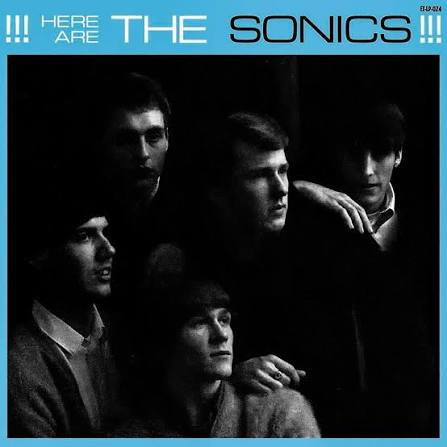
The pristine, heavily manicured landscape of mid-sixties American pop radio was violently disrupted by a sound so feral, abrasive, and structurally primitive that it felt less like commercial music and more like an act of sonic vandalism. Emerging from the rainy, isolated blue-collar hubs of the Pacific Northwest, The Sonics bypassed the polite harmonies of the British Invasion entirely, opting instead to maximize the destructive limits of magnetic tape. Their monumental debut album, Here Are The Sonics!!!, stands as the absolute ground zero for garage rock and proto-punk. It is a record fueled by cheap amplifiers, blown-out microphones, and a collective disregard for conventional studio decorum—a white-hot blast of rhythm and blues stripped of its elegance and injected with pure, unadulterated teenage menace.
Recorded in a rudimentary two-track studio in Seattle under the pragmatic guidance of engineer Buck Ormsby, the album functions as a masterclass in calculated sonic violence. While contemporary acts were exploring increasingly complex pop arrangements, Gerry Roslie, Andy Parypa, Larry Parypa, Bob Bennett, and Rob Lind chose to narrow their focus, refining a raw, overdriven aesthetic that prioritized physical impact over technical precision. Here Are The Sonics!!! did not merely capture a performance; it documented a sonic assault. It became a vital blueprint for the counterculture underground, proving that a handful of basic chords, when pushed through absolute volume and severe harmonic distortion, could capture the volatile reality of youth rebellion far more effectively than any orchestral arrangement.
The Engineering of Overdriven Distortion
To understand the sheer sonic weight of this record, one must look at the technical subversions executed during the tracking sessions. Larry Parypa’s guitar work abandoned the clean, treble-heavy surf tones common to the era. Instead, he systematically abused his equipment, tearing holes in his amplifier cones and using early fuzz boxes to achieve a thick, buzzy, and deeply aggressive tone. His riffs were blocky, rhythmic, and heavy, cutting through the rhythm section like an industrial saw and establishing the foundational framework for the punk-rock power chord.
The true engine of this primordial noise, however, was the rhythm section and the unhinged vocal delivery of keyboardist Gerry Roslie. Rather than keeping a steady, polite backbeat, drummer Bob Bennett attacked his kit with an unprecedented physical ferocity, hitting the snare with a cracking force that routinely overloaded the studio microphones. Alongside him, Andy Parypa’s bass was mixed remarkably loud, providing a distorted, mud-thick low end that glued the chaotic tracking together.
Over this sonic bed, Roslie delivered a vocal performance that defied the boundaries of pop singing. He did not sing so much as tear his throat apart, unleashing a sequence of piercing, blood-curdling screeches that felt genuinely dangerous. On the legendary opening track, “The Witch,” this formula is weaponized perfectly. Built around a sinister, driving minor-key guitar riff and punctuated by Rob Lind’s screeching saxophone, the song crawls forward with an immense, menacing weight. Roslie’s vocals are frantic and paranoid, transforming a standard teenage dance track into an unsettling narrative of supernatural dread. It was a terrifyingly heavy piece of plastic that shook the Pacific Northwest teen-dance circuit to its core.
The Subversion of Rhythm and Blues Standards
While the album features timeless original compositions, a significant portion of its runtime is dedicated to deconstructing and rebuilding classic American rhythm and blues standards. The Sonics took the warm, swinging soul of Black Southern music and ran it through a cold, industrial meat grinder, stripping away the groove to expose a raw, neurotic nerve.
Their interpretation of Richard Berry’s “Louie Louie” stands as a fascinatingly aggressive counterpoint to the definitive version recorded by their regional contemporaries, The Kingsmen. Where The Kingsmen found a loose, frat-rock party groove, The Sonics delivered a tense, driving, and heavily distorted assault. The guitar chords are struck with an unyielding rigidity, while Rob Lind’s saxophone honks with a frantic, rhythmic dissonance. It was a deliberate stripping of pop artifice, turning a casual dance staple into a heavy, driving monument of garage-punk fury.
This reconstructive violence is even more pronounced on their covers of Little Richard’s “Keep A-Knockin'” and “Lucille.” Roslie, whose vocal style owed everything to Little Richard’s high-register intensity, pushes the tracks into a state of pure, chaotic hysteria. The band drops all pretense of swing, replacing it with a relentless, driving straight-eight rhythm that prefigures the metronomic drive of early punk rock. The music moves with a terrifying, locomotive momentum, pushing the primitive two-track recording equipment to its absolute breaking point. It was a fascinating cultural transmutation: they took the ecstatic, celebratory energy of early rock-and-roll and transformed it into a dark, claustrophobic expression of teenage angst.
The Holy Trinity of Garage-Punk Originals
Beyond the reimagined covers, the album’s historical legacy is permanently cemented by its original tracks—a trio of songs written by Gerry Roslie that explored themes of madness, poison, and existential terror, completely discarding the romantic cliches of mid-60s pop songwriting.
In “Psycho,” the band delivers an extraordinary, driving portrait of psychological instability. Driven by a looping, hypnotic bassline and a jagged guitar riff, the track features Roslie screaming the title with a manic, unhinged intensity. The song captures a raw, adolescent frustration that feels incredibly modern, rejecting the polished, sanitized emotions of the Billboard charts in favor of a dark, unvarnished look into an anxious mind. The inclusion of Lind’s erratic, blistering saxophone solos adds a layer of chaotic jazz texture to the track, heightening the overall sense of sonic claustrophobia.
This dark thematic obsession deepens significantly on “Strychnine,” a track that serves as a bizarre, garage-rock love letter to lethal poison. Built around a bouncing, infectious piano riff played by Roslie, the song features a deceptively upbeat, danceable rhythm. Yet, the lyrics openly reject traditional romantic themes, with Roslie snarling about his preference for toxic chemicals over water, wine, or soda. It was a brilliant, proto-goth subversion of pop structures, pairing a radio-friendly melody with a pitch-black, transgressive lyric that predicted the shock-rock aesthetics of the 1970s.
The Genesis of the Underground Aesthetic
The historical fallout of Here Are The Sonics!!! reverberated through the musical underground for decades, establishing the foundational DNA for multiple generations of garage revivalists, punks, and alternative icons. The album proved that technical limitations and low-fidelity recording environments were not obstacles to be overcome, but potent artistic choices that could capture a raw, unmediated emotional truth.
The structural blueprint established by The Sonics—maximizing volume, embracing heavy distortion, and focusing on visceral, rhythmic energy—became the central operating philosophy for proto-punk pioneers like The Stooges and MC5. Iggy Pop’s feral stage persona and raw vocal delivery owe a massive, unvarnished debt to Gerry Roslie’s unhinged performances on this record. Decades later, the garage-rock explosion of the early 2000s, spearheaded by acts like The White Stripes, The Cramps, and Mudhoney, drew directly from the distorted, primitive well that The Sonics dug in Seattle. They established a permanent counter-narrative to pop production, proving that three chords and a blown speaker cone could change the course of music history.
Conclusion: The Modernity of Primitive Noise
Here Are The Sonics!!! remains an astonishing, vital masterpiece because its raw power has not aged a single day. It is an album completely devoid of safe choices, standing as a timeless monument to the necessity of sonic aggression, physical commitment, and artistic purity.
It demands to be experienced in its original, red-lined monaural format—the exact way it was captured to ensure that the distorted guitars, cracking snare drums, and feral screams function as a singular, crushing wall of noise. In a historical landscape that often views the mid-1960s through a lens of psychedelic experimentation and highly polished pop craftsmanship, The Sonics stand as a fierce reminder of rock-and-roll’s primal, working-class roots. It is an immaculate, beautifully ugly document of human energy at its most unhinged—an absolute, genre-defining classic that remains the ultimate gold standard for rock-and-roll rebellion.
Final Score: 9.5 / 10
This post has already been read 54 times!