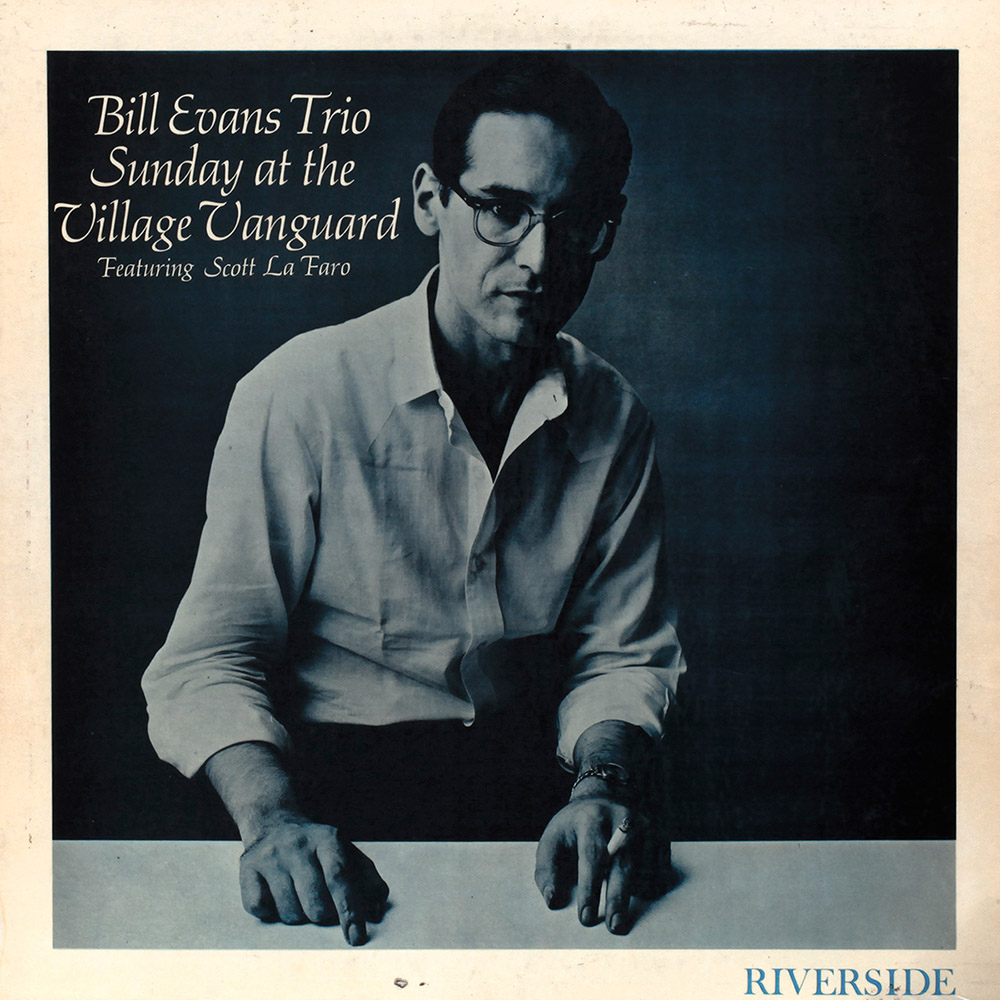
Few live albums have captured the fragile magic of musical conversation as completely as Sunday at the Village Vanguard. Recorded on June 25, 1961, at New York City’s legendary Village Vanguard, the album documents the Bill Evans Trio at the absolute peak of its creative powers. It also carries an emotional weight unlike almost any other jazz recording. Just ten days after these performances, bassist Scott LaFaro was killed in a car accident at the age of twenty-five, bringing one of jazz’s most revolutionary trios to an abrupt and heartbreaking end.
Knowing that history inevitably colors the listening experience, but even without it, Sunday at the Village Vanguard stands as one of the finest live jazz albums ever recorded. Evans, LaFaro, and drummer Paul Motian fundamentally redefined what a piano trio could be. Rather than treating the bass and drums as accompaniment, the three musicians interacted as complete equals, constantly exchanging ideas with extraordinary sensitivity and imagination.
The result is an album that feels less like a series of performances and more like three brilliant musicians thinking aloud together. Every phrase inspires another, every silence carries meaning, and every performance reveals new details with repeated listening.
More than sixty years after its release, Sunday at the Village Vanguard remains one of the crowning achievements of modern jazz.
Album Overview
Unlike many live jazz albums built around explosive solos and audience excitement, Sunday at the Village Vanguard thrives on intimacy. Recorded during afternoon performances in the basement club, the album places listeners only a few feet away from the trio, capturing the quiet atmosphere of one of jazz’s most revered venues.
The repertoire consists primarily of standards and familiar compositions, but Evans transforms them into vehicles for remarkable collective improvisation. Familiar melodies become starting points rather than destinations.
One of the album’s greatest strengths is its patience. The trio never rushes. Every performance unfolds organically, allowing ideas to develop naturally rather than forcing dramatic climaxes.
The pacing is equally impressive. Reflective ballads alternate with more rhythmically adventurous selections, creating subtle emotional variety without disrupting the album’s contemplative atmosphere.
Throughout the performance, there is an overwhelming sense of trust among the musicians. Each player listens as carefully as they perform, creating a level of interaction that remains astonishing even by today’s standards.
Songwriting
Although Sunday at the Village Vanguard relies primarily on jazz standards, the trio’s interpretations make familiar material feel completely new.
“Gloria’s Step,” composed by Scott LaFaro, opens the album with remarkable interplay and immediately announces that this will not be a conventional piano trio recording.
“My Man’s Gone Now,” from George Gershwin’s Porgy and Bess, becomes a deeply introspective exploration filled with subtle emotional nuance.
“Solar,” credited to Miles Davis, serves as the foundation for one of the album’s most adventurous performances, allowing each musician to stretch harmonically while maintaining complete cohesion.
“Alice in Wonderland” receives one of the most lyrical interpretations in Evans’ catalog, balancing playful elegance with remarkable sophistication.
The compositions themselves are outstanding, but it is the trio’s ability to reinvent them through collective improvisation that elevates the album into the highest tier of jazz recordings.
Performance
The performances throughout Sunday at the Village Vanguard are extraordinary.
Bill Evans plays with his trademark lyricism and harmonic sophistication, but unlike many pianist-led recordings, he rarely dominates the conversation. Instead, he constantly responds to the ideas unfolding around him.
Scott LaFaro delivers one of the greatest bass performances ever recorded. His melodic independence, rhythmic freedom, and astonishing technical command completely transformed the role of the bass in jazz. Rather than simply outlining chord progressions, he engages Evans and Motian in an ongoing dialogue that remains breathtaking.
Paul Motian’s drumming is equally remarkable. His subtle brushwork, delicate cymbal textures, and instinctive sense of timing provide the perfect framework for the trio’s conversational approach.
What truly separates these performances from countless other jazz recordings is the absence of hierarchy. No instrument functions merely as accompaniment. Every member of the trio shapes the music equally, creating performances that feel spontaneous, democratic, and deeply human.
Production
Recorded live by producer Orrin Keepnews and engineer David Jones, Sunday at the Village Vanguard remains one of the finest live jazz recordings ever made.
The production captures the natural acoustics of the Village Vanguard beautifully. Every instrument sounds warm, detailed, and perfectly balanced without sacrificing the intimacy of the room.
Audience noise is present but unobtrusive, reminding listeners that these are genuine live performances rather than heavily edited studio creations.
The stereo image allows each musician ample space while preserving the remarkable interaction that defines the trio.
Modern remasters have enhanced the clarity without compromising the warmth that has made the album an audiophile favorite for decades.
It remains a reference recording for live acoustic jazz.
Standout Tracks
Every performance contributes something essential, but several stand among the trio’s greatest achievements.
“Gloria’s Step” serves as the perfect introduction to the trio’s revolutionary approach, highlighting LaFaro’s extraordinary compositional and improvisational gifts.
“My Man’s Gone Now” unfolds with breathtaking emotional restraint, allowing every musical gesture to resonate deeply.
“Solar” showcases the trio’s fearless improvisational chemistry while maintaining remarkable structural coherence.
“Alice in Wonderland” captures Evans at his most lyrical, supported beautifully by LaFaro and Motian.
Even the brief “Jade Visions,” another LaFaro composition, carries immense emotional significance, closing the album with quiet elegance.
Weak Points
Finding genuine weaknesses in Sunday at the Village Vanguard is exceptionally difficult.
Listeners expecting energetic hard bop or technically flashy solo showcases may initially find the trio’s understated approach almost too subtle.
The album also demands attentive listening. Much of its brilliance lies in the intricate interactions between the musicians, making it less immediately accessible than more melody-driven jazz classics.
Finally, its relatively brief running time leaves listeners wishing more of this historic performance had been preserved—though later archival releases have helped address that limitation.
These are minor observations rather than meaningful criticisms.
Legacy
Sunday at the Village Vanguard forever changed the modern jazz piano trio.
Its conversational approach became the model for generations of musicians, demonstrating that bass and drums could function as equal creative partners rather than simple accompaniment.
The album’s influence can be heard in the work of Keith Jarrett, Brad Mehldau, Chick Corea, Christian McBride, and countless others who embraced Evans’ collaborative philosophy.
Scott LaFaro’s tragic death shortly after the recording has understandably become part of the album’s legacy, but it should never overshadow the extraordinary artistry preserved here. These performances endure because of their musical brilliance, not simply because they became a final document of an irreplaceable trio.
Today, Sunday at the Village Vanguard is universally recognized as one of the greatest live jazz albums ever recorded and one of the defining achievements of the piano trio format.
Final Score
10/10
Sunday at the Village Vanguard is a masterpiece of modern jazz and one of the greatest live recordings ever made. Bill Evans, Scott LaFaro, and Paul Motian created a level of musical communication that remains astonishing more than six decades later. Every performance balances lyrical beauty, harmonic sophistication, and spontaneous interaction with effortless grace. Beyond its historical significance, the album stands on its own as a timeless artistic achievement—a recording that continues to redefine what jazz ensemble playing can be.
This post has already been read 73 times!