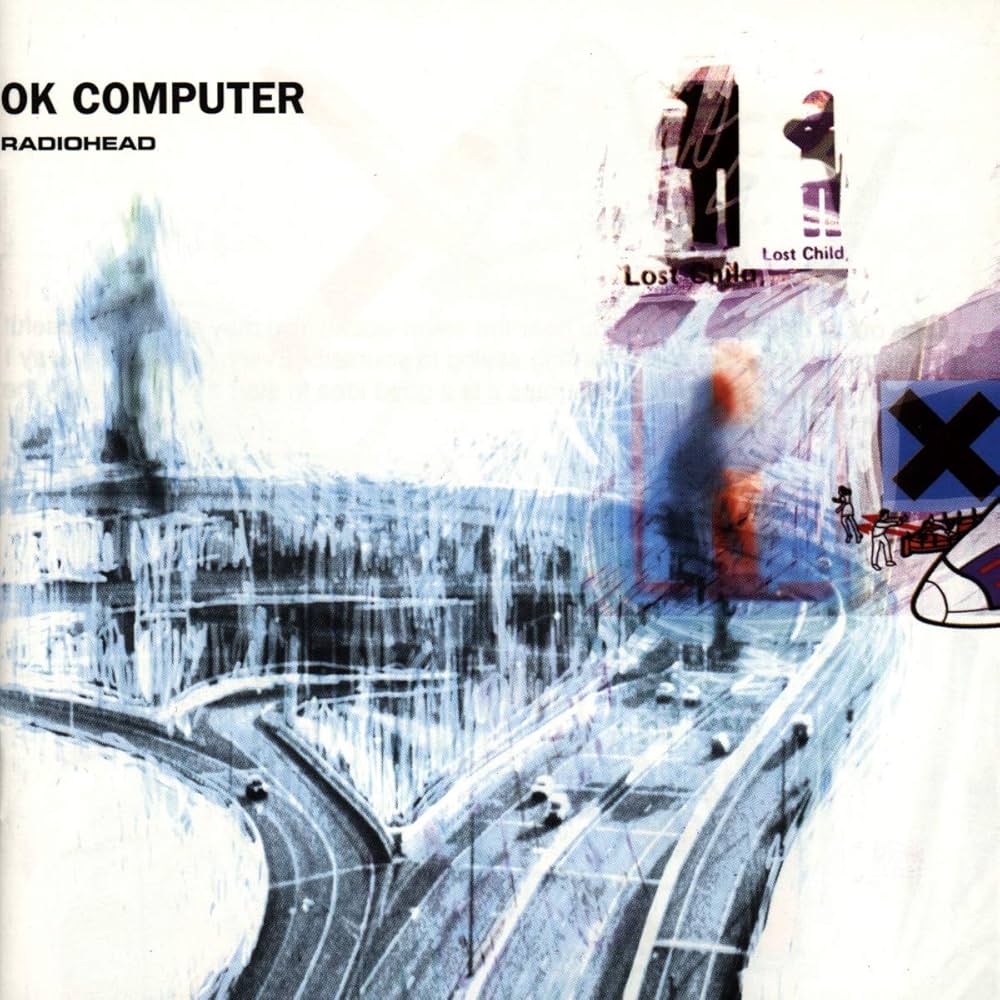
Some albums define a moment. Others predict the future.
Released on May 21, 1997, OK Computer did both. At a time when Britpop still dominated the British music scene and alternative rock was becoming increasingly commercial, Radiohead released an album that seemed completely disconnected from prevailing trends. Rather than writing songs about youthful confidence or rock-and-roll excess, Thom Yorke and company turned their attention toward technology, consumerism, alienation, anxiety, and the creeping loss of human connection in the modern world.
What could have been an inaccessible art-rock experiment instead became one of the most acclaimed albums ever recorded.
Building on the guitar-driven foundation established by The Bends, Radiohead expanded their musical vocabulary dramatically. Atmospheric textures, unconventional song structures, electronic flourishes, and ambitious arrangements pushed alternative rock into entirely new territory. The album challenged listeners without ever forgetting the importance of melody, creating a record that was intellectually stimulating while remaining emotionally overwhelming.
Nearly three decades later, OK Computer feels even more relevant than it did upon release. Its themes of isolation in an increasingly technological world have only grown more resonant, while its influence continues to shape countless artists across rock, electronic music, indie, and experimental pop.
Few albums have aged as gracefully—or as prophetically.
Album Overview
Produced by Nigel Godrich alongside the band, OK Computer is a masterclass in atmosphere.
Rather than relying on conventional verse-chorus structures throughout, the album constantly evolves. Songs swell unexpectedly, dissolve into ambient passages, or shift dramatically in mood without feeling forced. Every arrangement serves the emotional weight of the material.
The instrumentation is remarkably rich. Jonny Greenwood’s inventive guitar work frequently abandons traditional rock techniques in favor of texture and sonic experimentation. Ed O’Brien layers shimmering ambient guitars throughout the record, while Colin Greenwood’s melodic bass playing quietly anchors even the most adventurous compositions. Phil Selway’s understated drumming provides subtle complexity without drawing unnecessary attention to itself.
Despite its ambitious scope, the album never feels self-indulgent. Every experiment has a purpose, every unusual sound contributes to the emotional landscape, and every transition feels meticulously considered.
Listening to OK Computer is less like hearing a collection of songs and more like traveling through an increasingly surreal emotional landscape.
Songwriting
The songwriting throughout OK Computer borders on astonishing.
“Airbag” opens the album with mechanical rhythms, distorted guitars, and a sense of cautious optimism emerging from catastrophe. It immediately establishes that this is not going to be a conventional rock album.
“Paranoid Android” remains one of Radiohead’s greatest achievements. Stretching across multiple movements, the song constantly transforms while somehow remaining completely cohesive. Its shifting dynamics, haunting melodies, and unforgettable climax make it one of the defining rock compositions of the 1990s.
“Subterranean Homesick Alien” slows the pace with dreamlike textures and quiet longing before giving way to “Exit Music (For a Film),” whose gradual build from delicate acoustic guitar to overwhelming emotional release remains breathtaking.
“Let Down” is often cited by fans as one of the band’s finest songs. Its shimmering guitars and layered vocal harmonies create an almost weightless feeling while conveying profound emotional exhaustion.
“Karma Police” became the album’s biggest commercial success, balancing accessibility with unsettling lyrical ambiguity. Its unforgettable piano progression and haunting conclusion have made it one of Radiohead’s signature songs.
“Fitter Happier” divides listeners even today. Delivered through a computerized voice, it interrupts the album’s flow with a chilling list of modern expectations and routines. It isn’t traditionally enjoyable, but it serves as one of the album’s most important thematic statements.
The closing stretch is extraordinary. “Electioneering” injects raw guitar energy before “Climbing Up the Walls” descends into psychological horror. “No Surprises” provides deceptive calm beneath its gentle melody, while “Lucky” and “The Tourist” conclude the album with grace, resignation, and quiet hope.
There is not a weak song anywhere on the record.
Performance
Radiohead performs with astonishing unity throughout the album.
Thom Yorke delivers the finest vocal performance of his career up to that point. His soaring falsetto, fragile vulnerability, and emotional intensity allow even the album’s most abstract lyrics to feel deeply personal. He rarely over-sings, trusting subtle phrasing and emotional nuance to carry the material.
Jonny Greenwood establishes himself as one of the most inventive guitarists of his generation. Rather than relying on technical showmanship, he creates textures, atmospheres, and unconventional sounds that fundamentally reshape what rock guitar can accomplish.
Ed O’Brien’s atmospheric guitar layers are equally essential, providing much of the album’s emotional depth. Colin Greenwood’s melodic bass lines quietly bind the arrangements together, while Phil Selway delivers some of alternative rock’s most tasteful drumming.
What makes these performances exceptional is their complete lack of ego.
Every musician serves the songs rather than seeking individual attention.
Production
Nigel Godrich’s production is one of the album’s greatest triumphs.
The recording feels enormous without becoming cluttered. Every instrument occupies its own space, allowing incredibly dense arrangements to remain clear and balanced.
The production constantly rewards repeated listening. Tiny electronic details, distant vocal harmonies, unusual guitar textures, and subtle ambient sounds continue revealing themselves years after the first listen.
Unlike many albums from the late 1990s, OK Computer avoids fashionable production techniques that would later feel dated. Instead, it embraces timeless sonic craftsmanship built around atmosphere and dynamics.
The record also demonstrates remarkable restraint. Loud moments feel powerful because quiet moments are allowed to exist. Rather than compressing every sound for maximum volume, Godrich preserves the emotional impact of contrast.
It remains one of the finest-produced rock albums ever recorded.
Standout Tracks
“Paranoid Android”
A progressive rock masterpiece that somehow manages to be adventurous, emotionally gripping, and instantly memorable all at once.
“Karma Police”
One of Radiohead’s defining songs. Beautifully arranged, hauntingly performed, and endlessly replayable.
“Exit Music (For a Film)”
An extraordinary slow burn whose emotional climax remains devastating.
“Let Down”
A shimmering, emotionally overwhelming composition that perfectly captures the album’s themes of alienation and quiet despair.
“No Surprises”
Gentle on the surface yet deeply unsettling underneath, it stands as one of the band’s most enduring songs.
Weak Points
Finding genuine flaws in OK Computer is remarkably difficult.
Some listeners may find “Fitter Happier” more intellectually interesting than musically enjoyable, and its placement deliberately interrupts the album’s momentum.
Additionally, the album’s emotional weight and thematic density make it less suitable for casual listening than many classic rock records. It demands patience, attention, and repeated exploration.
Neither criticism significantly diminishes the album’s extraordinary achievement.
Legacy
Very few albums permanently alter the direction of popular music.
OK Computer accomplished exactly that.
Its influence extends across alternative rock, indie music, electronic music, post-rock, progressive rock, and modern pop. Artists from Coldplay to Muse, Arcade Fire, Elbow, and countless others have acknowledged its enormous impact.
The album also elevated Radiohead from one of Britain’s best alternative bands into one of the most respected and innovative groups in modern music. It gave them the creative freedom to continue pushing boundaries with later masterpieces like Kid A and In Rainbows.
Perhaps most remarkable is how prophetic the album feels today. Its exploration of technology, surveillance, emotional isolation, and modern anxiety has only become more relevant with each passing year.
Rather than sounding like a relic of the 1990s, OK Computer often feels like it was written for the present day.
That timeless relevance is one of the defining characteristics of truly great art.
Final Score: 10/10
OK Computer is one of the greatest albums ever made. Radiohead combined breathtaking songwriting, fearless experimentation, exceptional musicianship, and Nigel Godrich’s masterful production into a work that fundamentally changed alternative rock. Emotionally profound, intellectually ambitious, and endlessly rewarding, it remains as powerful today as it was upon release. Few records balance accessibility and innovation so completely, and even fewer continue to reveal new layers after decades of listening. It is a genuine masterpiece.
This post has already been read 132 times!