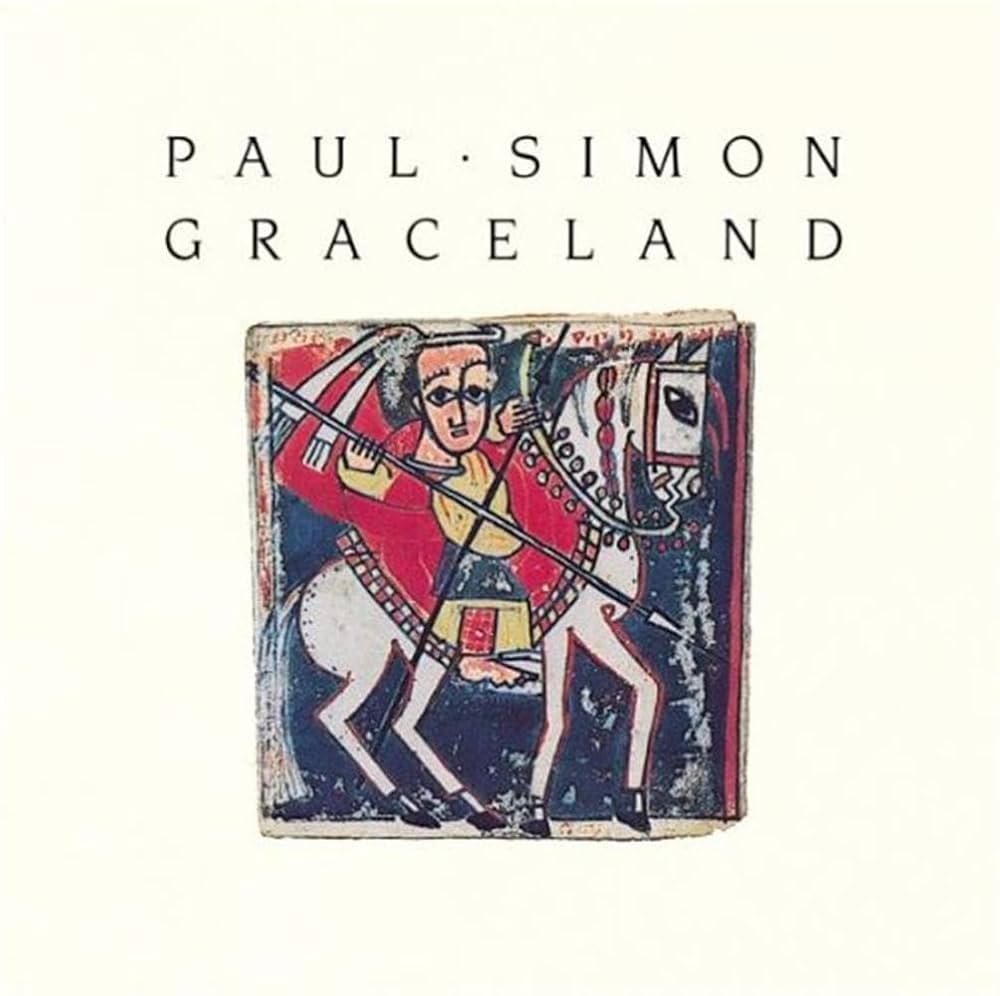
Few albums have reinvented an artist’s career as dramatically as Graceland. By the mid-1980s, Paul Simon was already recognized as one of America’s greatest songwriters, but following the commercial disappointment of Hearts and Bones, many wondered whether his creative peak had passed. Instead of retreating to familiar territory, Simon looked outward, finding inspiration in the vibrant music of South Africa.
Released in 1986, Graceland became both a commercial triumph and one of the most celebrated albums of the decade. Blending American folk, pop, rock, zydeco, country, and South African township music, Simon created a record unlike anything else in mainstream pop. It was adventurous yet accessible, intellectually rich yet effortlessly enjoyable.
Its creation was not without controversy. Simon recorded much of the album with South African musicians during the international cultural boycott of apartheid, sparking debate that continues today. Regardless of those discussions, the music itself remains one of the most extraordinary artistic achievements of the 1980s.
Album Overview
Graceland feels less like a traditional pop album and more like a musical conversation between cultures.
Rather than simply borrowing South African rhythms as decorative elements, Simon built the songs around collaborations with exceptional musicians, including members of Ladysmith Black Mambazo, guitarist Ray Phiri, bassist Bakithi Kumalo, and numerous other South African performers whose contributions are central to the album’s identity.
The result is a remarkably organic fusion.
The intricate guitar lines, fluid bass playing, shimmering vocal harmonies, and infectious rhythms never feel forced. Instead, Simon’s songwriting adapts naturally to the musical language surrounding it.
Despite its stylistic diversity, the album remains remarkably cohesive. Themes of identity, aging, family, love, loss, and hope run throughout the record, tying together its varied musical influences into a unified artistic statement.
Songwriting
Paul Simon has always possessed an extraordinary ability to make complex observations feel conversational.
On Graceland, his songwriting reaches one of its highest points.
The title track uses a road trip to Elvis Presley’s home as a meditation on heartbreak, self-discovery, and emotional renewal. Rich in symbolism without becoming overly abstract, it perfectly balances humor and melancholy.
“You Can Call Me Al” pairs witty, surreal lyrics with one of the most infectious grooves of the decade. Its famous bass solo—performed in reverse on the recording—remains one of pop music’s most memorable moments.
“Diamonds on the Soles of Her Shoes” combines poetic storytelling with magnificent vocal harmonies from Ladysmith Black Mambazo, creating one of the album’s most uplifting moments.
“Homeless,” developed with Ladysmith Black Mambazo founder Joseph Shabalala, beautifully blends Zulu choral traditions with Simon’s melodic sensibilities.
“The Boy in the Bubble” opens the album with a brilliant juxtaposition of technological progress and human uncertainty, setting the reflective tone that continues throughout the record.
Every song demonstrates Simon’s remarkable gift for finding profound meaning in everyday observations.
Performance
Paul Simon delivers one of the finest vocal performances of his solo career.
His understated singing allows the songs to breathe naturally, never competing with the remarkable musicians surrounding him. Instead, he functions as both storyteller and collaborator, placing the music above personal showmanship.
The supporting musicians are phenomenal.
Bakithi Kumalo’s melodic bass playing frequently steals the spotlight, weaving intricate lines through nearly every arrangement.
Ray Phiri’s guitar work is equally extraordinary, combining elegance and rhythmic precision with remarkable subtlety.
Ladysmith Black Mambazo provide some of the most beautiful vocal harmonies ever captured on a pop album. Their contributions elevate nearly every song they appear on, adding warmth, spirituality, and emotional depth.
Every performance reflects exceptional musicianship and genuine collaboration.
Production
The production remains astonishingly fresh nearly forty years later.
Simon wisely avoids excessive studio effects, allowing the natural beauty of the performances to remain front and center.
Every instrument occupies its own space within the mix.
The intricate percussion sparkles without becoming overwhelming.
The bass is rich and melodic.
The layered vocal harmonies retain remarkable clarity even during the album’s busiest arrangements.
Because the production relies primarily on exceptional musicianship rather than fashionable studio trends, Graceland has aged considerably better than many albums from the mid-1980s.
It still sounds vibrant and contemporary today.
Standout Tracks
“Graceland”
A beautifully written meditation on heartbreak, healing, and self-discovery featuring one of Simon’s finest melodies.
“You Can Call Me Al”
One of the greatest pop singles of the 1980s. Its irresistible groove, clever lyrics, and unforgettable bass break make it endlessly enjoyable.
“Diamonds on the Soles of Her Shoes”
An uplifting masterpiece that perfectly blends Simon’s songwriting with Ladysmith Black Mambazo’s extraordinary vocal harmonies.
“The Boy in the Bubble”
A brilliant album opener combining thoughtful social commentary with infectious rhythmic energy.
“Homeless”
One of the album’s emotional highlights, showcasing the breathtaking vocal interplay between Simon and Ladysmith Black Mambazo.
“Under African Skies”
A warm, reflective collaboration with Linda Ronstadt that beautifully captures the album’s spirit of musical exploration.
Weak Points
Graceland is remarkably consistent, making genuine criticism difficult.
Some listeners may find the album’s deliberate pacing less immediate than Simon’s earlier pop-oriented work with Simon & Garfunkel. A handful of deeper cuts require repeated listening before revealing their full emotional impact.
Additionally, the historical controversy surrounding the album’s recording during the apartheid-era cultural boycott remains part of its legacy. While that debate concerns the album’s context rather than its musical quality, it continues to shape discussions surrounding the record.
Musically, however, there are very few weaknesses to identify.
Legacy
Graceland became one of the defining albums of the 1980s, winning the Grammy Award for Album of the Year while introducing millions of listeners to South African musical traditions.
Its success encouraged broader appreciation for world music within mainstream popular culture and demonstrated that cross-cultural collaboration could produce commercially successful, artistically ambitious work.
The album has influenced generations of musicians exploring global musical traditions, inspiring artists across folk, rock, alternative, and world music to embrace collaboration beyond traditional genre boundaries.
Perhaps its greatest achievement is its timelessness.
Nearly four decades after its release, Graceland continues to sound joyful, thoughtful, adventurous, and deeply human.
It remains not only Paul Simon’s finest solo album but one of the greatest records ever made.
Final Score
10/10
Graceland is a rare masterpiece that successfully blends extraordinary songwriting, world-class musicianship, and groundbreaking musical collaboration into a work of remarkable beauty and lasting influence. Paul Simon created an album that feels simultaneously intimate and global, personal and universal. Nearly forty years later, it remains one of the greatest achievements in popular music and fully deserves its place among the small handful of albums worthy of a perfect score.
This post has already been read 59 times!