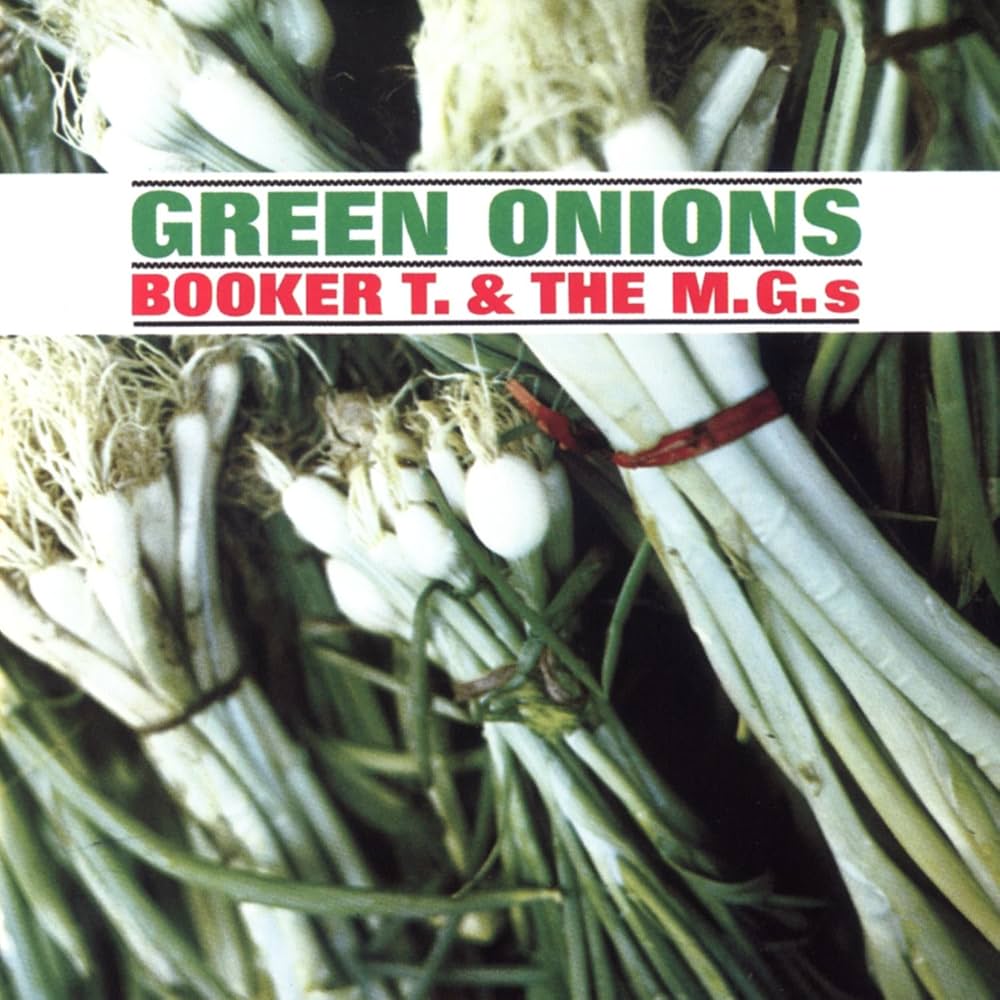
Sometimes a single song is so iconic that it overshadows the album it came from. That’s certainly true of Green Onions. The title track has become one of the most recognizable instrumentals in popular music history, appearing in countless films, television shows, commercials, and sporting events. Yet reducing the album to one famous riff overlooks one of the foundational records of Southern soul and instrumental R&B.
Released in October 1962, Green Onions introduced Booker T. & the M.G.’s as one of the defining house bands of Stax Records. Booker T. Jones (organ), Steve Cropper (guitar), Lewie Steinberg (bass), and Al Jackson Jr. (drums) possessed an almost telepathic chemistry that allowed them to create music built on groove rather than flash. Their recordings became the backbone of the Stax sound, supporting legendary artists like Otis Redding, Sam & Dave, Wilson Pickett, and Carla Thomas while simultaneously establishing themselves as stars in their own right.
Unlike many instrumental albums of the era, Green Onions never feels like musicians simply filling space between vocal performances. Every track stands on its own through impeccable musicianship, irresistible rhythms, and an effortless sense of cool that remains just as compelling today as it was more than sixty years ago.
This is not simply a collection of jams.
It is one of the cornerstones of American soul music.
Album Overview
The beauty of Green Onions lies in its simplicity.
There are no elaborate arrangements.
No orchestras.
No complicated production tricks.
Just four extraordinary musicians locked into grooves that feel almost impossible to improve upon.
The album blends rhythm and blues, soul, Memphis blues, rock and roll, jazz, and gospel into a sound that would influence generations of musicians across multiple genres.
While many instrumental records eventually begin to feel repetitive, Green Onions avoids that trap through subtle variation.
Different tempos.
Different grooves.
Different emotional moods.
Each song explores a slightly different corner of the band’s musical vocabulary while maintaining remarkable cohesion.
Perhaps the album’s greatest achievement is how relaxed it sounds.
Nothing feels forced.
Nobody appears interested in showing off.
Instead, Booker T. & the M.G.’s demonstrate that confidence often comes from knowing exactly what not to play.
Every note serves the groove.
Every pause matters.
That restraint gives the album a timeless quality.
Songwriting
Although much of the album consists of instrumental originals and carefully selected covers, the songwriting consistently emphasizes memorable melodies over technical complexity.
The title track remains the obvious centerpiece.
Built around one of the most unforgettable organ riffs ever recorded, “Green Onions” proves that a simple musical idea, executed perfectly, can become immortal.
“Mo’ Onions” successfully revisits the same general atmosphere without feeling like a lazy sequel, expanding the band’s signature sound through subtle rhythmic variation.
“I Got a Woman” transforms Ray Charles’ classic into an instrumental showcase that preserves the original’s infectious energy while allowing each member of the band room to contribute.
“Twist and Shout,” which would soon become famous through another legendary recording, receives a soulful reinterpretation that emphasizes groove over youthful exuberance.
“Behave Yourself” slows things down considerably, allowing Booker T.’s organ to carry much of the emotional weight through elegant phrasing and understated melodic development.
Throughout the record, the songs rarely rely on dramatic structural changes.
Instead, they succeed through gradual evolution.
Tiny rhythmic adjustments.
Improvised embellishments.
Shifting dynamics.
The music remains engaging precisely because the band understands the power of subtlety.
Performance
Every member of Booker T. & the M.G.’s deserves equal recognition.
Booker T. Jones immediately establishes himself as one of soul music’s greatest organists.
His Hammond organ tone is instantly recognizable.
Warm.
Punchy.
Expressive.
He balances melody and rhythm effortlessly, often functioning as both lead instrument and harmonic foundation simultaneously.
Steve Cropper’s guitar playing is equally remarkable.
Rather than dominating songs with flashy solos, Cropper specializes in economical phrasing.
Every note feels intentional.
His rhythm work is among the finest in popular music.
Lewie Steinberg’s bass playing quietly anchors every groove with remarkable consistency.
He rarely demands attention, but his subtle lines provide the foundation upon which the entire album rests.
Then there is Al Jackson Jr.
His drumming is a masterclass in groove.
Every snare hit.
Every hi-hat accent.
Every kick drum placement.
Nothing is wasted.
Countless drummers have studied Jackson’s feel, and for good reason.
His sense of time borders on supernatural.
Together, the quartet demonstrates the extraordinary chemistry that would soon make them one of the greatest backing bands in recording history.
Production
Recorded at Stax Studios in Memphis, the production captures everything essential while avoiding unnecessary embellishment.
The recording feels intimate.
Organic.
Warm.
Every instrument occupies its own place within the mix.
Booker T.’s organ remains front and center without overwhelming Cropper’s guitar.
The rhythm section sounds tight and natural.
The lack of excessive studio effects allows the musicianship to remain the focus.
Unlike many recordings from the early 1960s that now sound dated, Green Onions retains remarkable sonic clarity.
Its straightforward production has aged beautifully because it never chased trends.
It simply documented an exceptional band playing exceptional music.
That authenticity continues to make the album sound fresh decades later.
Standout Tracks
Although the album maintains remarkable consistency, several performances stand among the defining recordings of instrumental soul.
“Green Onions” is one of the greatest instrumentals ever recorded. Its unforgettable Hammond organ riff, flawless groove, and effortless cool transformed a simple jam session into an enduring musical landmark.
“Mo’ Onions” successfully builds upon the title track’s formula while introducing enough variation to stand comfortably on its own.
“Behave Yourself” highlights the band’s more restrained side, allowing Booker T.’s melodic instincts to shine through a beautifully relaxed arrangement.
“I Got a Woman” breathes new life into Ray Charles’ classic through tasteful instrumental interplay and exceptional rhythmic precision.
“Twist and Shout” demonstrates how effectively the band could reinterpret familiar material, replacing vocal excitement with pure instrumental groove.
Weak Points
The album’s greatest strength—its unwavering commitment to groove—can occasionally make individual tracks feel stylistically similar.
Listeners expecting dramatic shifts in mood or elaborate arrangements may find portions of the record somewhat repetitive.
At just under thirty minutes, the album also ends almost as soon as it begins.
Additionally, because the musicians consistently prioritize ensemble playing over individual virtuosity, listeners searching for extended instrumental showcases may occasionally wish for more adventurous solos.
These observations hardly diminish the listening experience.
If anything, they reinforce the band’s philosophy that serving the song always comes before showing off.
Legacy
Few instrumental albums have exerted such enormous influence on American popular music.
Green Onions helped establish the unmistakable Stax sound that would define Southern soul throughout the 1960s.
The title track became one of the most recognizable pieces of instrumental music ever recorded, inspiring generations of musicians across rock, blues, funk, jazz, hip-hop, and R&B.
Beyond their own recordings, Booker T. & the M.G.’s became one of the greatest house bands in music history, providing the musical backbone for countless classic Stax sessions.
Their influence can be heard in everyone from Eric Clapton and the Blues Brothers to countless funk bands and hip-hop producers who sampled their grooves.
More than sixty years later, Green Onions still sounds effortlessly cool.
That may be its greatest accomplishment.
It has never needed to announce its importance.
The music simply speaks for itself.
Final Score: 9.5/10
Green Onions is one of the definitive instrumental albums in American music history. Booker T. & the M.G.’s created a record built not on technical excess or flashy performances, but on impeccable musicianship, extraordinary chemistry, and grooves that remain irresistible decades later.
Its influence stretches across soul, rock, funk, blues, jazz, and hip-hop, while its timeless production and understated performances ensure it never feels trapped in its era. Every member contributes equally to a sound that is instantly recognizable and endlessly enjoyable.
Only a handful of instrumental albums achieve this combination of historical significance, musical excellence, and lasting replay value. Green Onions stands comfortably among them—a soul classic whose simplicity remains its greatest strength.
This post has already been read 71 times!