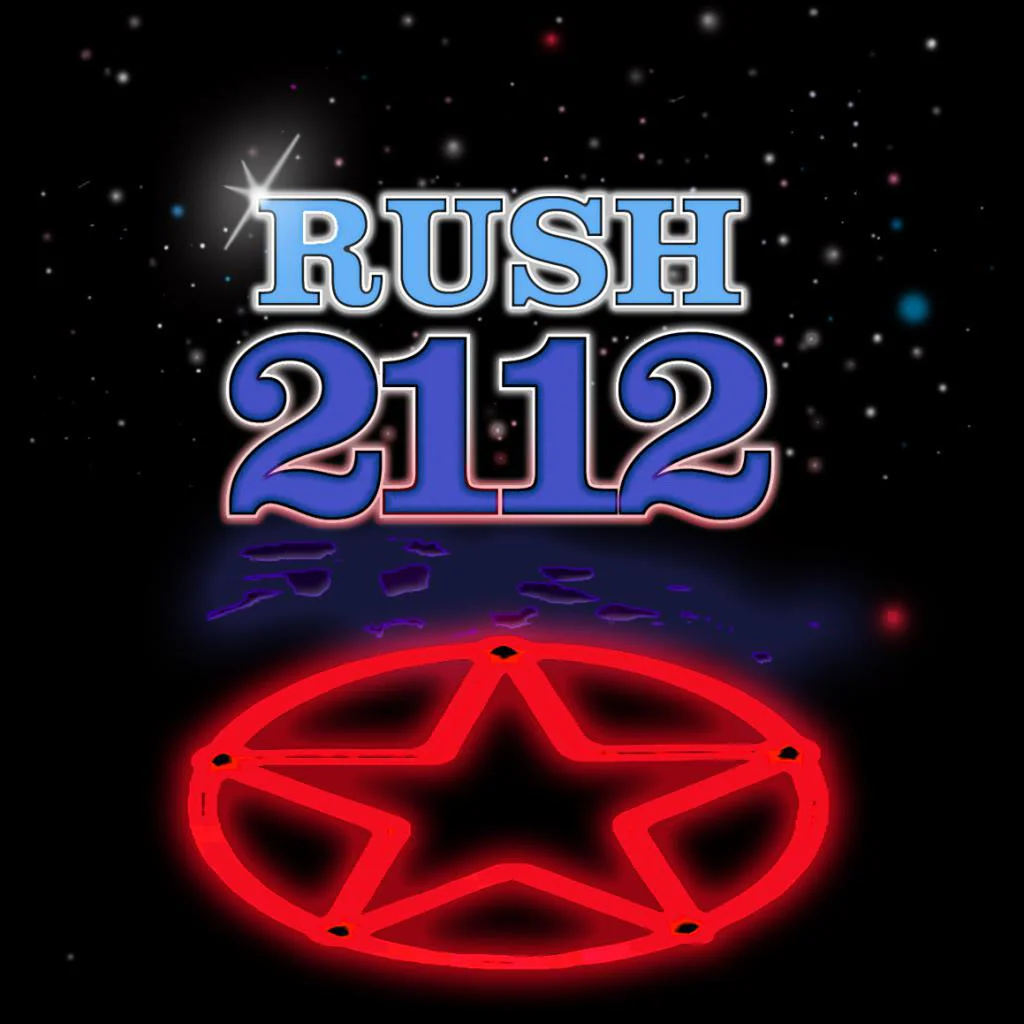
By early 1976, Rush found themselves at a crossroads. Their self-titled debut had earned modest attention thanks to “Working Man,” but their follow-up, Fly by Night, and the ambitious Caress of Steel failed to meet commercial expectations. Record executives urged the Canadian trio to abandon their progressive rock ambitions in favor of shorter, more radio-friendly songs. Rather than compromise, Geddy Lee, Alex Lifeson, and Neil Peart doubled down on their creative vision.
The result was 2112, an album that not only saved Rush’s career but also became one of progressive rock’s defining statements. Combining science fiction, philosophical themes, hard rock riffs, and dazzling musicianship, the album proved that artistic integrity and commercial success could coexist. Its legendary twenty-minute title suite occupies the first side of the record, while the second side offers a collection of diverse yet equally compelling songs.
Nearly fifty years after its release, 2112 remains one of Rush’s most beloved albums and a milestone in progressive rock.
Album Overview
Unlike many concept albums that tell a story across an entire record, 2112 splits its focus between one epic composition and several standalone tracks. The title suite presents a dystopian future where creativity has been suppressed by authoritarian rulers known as the Priests of the Temples of Syrinx. When an ordinary man discovers an ancient guitar, he experiences the joy of music for the first time, setting off a tragic chain of events.
The second half shifts away from the narrative while maintaining the band’s fascination with fantasy, philosophy, and human emotion. Songs range from energetic rockers to reflective ballads, demonstrating Rush’s versatility without sacrificing cohesion.
Musically, 2112 balances technical precision with memorable hooks better than its predecessor. The band had matured significantly, creating arrangements that were intricate without becoming inaccessible.
Songwriting
Neil Peart’s arrival as lyricist transformed Rush into something far more ambitious than a traditional hard rock band. His writing explores freedom, individuality, imagination, and resistance against conformity.
The title suite unfolds across seven interconnected movements. Rather than feeling like seven separate songs stitched together, each section naturally flows into the next.
“Overture” introduces the album’s recurring musical themes before “The Temples of Syrinx” establishes the oppressive world where independent thought has been outlawed.
“Discovery” provides one of the album’s emotional peaks as the protagonist finds an abandoned guitar and learns to play it. The wonder expressed in these moments makes the story deeply personal despite its futuristic setting.
The narrative grows increasingly dramatic through “Presentation,” “Oracle: The Dream,” “Soliloquy,” and “Grand Finale,” culminating in one of progressive rock’s most memorable endings.
The second side contains no filler.
“A Passage to Bangkok” delivers one of Rush’s catchiest riffs while taking listeners on a globe-trotting adventure.
“The Twilight Zone” draws inspiration from the classic television series while exploring mysterious alternate realities.
“Lessons” provides a surprisingly accessible melodic centerpiece, while “Tears” reveals a softer, more emotional side of the band.
The album concludes with “Something for Nothing,” whose optimistic message about earning success through effort perfectly complements the themes introduced earlier.
Performance
Every member of Rush performs at an extraordinary level.
Geddy Lee’s bass playing is astonishing throughout the album. Rather than simply supporting the rhythm section, his melodic bass lines often function as lead instruments. His powerful vocals continue to evolve, delivering both emotional vulnerability and commanding intensity.
Alex Lifeson contributes some of the finest guitar work of his career. His riffs on “2112,” “A Passage to Bangkok,” and “Something for Nothing” rank among the band’s greatest, while his solos combine technical brilliance with genuine feeling.
Neil Peart announces himself as one of rock’s elite drummers. His precision, creativity, and dynamic control elevate every composition. Yet what truly separates Peart from many technically gifted drummers is his ability to enhance songs rather than dominate them.
The chemistry between the three musicians borders on telepathic. Complex time changes, shifting dynamics, and intricate arrangements never sound forced because every member listens closely to the others.
Production
Produced by Terry Brown, 2112 sounds considerably fuller and more confident than Rush’s earlier albums.
The guitars possess warmth and bite without becoming muddy. Lee’s bass sits prominently in the mix—a signature Rush characteristic that gives the album tremendous depth. Peart’s drums sound crisp and powerful, capturing every intricate fill without overwhelming the arrangements.
The production also handles the ambitious title suite exceptionally well. Transitions between movements feel seamless, allowing the story to unfold naturally without disrupting musical momentum.
Although later Rush albums would feature cleaner production, the slightly raw edge of 2112 perfectly suits its combination of progressive complexity and hard rock aggression.
Standout Tracks
“2112”
The twenty-minute title suite is Rush’s first undisputed masterpiece. It seamlessly blends storytelling, virtuoso musicianship, unforgettable riffs, and emotional depth into one of progressive rock’s greatest compositions.
“A Passage to Bangkok”
Driven by an infectious riff and adventurous spirit, this remains one of the band’s most entertaining hard rock songs while providing a welcome contrast to the album’s epic first half.
“The Twilight Zone”
Mysterious and atmospheric, this track demonstrates Rush’s ability to translate science fiction concepts into compelling rock music.
“Something for Nothing”
One of Rush’s strongest closing songs, combining memorable melodies with an inspiring message about perseverance and personal responsibility.
“Tears”
Often overlooked, this heartfelt ballad showcases a gentler side of Rush while allowing Geddy Lee to deliver one of his most emotional vocal performances.
Weak Points
While 2112 is widely celebrated, it is not entirely without imperfections.
The title suite is so monumental that some listeners feel the second side struggles to match its impact. Although the individual songs are excellent, they inevitably live in the shadow of the opening epic.
The album also reflects Rush’s early progressive tendencies, occasionally favoring complexity over immediacy. New listeners unfamiliar with long-form compositions may need several listens before fully appreciating the structure and recurring musical themes.
Finally, Geddy Lee’s high-pitched vocal style remains an acquired taste for some rock fans, particularly on the album’s heavier moments.
These criticisms are relatively minor considering the album’s enormous artistic achievements.
Legacy
2112 changed the course of Rush’s career.
Its commercial success gave the band complete creative freedom, allowing them to continue exploring increasingly ambitious musical ideas on classics like A Farewell to Kings, Hemispheres, Permanent Waves, and Moving Pictures.
The album also became one of progressive rock’s defining works. While bands like Yes, Genesis, and Emerson, Lake & Palmer had already expanded the genre’s possibilities, Rush brought progressive rock into the hard rock and heavy metal worlds in a way few others had accomplished.
Generations of musicians have cited 2112 as a major influence. Progressive metal, alternative rock, technical rock, and countless modern bands owe a debt to the fearless creativity displayed throughout this record.
More importantly, 2112 stands as a lasting reminder that artistic conviction can triumph over commercial pressure. Had Rush followed industry advice and abandoned their progressive instincts, one of rock’s greatest catalogs might never have existed.
Final Score: 10/10
2112 is a landmark achievement that perfectly balances ambitious storytelling, extraordinary musicianship, memorable songwriting, and emotional resonance. The title suite alone secures its place among rock’s greatest compositions, while the second side provides enough outstanding material to make the album a complete listening experience. Bold, imaginative, and endlessly rewarding, 2112 remains one of the finest progressive rock albums ever recorded and the defining moment that transformed Rush from a promising band into legends.
This post has already been read 71 times!