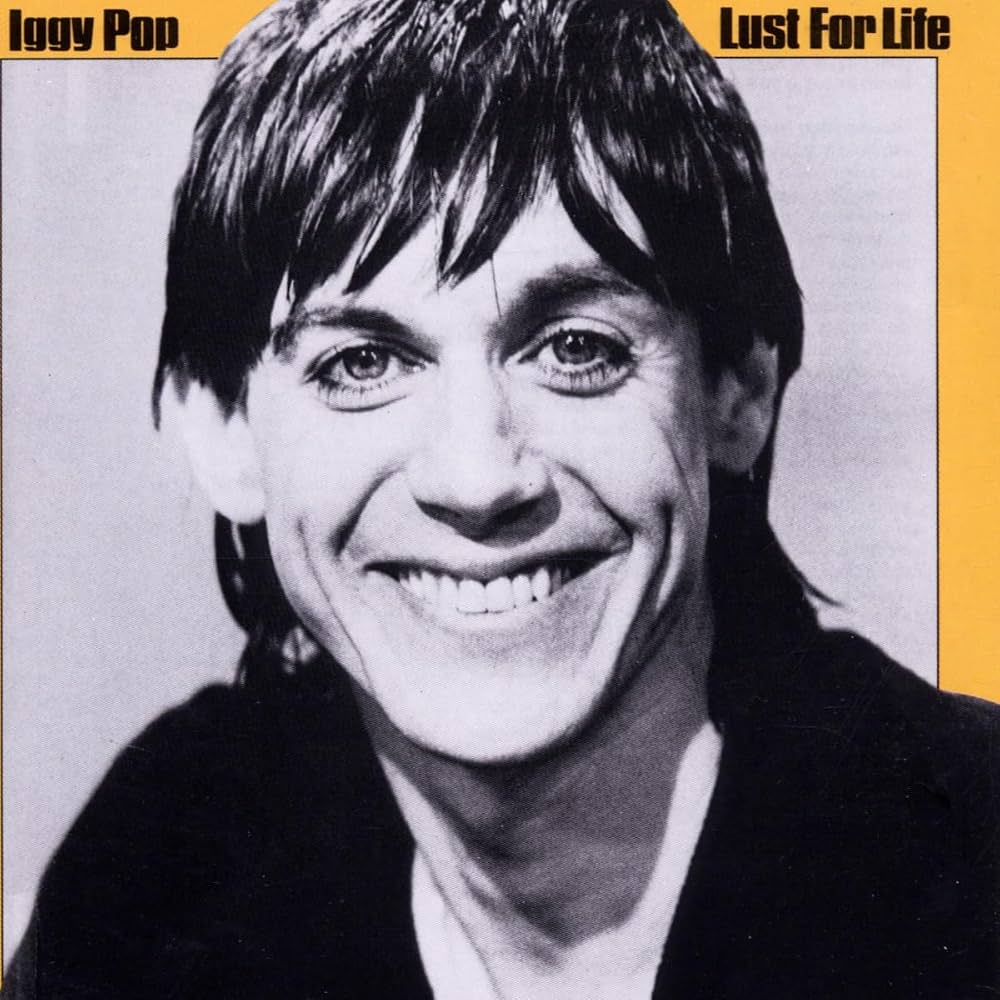
Few artists have reinvented themselves as dramatically as Iggy Pop. After the groundbreaking chaos of The Stooges and a period marked by addiction and personal turmoil, Iggy found himself in Berlin alongside his friend David Bowie, searching for a fresh start. The collaboration produced two remarkable albums in 1977. While The Idiot explored darker, more experimental territory, Lust for Life saw Iggy reconnect with the explosive rock and roll spirit that had made him a legend.
Released only months after The Idiot, Lust for Life is energetic, confident, and full of swagger. It captures an artist who had survived his lowest moments and rediscovered the joy of making loud, fearless rock music. Mixing punk attitude, garage rock grit, glam influences, and surprisingly sophisticated songwriting, the album became one of the defining records of Iggy’s solo career.
Although it wasn’t an immediate commercial blockbuster, Lust for Life steadily grew into one of rock’s most beloved albums, influencing generations of musicians while introducing many listeners to one of rock’s greatest frontmen.
Album Overview
Produced by David Bowie and Colin Thurston, Lust for Life perfectly balances raw energy with polished musicianship. Unlike the brooding atmosphere of The Idiot, this album bursts with confidence from its opening seconds. The rhythm section drives each song forward with relentless momentum, while Iggy’s charismatic vocals command attention throughout.
The album moves effortlessly between hard-driving rockers, reflective ballads, upbeat pop-infused tracks, and darker character studies. Rather than relying on a single formula, Iggy and Bowie crafted a record filled with variety while maintaining a remarkably cohesive identity.
Every performance feels alive. Even the quieter moments possess an underlying tension that keeps listeners engaged from beginning to end.
Songwriting
One of the album’s greatest strengths is its versatility. Iggy Pop proves himself to be far more than a wild stage performer by delivering thoughtful, witty, and emotionally honest songs.
The opening title track immediately establishes the album’s exhilarating spirit. Built around one of rock’s most recognizable drum patterns and an unforgettable riff, “Lust for Life” radiates optimism without ignoring life’s struggles. It celebrates resilience and embracing life despite past hardships.
“Sixteen” channels youthful innocence through an infectious melody that balances nostalgia with exuberance. The song demonstrates Iggy’s ability to write straightforward rock songs that remain emotionally compelling.
“Some Weird Sin” explores romance with playful charm, while “The Passenger” stands among Iggy’s greatest achievements. Inspired by rides through Berlin with David Bowie, the song transforms ordinary travel into a meditation on observation, freedom, and urban life. Its hypnotic rhythm and unforgettable chorus have made it one of the most enduring songs in rock history.
Elsewhere, “Neighborhood Threat” introduces darker tension, “Success” delivers biting humor, and “Fall in Love with Me” closes the album with emotional warmth.
Throughout the record, Iggy’s lyrics feel personal without becoming overly confessional. He writes with confidence, wit, and an unmistakable sense of individuality.
Performance
Iggy Pop delivers one of the strongest vocal performances of his career.
His voice retains the raw intensity that defined The Stooges, but here it displays greater control and nuance. He effortlessly shifts between snarling rock vocals, conversational storytelling, and surprisingly tender moments.
David Bowie contributes significantly behind the scenes while also adding keyboards, backing vocals, and songwriting support. His influence is undeniable, yet the album never feels like a Bowie record. Iggy’s personality dominates every song.
Carlos Alomar’s guitar work provides memorable riffs without excessive flash, while the rhythm section locks into grooves that are both powerful and danceable. Hunt and Tony Sales form an exceptionally tight backbone, giving the album much of its infectious momentum.
Every musician understands exactly when to push forward and when to leave space for Iggy’s commanding presence.
Production
The production achieves an ideal balance between polish and spontaneity.
Unlike many late-1970s rock albums that embraced increasingly elaborate studio techniques, Lust for Life maintains an organic feel. The guitars are crisp, the drums sound huge without becoming artificial, and Iggy’s vocals remain front and center throughout.
The title track immediately demonstrates the production’s strengths. The famous drumbeat explodes from the speakers with remarkable clarity, setting the tone for everything that follows.
The album also benefits from excellent pacing. High-energy rockers alternate naturally with more reflective songs, preventing the record from becoming predictable while maintaining consistent momentum.
Decades later, the production continues to sound vibrant because it emphasizes strong performances rather than contemporary trends.
Standout Tracks
“Lust for Life”
One of rock’s greatest opening tracks, combining infectious rhythms, unforgettable hooks, and boundless energy. It remains Iggy’s signature solo recording and a timeless classic.
“The Passenger”
A masterpiece of simplicity and atmosphere. Its hypnotic groove, memorable chorus, and reflective lyrics have earned it a permanent place among rock’s greatest songs.
“Sixteen”
Bright, energetic, and irresistibly catchy, this song showcases Iggy’s talent for writing classic rock and roll with genuine heart.
“Some Weird Sin”
A wonderfully melodic track that blends romance, humor, and swagger while highlighting the album’s lighter side.
“Neighborhood Threat”
One of the album’s darker highlights, featuring dramatic arrangements and a captivating vocal performance.
Weak Points
The album’s consistency occasionally works against it. While every song is enjoyable, a few deeper cuts lack the immediate impact of classics like “Lust for Life” and “The Passenger.” Those towering highlights naturally dominate discussions of the record.
Listeners expecting the unhinged aggression of The Stooges may also find Lust for Life surprisingly polished. The Berlin period refined Iggy’s songwriting without completely abandoning his rebellious spirit, but some fans of his earlier work may initially miss the raw chaos.
Additionally, David Bowie’s creative influence is substantial enough that it occasionally becomes difficult to separate where one artist ends and the other begins. Fortunately, Iggy’s commanding personality ultimately keeps the album firmly his own.
Legacy
Lust for Life has only grown in stature over time.
Although the title track became famous almost immediately, the album’s reputation expanded significantly after “The Passenger” developed into one of Iggy Pop’s defining songs. Both tracks remain staples of classic rock radio, films, television, commercials, and live performances.
The album also reinforced Iggy Pop’s status as one of punk’s founding fathers while proving he could evolve beyond the raw aggression of The Stooges. Artists ranging from alternative rock bands to garage revival groups have cited Lust for Life as a major influence.
Perhaps its greatest achievement is demonstrating that artistic reinvention need not sacrifice authenticity. Rather than repeating past successes, Iggy embraced new musical ideas while remaining unmistakably himself.
Today, Lust for Life stands alongside The Idiot as one of the essential albums of the Berlin era and one of the finest records of the 1970s.
Final Score: 9.5/10
Lust for Life is an exhilarating celebration of survival, creativity, and rock and roll. Packed with unforgettable songs, exceptional performances, sharp production, and two of the greatest tracks in Iggy Pop’s catalog, it captures an artist at the perfect intersection of maturity and reckless energy. While a handful of songs are inevitably overshadowed by its iconic singles, the album remains an endlessly enjoyable listen and one of the defining rock records of the late 1970s.
This post has already been read 59 times!