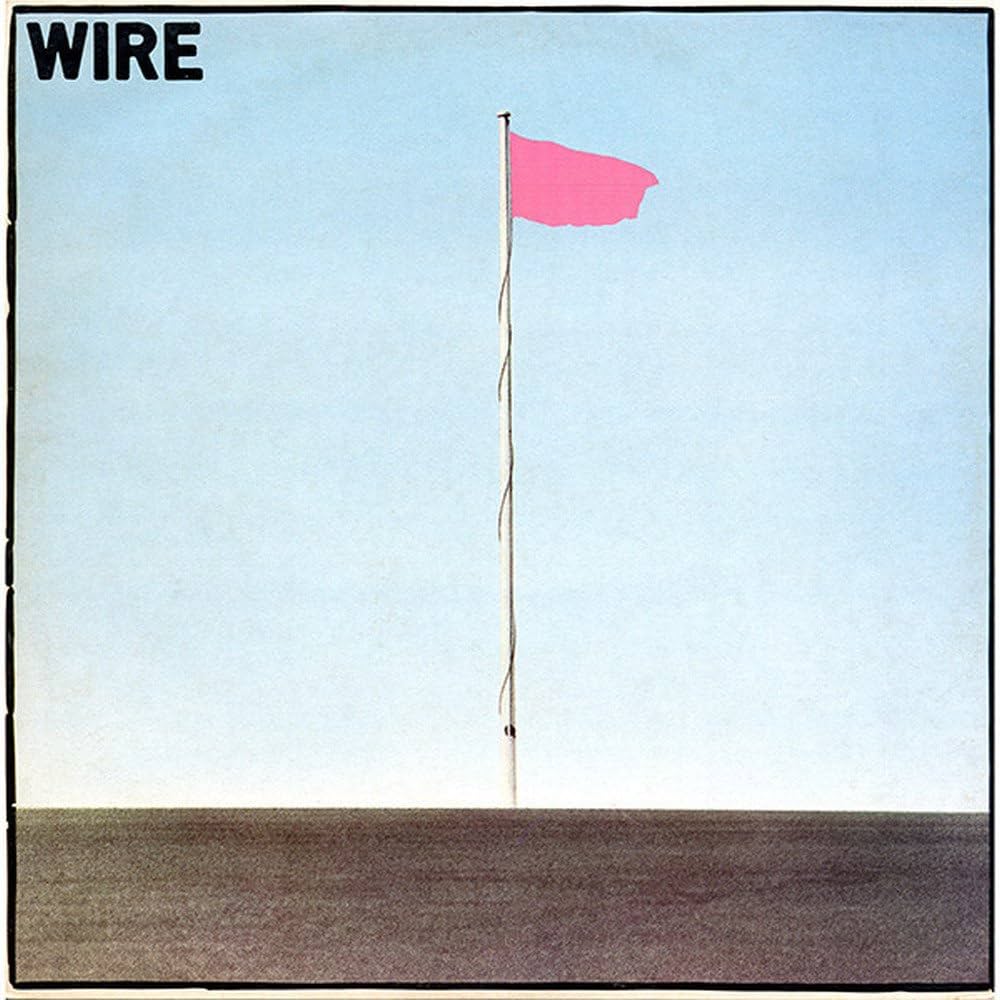
The first wave of British punk produced several landmark albums, but few were as unconventional—or as influential—as Wire’s Pink Flag. Released in 1977, the album arrived during punk’s explosive rise, yet it sounded unlike almost anything else coming out of the movement. While many of their contemporaries leaned heavily on anger, political outrage, or rock and roll tradition, Wire embraced minimalism, experimentation, and startling brevity.
Containing 21 songs in just over 35 minutes, Pink Flag constantly defies expectations. Several tracks barely last a minute, some end just as they seem to be getting started, and the arrangements strip rock music down to its bare essentials. What initially sounds simple reveals remarkable sophistication after repeated listens. Every riff, lyric, and rhythm feels carefully considered, making Pink Flag one of the rare albums where almost nothing is wasted.
Although it wasn’t a major commercial success upon release, its influence has only grown over the decades. Today, it is recognized as one of punk’s greatest achievements and a blueprint for post-punk, indie rock, and alternative music.
Album Overview
Produced by Mike Thorne, Pink Flag captures a band refusing to follow convention. Wire emerged from London’s punk scene but approached songwriting with an art-school mindset. Rather than relying on familiar verse-chorus structures, many songs feel like musical sketches—brief ideas presented with complete confidence before abruptly ending.
The lineup of Colin Newman, Bruce Gilbert, Graham Lewis, and Robert Gotobed functions as a perfectly balanced unit. Every instrument serves the composition without unnecessary embellishment. The guitars alternate between jagged riffs and minimalist textures, the rhythm section provides precise momentum, and Newman’s understated vocals deliver lyrics that range from cryptic observations to dry humor.
Despite the album’s fragmented nature, it never feels disjointed. The sequencing creates a relentless pace that keeps listeners engaged from beginning to end.
Songwriting
One of Pink Flag‘s greatest accomplishments is proving that great songwriting doesn’t require excess.
Many tracks communicate fully formed ideas in less than two minutes. “Reuters” opens the album with a slow-building atmosphere before exploding into controlled tension, immediately announcing that Wire would not follow punk’s established rules.
“Field Day for the Sundays” lasts barely half a minute yet remains unforgettable through its sharp lyrics and infectious melody.
The title track combines military imagery with one of the album’s strongest hooks, while “Three Girl Rhumba” delivers a hypnotic riff that would later inspire countless alternative rock bands. Decades later, its influence remains unmistakable.
Songs such as “Ex Lion Tamer,” “Lowdown,” and “Mr. Suit” demonstrate the band’s remarkable ability to distill ideas into concise, impactful statements.
Perhaps the album’s most surprising quality is its variety. Beneath the minimalist approach lies an impressive range of moods, from aggression and sarcasm to melancholy and introspection.
The lyrics often resist straightforward interpretation, encouraging listeners to revisit the album repeatedly in search of new meanings.
Performance
Wire’s performances are defined by discipline rather than flash.
Colin Newman’s guitar playing avoids traditional rock heroics, favoring angular riffs and economical melodies that maximize impact with minimal notes. His vocal delivery is detached yet expressive, perfectly complementing the band’s intellectual approach.
Bruce Gilbert’s guitar work constantly interacts with Newman’s, creating textures rather than conventional lead parts. Together they build an unmistakable sonic identity that countless bands would later emulate.
Graham Lewis anchors the songs with melodic bass lines that quietly carry much of the album’s momentum, while Robert Gotobed’s drumming remains crisp, inventive, and remarkably restrained.
Perhaps most impressive is the band’s collective confidence. Every abrupt ending, unexpected tempo change, and unconventional arrangement feels completely intentional. There is never a sense that Wire is experimenting for its own sake; every creative decision strengthens the songs.
Production
Mike Thorne’s production is one of the album’s greatest assets.
The recording is clean without sacrificing raw energy. Each instrument occupies its own space, allowing listeners to appreciate the intricate interplay between the guitars and rhythm section.
Unlike many punk albums recorded during the same period, Pink Flag avoids sounding chaotic or muddy. The clarity enhances the minimalist arrangements, ensuring every note contributes meaningfully to the overall sound.
The production also emphasizes dynamics. Songs frequently shift between quiet tension and sudden bursts of energy, creating dramatic contrasts that reward attentive listening.
Nearly fifty years later, the album continues to sound remarkably modern because its production relies on balance and precision rather than studio gimmicks.
Standout Tracks
“Reuters”
An extraordinary opener that slowly builds suspense before erupting into one of the album’s most memorable moments. It immediately establishes Wire’s unique identity.
“Three Girl Rhumba”
Built around one of post-punk’s most influential guitar riffs, this concise masterpiece remains one of Wire’s defining songs and has inspired countless musicians.
“Pink Flag”
Simple, direct, and irresistibly catchy, the title track perfectly captures the band’s ability to combine memorable hooks with unconventional songwriting.
“Ex Lion Tamer”
Sharp, angular, and energetic, this track highlights Wire’s gift for creating maximum impact in minimal running time.
“Mannequin”
One of the album’s strongest melodic moments, balancing punk urgency with thoughtful songwriting and infectious guitar work.
Weak Points
Pink Flag intentionally challenges conventional expectations, which can make it a demanding listen for newcomers.
Many songs end abruptly, often just as they begin to develop. While this economy is central to the album’s identity, listeners accustomed to traditional rock structures may occasionally wish certain ideas lasted longer.
The emotional distance of Colin Newman’s vocals can also create a sense of detachment. Unlike the passionate delivery of many punk singers, Wire often favors observation over emotional catharsis.
Finally, the album’s minimalist approach requires attentive listening. Those seeking immediate singalong choruses or extended instrumental showcases may initially overlook its brilliance.
These characteristics, however, are fundamental to what makes Pink Flag such a groundbreaking work.
Legacy
Few debut albums have cast such a long shadow.
Pink Flag became one of the foundational records of post-punk, influencing artists across multiple generations. Bands such as R.E.M., Sonic Youth, Blur, Elastica, Minor Threat, Big Black, Hüsker Dü, Fugazi, and countless indie rock groups have acknowledged Wire’s enormous impact.
Its emphasis on brevity, repetition, angular guitar work, and minimalist arrangements helped redefine what punk could become after its initial explosion. Rather than treating punk as a fixed genre, Wire viewed it as an opportunity to dismantle traditional songwriting and rebuild it from the ground up.
The album’s influence extends beyond punk into indie rock, alternative rock, post-hardcore, and even experimental music. Many of the sounds that became common during the 1980s and 1990s can be traced directly back to the innovations found on Pink Flag.
Today, the album is rightly regarded as one of the greatest debut records ever made and one of the essential cornerstones of post-punk.
Final Score: 10/10
Pink Flag is a revolutionary masterpiece that transformed the possibilities of punk rock. Through concise songwriting, intelligent experimentation, exceptional performances, and pristine production, Wire created an album that remains as daring and influential today as it was in 1977. Every listen reveals new details, every song serves a purpose, and its lasting impact on alternative music is impossible to overstate. Bold, original, and endlessly rewarding, Pink Flag stands among the finest albums of the punk era and one of rock music’s most enduring achievements.
This post has already been read 53 times!