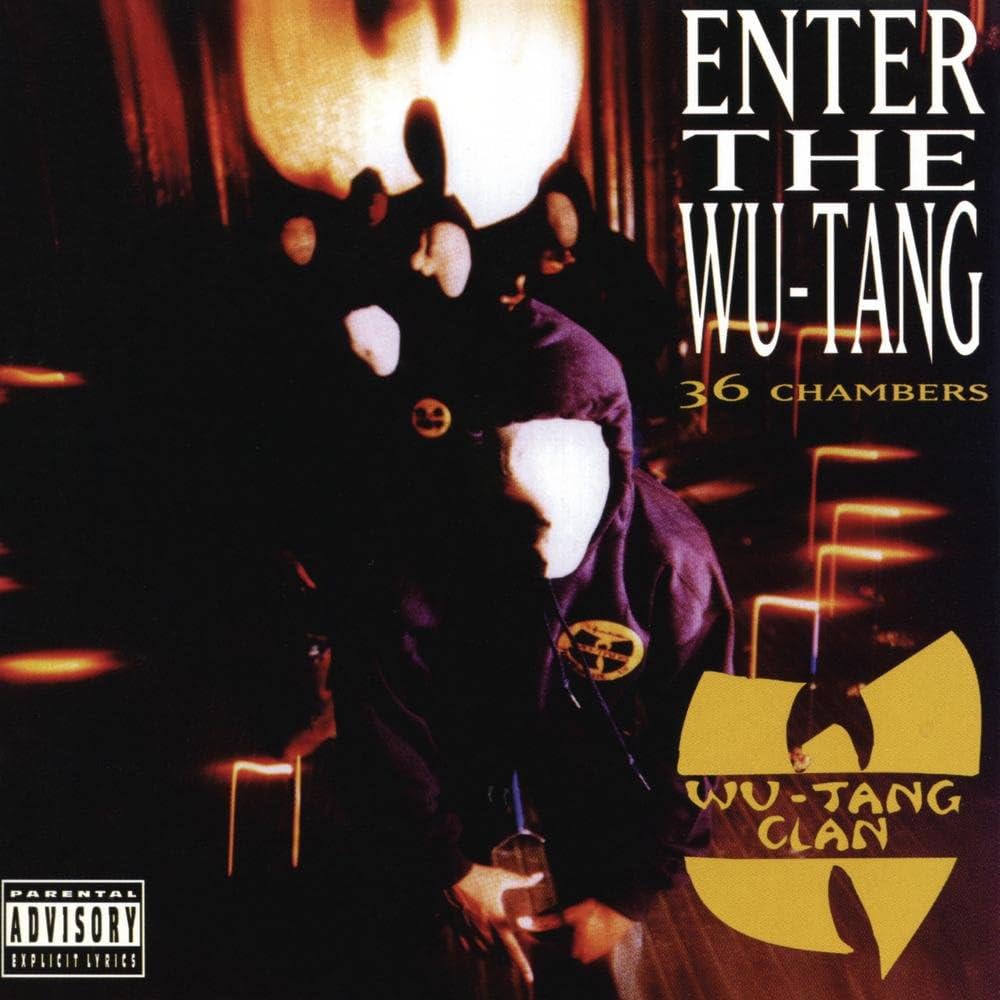
Hip-hop was at a crossroads in 1993. The West Coast had seized commercial dominance thanks to Dr. Dre’s The Chronic, G-funk was flooding the airwaves, and polished production was becoming the norm. Meanwhile, New York—the birthplace of hip-hop—was searching for its next defining voice.
That voice arrived not from a single rapper, but from a collective unlike anything the genre had ever seen.
Released on November 9, 1993, Enter the Wu-Tang (36 Chambers) introduced nine MCs with wildly different personalities, styles, and voices, all united under the visionary production of RZA. Rather than embracing polished radio-friendly beats, Wu-Tang Clan built their sound from dusty soul samples, eerie piano loops, gritty drums, kung fu movie dialogue, and an atmosphere that felt more like an abandoned Staten Island warehouse than a recording studio.
The result was revolutionary.
Enter the Wu-Tang (36 Chambers) not only restored New York’s place at the center of hip-hop, but also permanently changed how rap groups, independent labels, production, and lyrical styles would evolve throughout the next three decades. Raw, chaotic, and endlessly quotable, it remains one of the most influential hip-hop albums ever recorded.
Album Overview
Unlike many rap albums built around a single charismatic star, 36 Chambers thrives because every member contributes something unique.
RZA serves as the architect, crafting minimalist yet unforgettable beats that reject the polished production dominating commercial rap. GZA delivers cerebral lyricism. Method Man provides effortless charisma. Ol’ Dirty Bastard injects complete unpredictability. Raekwon and Ghostface Killah paint vivid street narratives. Inspectah Deck dazzles with intricate rhyme schemes. U-God supplies commanding presence, while Masta Killa quietly leaves memorable impressions despite limited appearances.
Rather than sounding crowded, the album feels remarkably balanced.
RZA’s production ties everything together. His beats are sparse, gritty, and often intentionally imperfect. Crackling samples, distorted drums, haunting vocal snippets, and unconventional arrangements create an atmosphere unlike anything listeners had heard in mainstream hip-hop.
The kung fu film samples scattered throughout the album are more than gimmicks. They reinforce the Clan’s mythology, turning the record into something that feels almost cinematic. Every track contributes to a larger world built around discipline, survival, competition, and lyrical mastery.
Despite featuring numerous rappers, 36 Chambers never loses focus because RZA carefully sequences each song, ensuring every member receives moments to shine.
Songwriting
The album opens with “Bring da Ruckus,” immediately introducing listeners to the Clan’s aggressive energy. Every verse feels like an announcement that a new era of hip-hop has arrived.
“Shame on a Nigga” shifts toward a looser, funkier groove while allowing Ol’ Dirty Bastard’s completely unpredictable delivery to steal the spotlight. His unconventional style would become one of the group’s defining characteristics.
“Clan in da Front” gives GZA the stage almost entirely to himself, demonstrating why he would soon become one of hip-hop’s most respected lyricists.
Then comes “Wu-Tang: 7th Chamber,” where the group’s chemistry becomes impossible to ignore. Every member attacks the microphone with a different approach, yet the performances complement rather than compete with one another.
The album’s commercial breakthrough, “C.R.E.A.M.,” remains one of the greatest hip-hop songs ever recorded. Built around a melancholy soul sample, Raekwon and Inspectah Deck deliver unforgettable verses examining poverty, ambition, and survival. The hook has become one of rap’s most recognizable phrases.
“Method Man” functions almost like a solo introduction, showcasing the effortless confidence and humor that would soon make him one of hip-hop’s biggest stars.
“Protect Ya Neck” may be the album’s defining posse cut. Every verse raises the intensity, culminating in one of the greatest ensemble performances in rap history.
“Tearz” demonstrates surprising emotional depth, while “Can It Be All So Simple” provides one of Ghostface Killah and Raekwon’s finest collaborations.
The album closes with “Wu-Tang: 7th Chamber – Part II,” bringing listeners full circle while reinforcing the collective’s identity.
Remarkably, despite its relatively short running time, there is virtually no filler.
Performance
Every member of Wu-Tang Clan performs at an exceptionally high level, yet no two sound remotely alike.
Method Man immediately emerges as the most naturally charismatic performer. His relaxed flow, memorable voice, and undeniable confidence make every appearance unforgettable.
GZA delivers razor-sharp lyricism with remarkable precision. His calm, deliberate style perfectly contrasts with the surrounding chaos.
Raekwon and Ghostface Killah establish a chemistry that would later blossom into one of hip-hop’s greatest creative partnerships. Their storytelling and street imagery bring extraordinary detail to every verse.
Inspectah Deck consistently produces some of the album’s strongest bars despite receiving less attention than some of his fellow members.
Then there is Ol’ Dirty Bastard.
Completely unpredictable, often sounding like he is inventing his flow in real time, ODB injects the album with manic energy that no other rapper could duplicate. His unconventional style shouldn’t work, yet it becomes one of the record’s greatest strengths.
Behind them all stands RZA, whose vision extends beyond production. He understands how to sequence voices, build tension, and create an identity larger than any individual performer.
The result is one of the greatest ensemble performances ever captured on a hip-hop album.
Production
If The Chronic represented immaculate studio perfection, 36 Chambers embraced beautiful imperfection.
RZA’s production sounds gritty, grimy, and almost homemade, yet every creative decision serves a purpose.
The drums often hit with distorted aggression. Soul samples appear chopped into unfamiliar shapes. Piano loops drift through mixes that intentionally avoid excessive polish. Empty space becomes as important as the sounds themselves.
This raw aesthetic helped redefine East Coast hip-hop.
Rather than hiding limitations, RZA turned them into strengths. The lo-fi production gives the album an urgency and authenticity that remains impossible to duplicate.
Even decades later, these beats sound unique because they reject conventional studio perfection in favor of atmosphere and personality.
Standout Tracks
“C.R.E.A.M.”
One of the greatest hip-hop songs ever recorded. Thoughtful storytelling, unforgettable production, and an iconic chorus make it the emotional centerpiece of the album.
“Protect Ya Neck”
A legendary posse cut that introduces nearly every member at the top of their game. Every verse contributes to one of rap’s greatest group performances.
“Bring da Ruckus”
An explosive opening statement that immediately establishes Wu-Tang’s uncompromising identity.
“Method Man”
The perfect showcase for one of hip-hop’s most charismatic personalities, featuring an irresistible beat and memorable hook.
“Can It Be All So Simple”
Ghostface Killah and Raekwon deliver vivid storytelling over one of RZA’s most soulful productions.
Weak Points
The album’s rough production may initially surprise listeners accustomed to cleaner modern recordings.
While its lo-fi sound has become part of its legendary status, first-time listeners may find the intentionally abrasive mixes less immediately accessible than more polished hip-hop classics.
Some skits and kung fu dialogue also interrupt the pacing slightly, though they contribute to the album’s larger mythology and atmosphere.
These are minor concerns on a record whose artistic vision is so fully realized.
Legacy
Very few albums have reshaped hip-hop as dramatically as Enter the Wu-Tang (36 Chambers).
It restored New York’s prominence during an era increasingly dominated by the West Coast. It established RZA as one of rap’s greatest producers and introduced a business model that allowed every member to pursue successful solo careers while remaining part of the collective.
The album’s influence extends far beyond East Coast rap. Underground hip-hop, alternative rap, horrorcore, backpack rap, and even modern trap producers continue borrowing elements from RZA’s production philosophy.
Artists across generations have cited 36 Chambers as a foundational influence, and its gritty aesthetic permanently expanded hip-hop’s creative possibilities.
Few debut albums have introduced so many legendary careers at once. Even fewer have maintained such cultural relevance more than thirty years after release.
Its impact remains immeasurable.
Final Score: 10/10
Enter the Wu-Tang (36 Chambers) is one of the defining masterpieces of hip-hop. RZA’s revolutionary production, the astonishing chemistry among nine unique MCs, unforgettable songwriting, and an uncompromising artistic vision combined to create an album that permanently changed rap music. Raw, inventive, and endlessly influential, it remains as thrilling today as it was in 1993. This is not only Wu-Tang Clan’s greatest achievement—it is one of the greatest albums in the history of popular music.
This post has already been read 67 times!