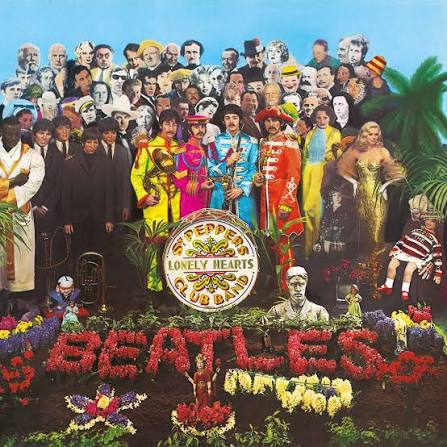
Popular music witnessed a fundamental paradigm shift in the summer of 1967 when The Beatles unveiled their ambitious, sprawling opus, Sgt. Pepper’s Lonely Hearts Club Band. Abandoning the familiar, high-energy rock persona of their earlier touring years, the band retreated into the meticulous sanctuary of EMI’s Abbey Road Studios for over four months. Under the guidance of producer George Martin, the record became a laboratory for unprecedented sonic experimentation, utilizing four-track tape machines to build dense, symphonic layers of instrumentation. It was a conscious effort to elevate the rock album into the realm of high art, effectively replacing the standard “collection of singles” format with a unified, conceptual, and highly curated long-form experience that forever altered the trajectory of modern recording.
The production is a masterclass in studio-as-instrument technique. The band, freed from the necessity of replicating their arrangements for live stages, harnessed orchestral string sections, brass ensembles, avant-garde tape loops, and unusual recording placements to craft a soundscape of unparalleled tonal diversity. Sgt. Pepper stands as a pivotal document, capturing a group at the absolute apex of their creative chemistry, bridging the gap between traditional melody-driven pop and the wild, unvarnished improvisational ambition that defined the latter half of the decade. By synthesizing diverse musical influences—from Indian classical music and circus-inspired brass bands to Edwardian music hall and sophisticated chamber-pop—the album successfully codified the concept album as the definitive format for artistic expression.
The Architectural Blueprint of the Concept Album
Central to the record’s enduring success is its bold decision to establish a cohesive, overarching conceptual identity. By adopting the persona of a fictitious, slightly nostalgic military brass band, the group provided an essential layer of artistic distance that allowed them to explore diverse, seemingly contradictory musical styles within a single project.
The album’s opening title track, “Sgt. Pepper’s Lonely Hearts Club Band,” immediately sets this experimental tone with its aggressive, crowd-noise-infused introduction and soaring, brass-heavy refrain. It functions as a meta-narrative invitation, framing the entire listening experience as a live, theatrical event rather than a static recording. This narrative commitment is mirrored in the suite-like construction of the record’s second half, where tracks bleed into one another to maintain the momentum of the experience. It was a structural innovation that directly paved the way for the progressive rock and concept-album boom of the 1970s, establishing a permanent precedent for using the album format to tell a story or explore a central, thematic concept.
This structural ambition culminates in the album’s monolithic closing track, “A Day in the Life,” which stands as one of the most sophisticated compositions in their entire catalog. Combining John Lennon’s detached, dream-like verses—inspired by newspaper reports and mundane observations—with Paul McCartney’s upbeat, piano-driven bridge, the song explores the crushing weight of the everyday reality set against the expansive potential of the imagination. The inclusion of a massive, forty-piece orchestral crescendo—meticulously recorded and layered by George Martin—creates an overwhelming sense of existential tension that builds until the famous, final, suspended piano chord rings out for over forty seconds. It is a staggering feat of arrangement that summarizes the band’s entire philosophy: taking the banal, mundane fragments of daily life and elevating them through technical virtuosity and atmospheric studio manipulation into something haunting, universal, and profoundly timeless.
The Fusion of Tradition and Avant-Garde
While Sgt. Pepper is remembered for its sprawling, ambitious concept, the record’s brilliance is equally evident in its ability to synthesize ancient, traditional melodic forms with cutting-edge, avant-garde studio experimentation. The band utilized the recording studio to breathe new, vital life into musical styles that were considered antiquated, effectively creating a modern, psychedelic pop language that felt both culturally grounded and entirely future-forward.
The iconic, sitar-heavy “Within You Without You” remains one of the most remarkable, genre-defying experiments in the band’s career. Written and arranged by George Harrison, the track incorporates a full ensemble of traditional Indian instruments, including tabla, dilruba, and tambura, creating a hypnotic, drone-based soundscape that feels distinctly apart from the western pop-rock structure of the rest of the record. Harrison’s lyrical exploration of existential detachment and interconnectedness, delivered with a calm, meditative focus, provides a necessary, reflective pause in the album’s otherwise chaotic, technicolor progression. It is a stunning, deeply sincere piece of composition that proved pop music could incorporate global, meditative, and non-linear melodic traditions without losing its emotional or rhythmic efficacy.
This fusion of the traditional and the experimental is pushed to its absolute, joyful extreme on “Being for the Benefit of Mr. Kite!” Inspired by an authentic Victorian-era circus poster found by Lennon, the track utilizes a bizarre, carnival-inspired soundscape of steam-organ loops, calliope-like brass arrangements, and deliberately distorted tape effects to recreate the swirling, chaotic atmosphere of a traveling spectacle. The band recorded the backing tracks by cutting up and splicing various lengths of recorded calliope music, effectively using the studio to build a synthetic, sonic landscape that mimicked the dizzying, non-linear experience of a circus performance. It remains a brilliantly effective, highly evocative piece of high-concept studio art, showcasing the band’s willingness to abandon the traditional guitar-driven pop sound in favor of an atmospheric, theatrical experience that served the specific, visual requirements of the song’s narrative.
The Legacy of the Studio Standard
The historical fallout of Sgt. Pepper’s Lonely Hearts Club Band permanently altered the structural DNA of the late-1960s music industry. By achieving massive commercial success while simultaneously championing an avant-garde, concept-driven, and deeply ambitious aesthetic, the record provided the essential, highly visible blueprint for the entire progressive and psychedelic pop movement.
The album’s influence on the broader industry cannot be overstated; it provided the commercial legitimacy required for major labels to prioritize long-form, artist-driven statements over the standard, short-term hit-single model. The record established a permanent creative template for the album era, directly shaping the sonic identities of bands like Pink Floyd, The Beach Boys, and David Bowie. By successfully synthesizing the sophisticated, melodic tradition of the pop song with a dense, experimental studio aesthetic, The Beatles permanently expanded the parameters of what popular music could conceptually achieve, proving that the recording studio was not merely a place to capture a song, but an essential, collaborative instrument in the creation of a definitive, modern work of art.
Conclusion: A Masterpiece of Transformative Pop
Sgt. Pepper’s Lonely Hearts Club Band remains an extraordinary, vital masterpiece because it captures the group at the exact moment they realized the infinite, expansive potential of the studio to manifest their inner world. It is an album that feels perfectly composed, elegantly contained, and remarkably forward-thinking, standing as a timeless monument to the power of melodic grace, studio innovation, and deeply observant, panoramic lyricism.
It demands to be experienced in its original, high-fidelity monaural mix—the exact way the engineers and band balanced the instruments to ensure the complex, layered arrangements functioned as a singular, unified force. In a historical landscape that often prioritizes the louder, more visceral rock experiments of the late-1960s, this record stands as a fierce, necessary reminder of the power of songcraft, tonal discipline, and the immense potential of the pop album as a definitive work of artistic expression. It is an flawless, genre-defining classic that remains as intricate, haunting, and beautiful today as it was the moment the final chord faded into the ether.
Final Score: 10 / 10
This post has already been read 91 times!