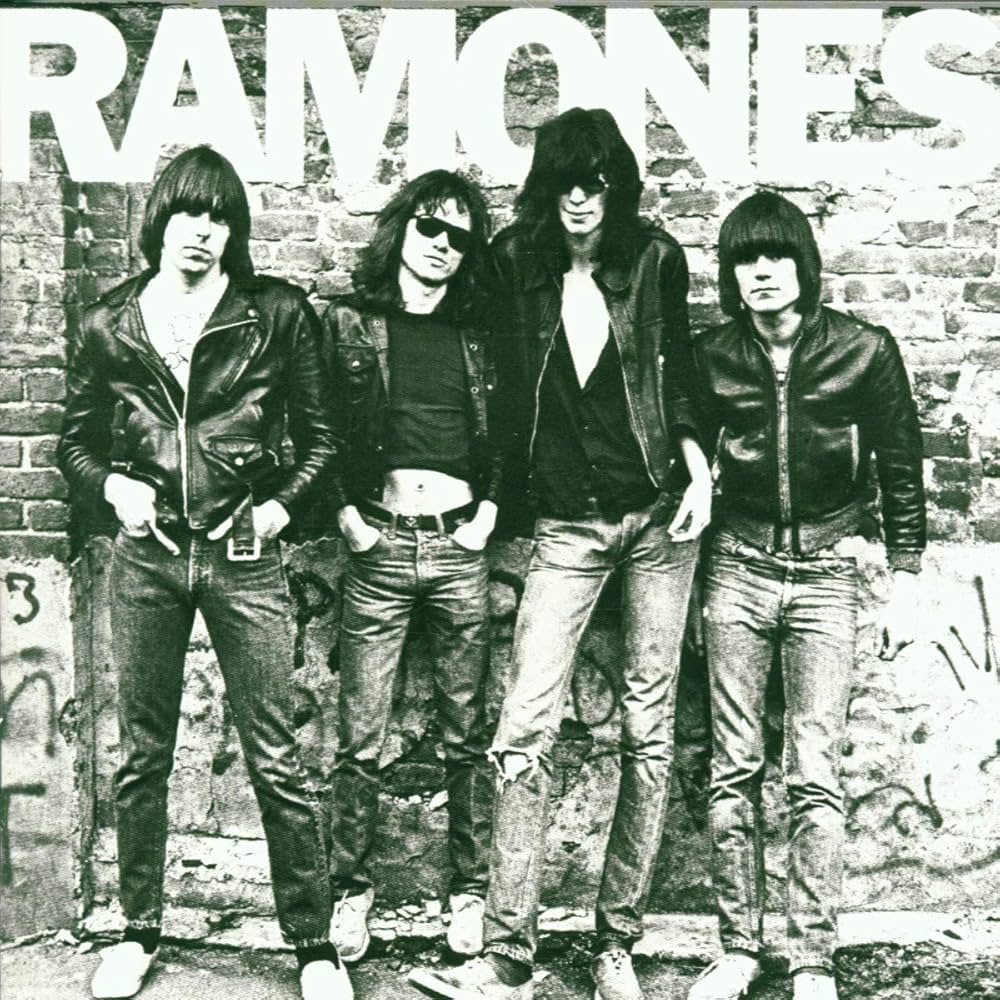
When Ramones arrived in 1976, rock music had grown increasingly elaborate. Progressive rock bands filled albums with lengthy compositions, arena acts relied on massive productions, and many artists seemed focused on technical complexity rather than raw excitement. Four musicians from Queens, New York, took the exact opposite approach. Their debut album stripped rock and roll back to its essentials, delivering fourteen songs in just under thirty minutes with relentless speed, razor-sharp hooks, and an attitude that would change music forever.
The Ramones weren’t polished virtuosos. They weren’t trying to reinvent songwriting through complexity. Instead, they rediscovered the power of short, loud, unforgettable songs built around simple riffs and infectious energy. Although the album sold modestly upon release, its influence became immeasurable. Entire genres—from punk and hardcore to alternative rock and pop-punk—can trace part of their DNA directly back to this record.
Nearly fifty years later, Ramones remains one of the most important debut albums ever recorded.
Album Overview
Recorded on a shoestring budget of roughly $6,000 and produced by Craig Leon, Ramones captures a band that already knew exactly who they were. There is no experimentation or uncertainty. From the famous opening count of “1-2-3-4!” the album launches into a barrage of fast, concise songs that rarely waste a second.
The formula sounds almost deceptively simple. Johnny Ramone’s relentless downstroke guitar attack creates a wall of sound, Dee Dee Ramone’s driving bass anchors every track, Tommy Ramone’s drumming keeps everything moving at breakneck speed, and Joey Ramone’s distinctive vocals provide the perfect balance between toughness and vulnerability.
Despite often being described as aggressive, the album is surprisingly melodic. Beneath the distortion and speed are catchy pop songs that owe as much to 1960s girl groups and early rock and roll as they do to garage rock.
Every song feels immediate, spontaneous, and exciting.
Songwriting
The songwriting is remarkably efficient. Few songs reach the three-minute mark, yet nearly every one contains memorable hooks, clever lyrics, and unforgettable choruses.
The opening track, “Blitzkrieg Bop,” instantly became the band’s signature song. Built around one of rock’s most recognizable chants, it demonstrates how powerful simplicity can be. Its infectious rhythm and singalong chorus remain staples at sporting events and concerts decades later.
“Beat on the Brat” combines dark humor with an irresistibly catchy melody, while “Judy Is a Punk” races through its story in barely over a minute without sacrificing memorable hooks.
The Ramones often drew inspiration from teenage boredom, comic books, horror films, old movies, and pop culture. Songs like “Chain Saw” and “Now I Wanna Sniff Some Glue” mix absurdity with youthful rebellion, creating lyrics that are humorous without taking themselves too seriously.
One of the album’s hidden strengths is “I Wanna Be Your Boyfriend.” Slowing the pace slightly, it reveals the band’s softer side and proves they could write charming pop songs just as effectively as high-speed punk anthems.
The closing “Today Your Love, Tomorrow the World” ends the album with one final burst of energy while demonstrating the Ramones’ willingness to push boundaries through provocative imagery.
The songs may appear simplistic on paper, but writing music this concise and memorable is far more difficult than it sounds.
Performance
The Ramones play with remarkable precision despite their reputation for chaos.
Johnny Ramone’s guitar work is among the most influential in rock history. Rather than flashy solos, he relies on relentless downstrokes and tightly locked rhythm playing that creates enormous momentum. His approach became the blueprint for countless punk guitarists.
Dee Dee Ramone’s bass lines are deceptively important. His playing provides the engine that drives nearly every song while adding melodic movement beneath Johnny’s wall of guitars.
Tommy Ramone’s drumming is equally essential. His steady, energetic performances never overwhelm the songs, keeping everything tight and focused.
Joey Ramone’s voice initially sounds unconventional, but it quickly becomes one of the band’s greatest strengths. His unique delivery gives the songs personality while making even the most outrageous lyrics feel oddly sincere.
Together, the four musicians sound completely unified. Every performance serves the song, with no unnecessary embellishments or wasted notes.
Production
Craig Leon’s production perfectly complements the band’s philosophy.
Rather than smoothing out the rough edges, the recording embraces them. The guitars are loud but clear, the rhythm section remains punchy, and Joey’s vocals sit prominently in the mix without feeling overproduced.
Considering the album’s tiny budget, the sound quality is impressive. The production captures the energy of the band’s live performances while maintaining enough clarity for every instrument to shine.
Perhaps the album’s greatest production achievement is its pacing. Fourteen songs fly by in under half an hour without becoming repetitive. Each track ends almost as quickly as it begins, encouraging listeners to immediately replay the record.
That sense of urgency became one of punk rock’s defining characteristics.
Standout Tracks
“Blitzkrieg Bop”
The definitive Ramones song and one of the greatest opening tracks ever recorded. Its instantly recognizable chant, explosive energy, and timeless simplicity make it an enduring rock classic.
“Beat on the Brat”
Darkly humorous and irresistibly catchy, this track showcases the band’s talent for turning unusual ideas into unforgettable songs.
“Judy Is a Punk”
Barely over a minute long, yet packed with hooks, attitude, and infectious momentum. It perfectly captures the Ramones’ economical songwriting style.
“I Wanna Be Your Boyfriend”
A charming contrast to the album’s relentless pace, revealing the band’s affection for classic pop melodies and proving they were more versatile than critics often acknowledged.
“53rd & 3rd”
One of the album’s grittiest songs, written by Dee Dee Ramone, offering a darker perspective and one of the record’s most memorable vocal performances.
Weak Points
The Ramones intentionally embraced repetition as part of their identity, but listeners unfamiliar with punk may initially find the songs blend together. Similar tempos, guitar tones, and structures create remarkable consistency, though they leave little room for dramatic variation.
The production also reflects the band’s minimalist philosophy. Those expecting layered arrangements, extended solos, or technical virtuosity may mistake simplicity for limitation.
Finally, several songs end almost as soon as they begin, occasionally leaving listeners wishing certain ideas had been explored a little further.
These qualities, however, are fundamental to the album’s character rather than genuine flaws.
Legacy
Few albums have had a greater impact on modern rock music.
Although Ramones was not a commercial blockbuster upon release, it became a blueprint for punk rock worldwide. British musicians who would soon form bands like the Sex Pistols and The Clash found inspiration in the Ramones’ stripped-down approach. American hardcore, alternative rock, indie rock, grunge, and pop-punk all owe a significant debt to this record.
Bands such as Green Day, The Offspring, Blink-182, Rancid, The Misfits, Social Distortion, and countless others have acknowledged the Ramones’ influence. Their emphasis on short songs, memorable choruses, and relentless energy permanently reshaped rock music.
Today, Ramones is widely recognized as one of the greatest debut albums ever recorded and a cornerstone of punk history.
Final Score: 10/10
Ramones is a masterpiece of economy, energy, and influence. Every song serves a purpose, every performance radiates excitement, and every minute helped redefine what rock music could be. Its straightforward approach may seem simple, but beneath that simplicity lies extraordinary songwriting, unforgettable hooks, and a revolutionary spirit that continues to inspire musicians nearly fifty years later. Essential, timeless, and endlessly replayable, this is one of the most important rock albums ever made.
This post has already been read 75 times!