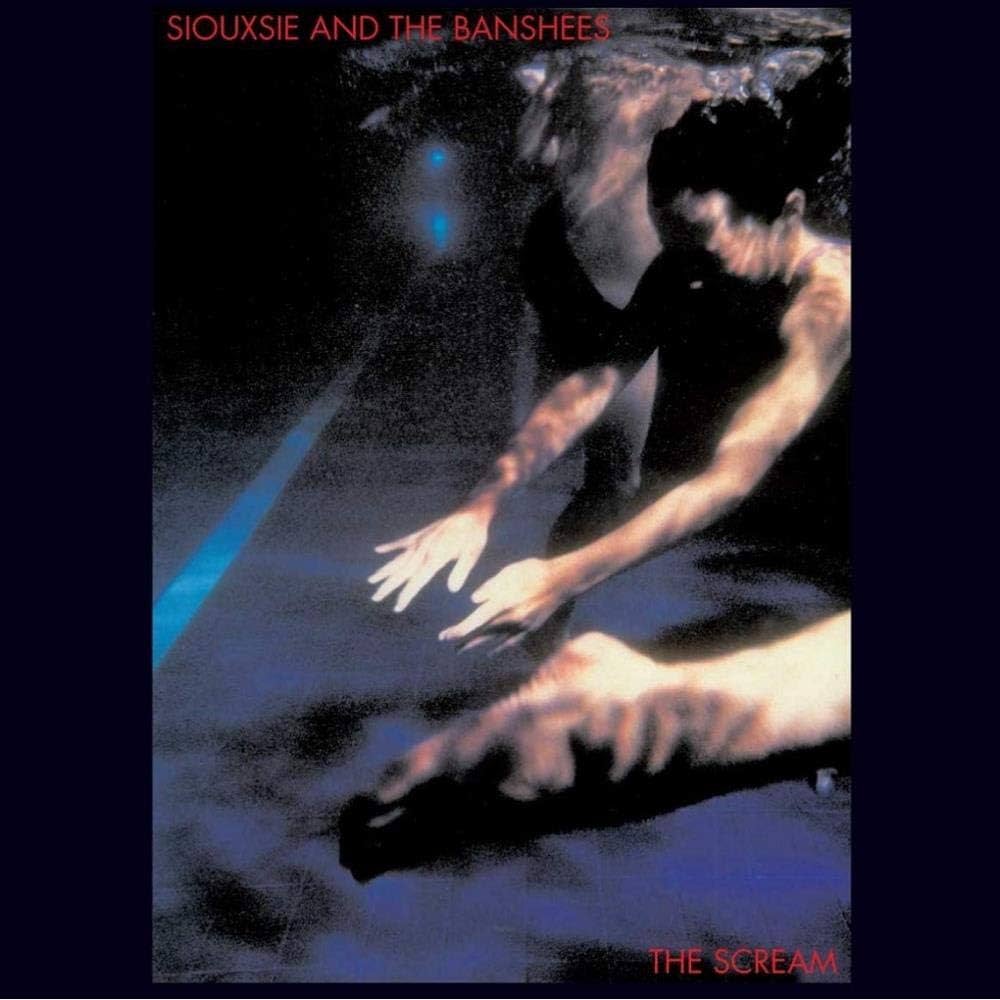
When punk exploded across Britain in 1976 and 1977, it was often defined by speed, aggression, and a deliberate rejection of musical excess. Many of the movement’s early bands burned brightly but briefly, leaving behind records fueled more by attitude than artistic ambition. Siouxsie and the Banshees emerged from that same scene, yet from the beginning they sounded like they belonged somewhere else entirely.
Released in 1978, The Scream is one of the most remarkable debut albums in rock history. Rather than simply extending punk’s raw energy, Siouxsie Sioux and the Banshees created a dark, hypnotic, atmospheric sound that would become one of the cornerstones of post-punk. Angular guitars, tribal drumming, haunting bass lines, and Siouxsie’s commanding vocals combined into music that felt mysterious, unsettling, and unlike anything else being released at the time.
The album’s influence would prove enormous. Gothic rock, alternative rock, dream pop, shoegaze, industrial music, and countless post-punk bands owe a creative debt to The Scream. Yet despite its historical importance, the album remains far more than an influential artifact. It is an extraordinary listening experience that still feels startlingly modern.
Nearly five decades after its release, The Scream remains one of the defining albums of the post-punk movement.
Album Overview
From its opening moments, The Scream creates an atmosphere of tension.
Silence becomes as important as sound.
Songs rarely explode with conventional rock energy.
Instead, they slowly build unease through repetition, space, and carefully controlled dynamics.
The album abandons many traditional rock conventions.
Standard blues progressions disappear.
Predictable song structures become rare.
Guitars often function as sources of texture rather than riffs.
The rhythm section drives the music forward through hypnotic repetition instead of flashy virtuosity.
This minimalist approach gives the record remarkable emotional power.
Every note feels deliberate.
Every pause matters.
Rather than overwhelming listeners with constant intensity, the band creates suspense.
The result is music that feels cinematic long before that became common within alternative rock.
Although unquestionably dark, the album never becomes oppressive.
Its beauty lies precisely in its willingness to embrace uncertainty.
Songwriting
Siouxsie Sioux and bassist Steven Severin developed a songwriting approach unlike almost anyone else in late-1970s rock.
Instead of relying on traditional narratives, many songs function as emotional landscapes.
“Pure” immediately establishes the album’s distinctive atmosphere through jagged rhythms and cryptic lyrics.
“Jigsaw Feeling” balances punk urgency with remarkable psychological depth, exploring alienation through fragmented imagery.
“Overground” remains one of the band’s finest early compositions, transforming social isolation into an unforgettable post-punk anthem.
“Carcass” combines grotesque imagery with hypnotic repetition, demonstrating the band’s willingness to confront uncomfortable subjects without sensationalism.
“Suburban Relapse” offers sharp observations about domestic life beneath its deceptively catchy structure.
The closing title track stretches beyond conventional songwriting almost entirely, building tension through repetition, atmosphere, and gradually escalating intensity.
Throughout the album, Siouxsie’s lyrics resist easy interpretation.
Rather than providing answers, they invite listeners to experience emotion directly.
That ambiguity remains one of the album’s greatest strengths.
Performance
Siouxsie Sioux immediately establishes herself as one of rock’s most distinctive vocalists.
Her voice possesses extraordinary authority.
She rarely pleads.
Rarely shouts.
Instead, she commands attention through precision and confidence.
Every phrase feels carefully controlled.
Even the album’s most unsettling moments remain elegant.
John McKay’s guitar work revolutionized post-punk guitar playing.
Rather than emphasizing blues solos or power chords, he constructs shimmering walls of dissonance, unusual chord voicings, and haunting textures that influenced generations of guitarists.
Steven Severin’s bass playing provides the album’s emotional foundation.
His melodic lines often function as lead instruments, guiding songs through constantly shifting harmonic landscapes.
Kenny Morris delivers one of post-punk’s finest drumming performances.
His tom-heavy, tribal rhythms create remarkable momentum without relying on traditional rock clichés.
Together, the band achieves extraordinary chemistry.
Every performance serves the larger atmosphere.
Nobody competes for attention.
Everything contributes to the album’s haunting identity.
Production
Produced by Steve Lillywhite, The Scream remains one of the defining production achievements of the post-punk era.
The recording embraces spaciousness.
Every instrument occupies its own carefully defined sonic territory.
The guitars shimmer without becoming muddy.
The bass remains powerful and melodic.
The drums possess remarkable depth.
Siouxsie’s vocals float above the arrangements with striking clarity.
Unlike many late-1970s recordings that now sound tied to their era, The Scream retains an astonishing sense of freshness.
The production avoids fashionable studio tricks in favor of atmosphere and balance.
Its influence can be heard throughout decades of alternative music.
Even today, the album sounds daring.
Standout Tracks
Although The Scream functions beautifully as a complete artistic statement, several songs stand among the greatest recordings of the post-punk era.
“Jigsaw Feeling” brilliantly combines psychological tension with unforgettable rhythmic momentum, showcasing the band’s extraordinary originality.
“Overground” remains one of Siouxsie and the Banshees’ signature songs, pairing infectious bass lines with one of Siouxsie’s finest vocal performances.
“Carcass” demonstrates the band’s fearless lyrical imagination while creating an atmosphere unlike anything else in late-1970s rock.
“Suburban Relapse” balances sharp social commentary with hypnotic musical arrangements, revealing another dimension of the band’s songwriting.
“The Scream” closes the album with an astonishing display of restraint and tension, building toward one of the most unforgettable finales in post-punk history.
Weak Points
The album’s uncompromising artistic vision naturally limits its accessibility.
Listeners expecting traditional rock hooks or straightforward melodies may initially find its atmosphere more compelling than its immediate catchiness.
Some songs also prioritize mood over conventional structure, demanding patience and repeated listening.
Additionally, the relentless emotional intensity leaves relatively little room for lighter moments.
These qualities ultimately define the album’s greatness rather than diminish it.
The Scream asks listeners to enter its world completely.
It richly rewards those willing to do so.
Legacy
The Scream helped establish the blueprint for post-punk while laying much of the foundation for gothic rock and countless alternative genres that followed.
Its influence reaches across decades.
The Cure.
Joy Division.
Bauhaus.
Cocteau Twins.
My Bloody Valentine.
PJ Harvey.
Garbage.
Interpol.
Yeah Yeah Yeahs.
Numerous artists have drawn inspiration from the album’s atmosphere, guitar textures, rhythmic innovations, and fearless originality.
Perhaps its greatest achievement is proving that punk’s rebellious spirit could evolve into something every bit as adventurous without sacrificing intensity.
Rather than ending one musical movement, The Scream helped begin several new ones.
Few debut albums have had such lasting consequences.
Final Score: 10/10
The Scream is one of the greatest debut albums in rock history and one of the defining masterpieces of the post-punk era. Siouxsie and the Banshees transformed punk’s raw energy into something darker, more sophisticated, and infinitely more mysterious through extraordinary songwriting, groundbreaking performances, and timeless production.
Every element contributes to the album’s haunting atmosphere, from Siouxsie Sioux’s commanding vocals to John McKay’s revolutionary guitar work and Steve Lillywhite’s spacious production. It remains an endlessly rewarding record whose influence continues to echo through alternative music nearly fifty years later.
Only a handful of debut albums completely reshape the possibilities of an entire genre. The Scream is one of those rare achievements—a bold, fearless masterpiece that still sounds startlingly original today.
This post has already been read 74 times!