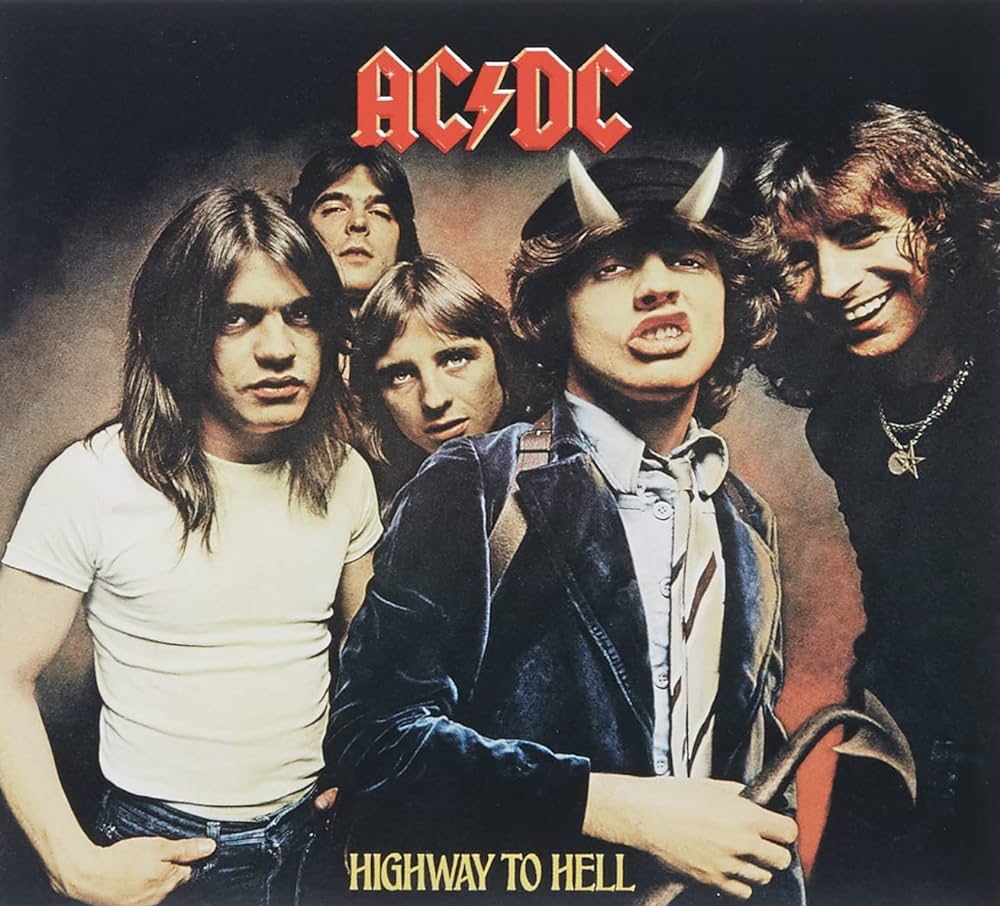
By 1979, AC/DC had already built a reputation as one of the hardest-working live bands in rock. Years of relentless touring, blistering performances, and a string of excellent albums had earned them a loyal following, but mainstream success on a global scale remained just out of reach. That changed with Highway to Hell. The album not only became the band’s commercial breakthrough, it also marked the final studio recording with the unforgettable Bon Scott, whose charisma, wit, and unmistakable voice helped define AC/DC’s identity.
Released in July 1979, Highway to Hell refined the band’s raw blues-rock formula without sacrificing any of its power. Working with producer Robert John “Mutt” Lange for the first time, AC/DC sharpened their songwriting, tightened their arrangements, and delivered one of the greatest hard rock albums ever made.
The tragic death of Bon Scott just months after the album’s release gives Highway to Hell additional emotional weight, but its greatness stands entirely on its own. It remains a celebration of loud guitars, unforgettable riffs, rebellious spirit, and rock ‘n’ roll at its purest.
Album Overview
Produced by Mutt Lange, Highway to Hell captures AC/DC at the perfect moment in their career. The rough edges that characterized earlier albums are still present, but they’re balanced by a cleaner, more focused production that allows every instrument to shine.
The formula is deceptively simple. Angus Young delivers one iconic guitar riff after another, Malcolm Young provides one of the tightest rhythm guitar foundations in rock history, Cliff Williams locks everything together with steady bass lines, Phil Rudd’s economical drumming provides an irresistible groove, and Bon Scott injects every song with personality, swagger, and humor.
Unlike many hard rock albums of its era, Highway to Hell rarely relies on excess. There are no unnecessary instrumental detours or overblown arrangements. Every song gets straight to the point while leaving a lasting impression.
The result is an album that feels effortless despite its extraordinary craftsmanship.
Songwriting
AC/DC’s songwriting has always thrived on memorable riffs and simple structures, but Highway to Hell represents a significant leap forward.
The title track is one of rock’s most recognizable songs. Built around Angus Young’s immortal opening riff and Bon Scott’s larger-than-life vocal performance, “Highway to Hell” has become an enduring anthem that perfectly captures the band’s rebellious image.
“Girls Got Rhythm” follows with infectious energy and a hook that demonstrates the band’s growing confidence as songwriters.
“Walk All Over You” balances heavy riffs with surprising melodic sophistication, while “Touch Too Much” remains one of AC/DC’s finest pop-oriented rock songs. Its irresistible chorus and tight arrangement make it one of the album’s highlights.
The swaggering “Shot Down in Flames” showcases Bon Scott’s ability to inject humor into tales of romantic frustration, while “If You Want Blood (You’ve Got It)” delivers one of the album’s heaviest performances.
Later tracks such as “Love Hungry Man” and “Night Prowler” reveal a more restrained side of the band, proving they could create atmosphere just as effectively as they could generate pure adrenaline.
Every song reflects a band that had mastered its identity without becoming repetitive.
Performance
Every member of AC/DC delivers an outstanding performance.
Bon Scott is simply magnificent. His gritty voice, mischievous personality, and effortless charisma elevate every lyric. Few frontmen have ever sounded so completely at home within a band’s musical identity.
Angus Young once again proves why he became one of rock’s most influential guitarists. His solos are exciting without becoming self-indulgent, and his riffs remain among the most recognizable ever written.
Malcolm Young deserves equal praise. Often overshadowed by his younger brother, Malcolm’s rhythm guitar playing is the backbone of AC/DC’s sound. His precision, groove, and unwavering consistency make every song feel enormous.
Cliff Williams provides solid, melodic bass lines that perfectly support the guitars, while Phil Rudd’s deceptively simple drumming demonstrates why restraint can often be more powerful than technical complexity.
Perhaps the greatest strength of the performances is the band’s chemistry. Every musician understands exactly what each song requires, resulting in an album that feels remarkably unified.
Production
Mutt Lange’s production transformed AC/DC without changing who they were.
Previous albums possessed tremendous energy but occasionally sounded rough around the edges. On Highway to Hell, Lange gives the band greater clarity while preserving their raw power.
The twin guitar sound is huge without becoming muddy. The rhythm section is tight and punchy, Bon Scott’s vocals sit perfectly within the mix, and every chorus carries tremendous impact.
Lange also tightened the song structures, helping the band emphasize memorable hooks without sacrificing their trademark aggression.
The production has aged exceptionally well. Decades later, the album still sounds powerful, balanced, and surprisingly modern.
Standout Tracks
“Highway to Hell”
One of the greatest hard rock songs ever written. From its unforgettable opening riff to Bon Scott’s iconic vocal performance, every second is instantly recognizable.
“Touch Too Much”
A perfect combination of melody, swagger, and hard rock energy. Its enormous chorus makes it one of AC/DC’s finest songs.
“Shot Down in Flames”
Bon Scott’s humorous storytelling and the band’s relentless groove combine to create one of the album’s most enjoyable tracks.
“If You Want Blood (You’ve Got It)”
Aggressive, loud, and packed with attitude, this song showcases AC/DC at their hardest-hitting.
“Night Prowler”
A slower, bluesy closer that demonstrates the band’s ability to build atmosphere without sacrificing intensity. Bon Scott’s vocal performance is particularly memorable.
Weak Points
There are remarkably few weaknesses on Highway to Hell.
The band’s commitment to a straightforward blues-rock formula means there is little stylistic variety from track to track. Listeners looking for dramatic experimentation or progressive song structures won’t find them here.
Additionally, “Love Hungry Man” is sometimes viewed as the album’s least memorable track. While still enjoyable, it lacks the immediate impact of the surrounding classics.
These are minor observations on an album whose greatest strength lies in its consistency. AC/DC never tries to be anything other than themselves, and that’s precisely why the record succeeds.
Legacy
Highway to Hell transformed AC/DC from a successful rock band into international superstars.
The album became their highest-charting release to that point and introduced millions of listeners to Bon Scott’s unforgettable voice and Angus Young’s legendary guitar work. Although Scott’s death in February 1980 brought this era of the band to a heartbreaking end, the album ensured his legacy would live on forever.
Its influence on hard rock and heavy metal cannot be overstated. Countless bands—including Guns N’ Roses, Metallica, Def Leppard, Airbourne, and many others—have cited AC/DC’s straightforward approach to songwriting as a major inspiration.
More importantly, Highway to Hell demonstrated that great rock music doesn’t require unnecessary complexity. Memorable riffs, honest performances, unforgettable choruses, and relentless energy were enough to create something timeless.
Today, the album remains one of the defining records of hard rock and one of the greatest final performances by any legendary frontman.
Final Score: 10/10
Highway to Hell is a masterclass in hard rock songwriting and execution. Bon Scott delivers the finest vocal performance of his career, Angus and Malcolm Young create an endless stream of unforgettable riffs, and Mutt Lange’s polished production elevates the band without diluting its identity. Every song serves a purpose, every performance overflows with confidence, and the album’s influence continues to echo through generations of rock music. Powerful, consistent, and endlessly replayable, Highway to Hell stands among the greatest hard rock albums ever recorded and remains one of AC/DC’s crowning achievements.
This post has already been read 106 times!