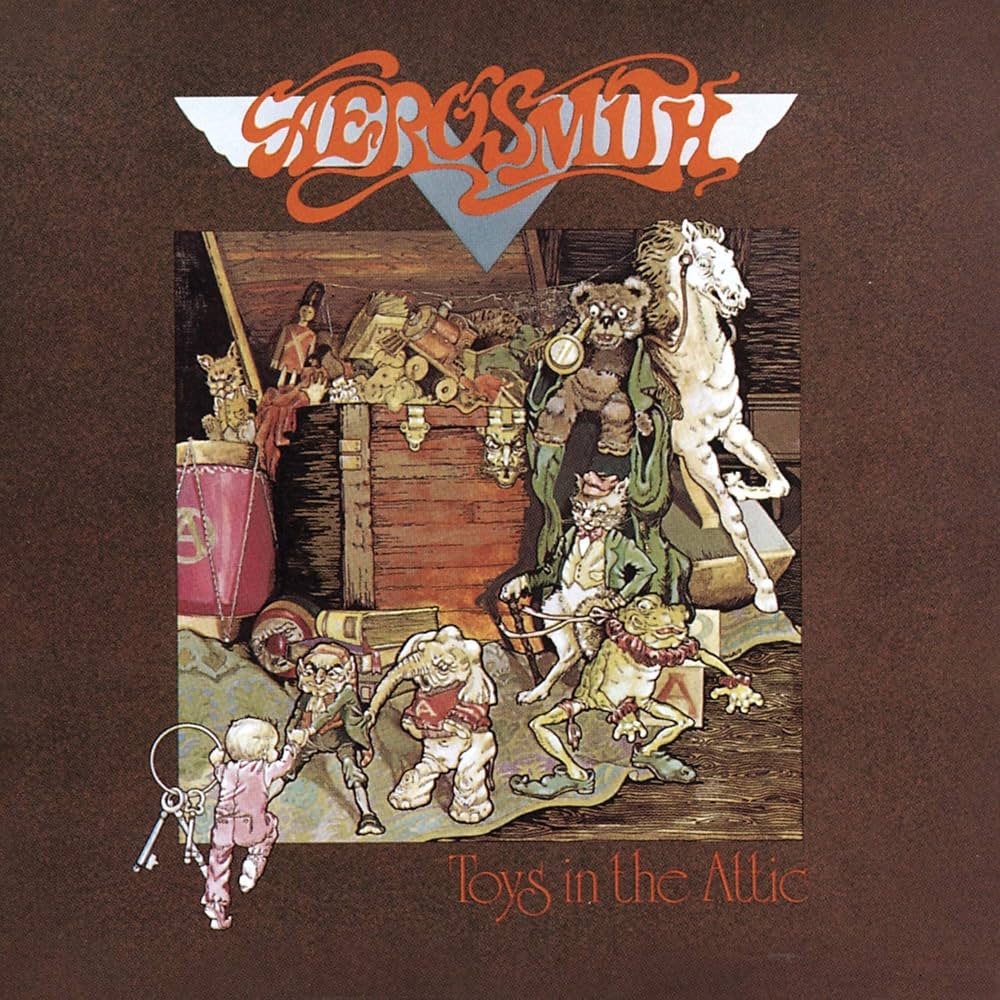
Released in April 1975, Aerosmith’s third studio album, Toys in the Attic, stands as the absolute high-water mark of American hard rock, capturing a hungry, street-smart Boston quintet firing on all cylinders. Following the modest commercial success of their first two records, singer Steven Tyler and lead guitarist Joe Perry fully embraced a high-octane blend of British blues-rock swagger and gritty, gritty American attitude, aided immensely by producer Jack Douglas. The resulting nine-track masterpiece successfully bridged the raw energy of early garage rock with stadium-sized sonic ambition, turning the band into international superstars and establishing a blueprint for countless hard rock and heavy metal acts that followed in their wake.
The album ignites with “Walk This Way,” a tour de force driven by Perry’s iconic, rhythmic guitar intro and Joey Kramer’s snapping snare beat. Featuring Tyler’s rapid-fire, scat-inspired vocal delivery and a relentlessly catchy funk-infused groove, the track is a masterclass in tension and release that remains one of the most recognizable anthems in rock history. This relentless momentum continues straight into “Big Ten Inch Record,” a playful, swaggering blues cover that showcases the band’s penchant for cheeky double-entendres, and “Sweet Emotion,” a moody, bass-driven tour de force anchored by Tom Hamilton’s hypnotic bassline and Perry’s innovative use of the talk box. The song’s sultry, menacing atmosphere creates a masterclass in dynamic buildup, exploding into a soaring chorus that defines the quintessential Aerosmith sound.
As the record progresses, the band balances its high-energy party anthems with moments of startling introspection and dark psychological weight. “No More No More” offers a poignant, bittersweet look at the grueling realities and isolation of the touring lifestyle, wrapped in gorgeous, intertwining twin-guitar harmonies from Perry and Brad Whitford. This darker edge reaches its zenith with the title track, “Toys in the Attic,” a blistering, high-tempo rocker fueled by panic, chaotic energy, and Tyler’s unhinged, howling vocals. The song races forward like a runaway train, showcasing a ferocious technical proficiency that proves the group was far more than just a swaggering blues outfit.
The back half of the record maintains this flawless sequencing, moving from the sludgy, menacing grooves of “Uncle Salty” to the cinematic, sweeping grandeur of “Adam’s Apple.” The journey finally culminates with “You See Me Crying,” a dramatic, emotionally charged power ballad elevated by a lush string arrangement and one of Tyler’s most vulnerable, soaring vocal performances. Toys in the Attic ultimately endures because it captures Aerosmith at their absolute peak—dangerous, deeply soulful, and effortlessly cool—solidifying the album as an untouchable landmark of 1970s rock and roll.
This post has already been read 86 times!