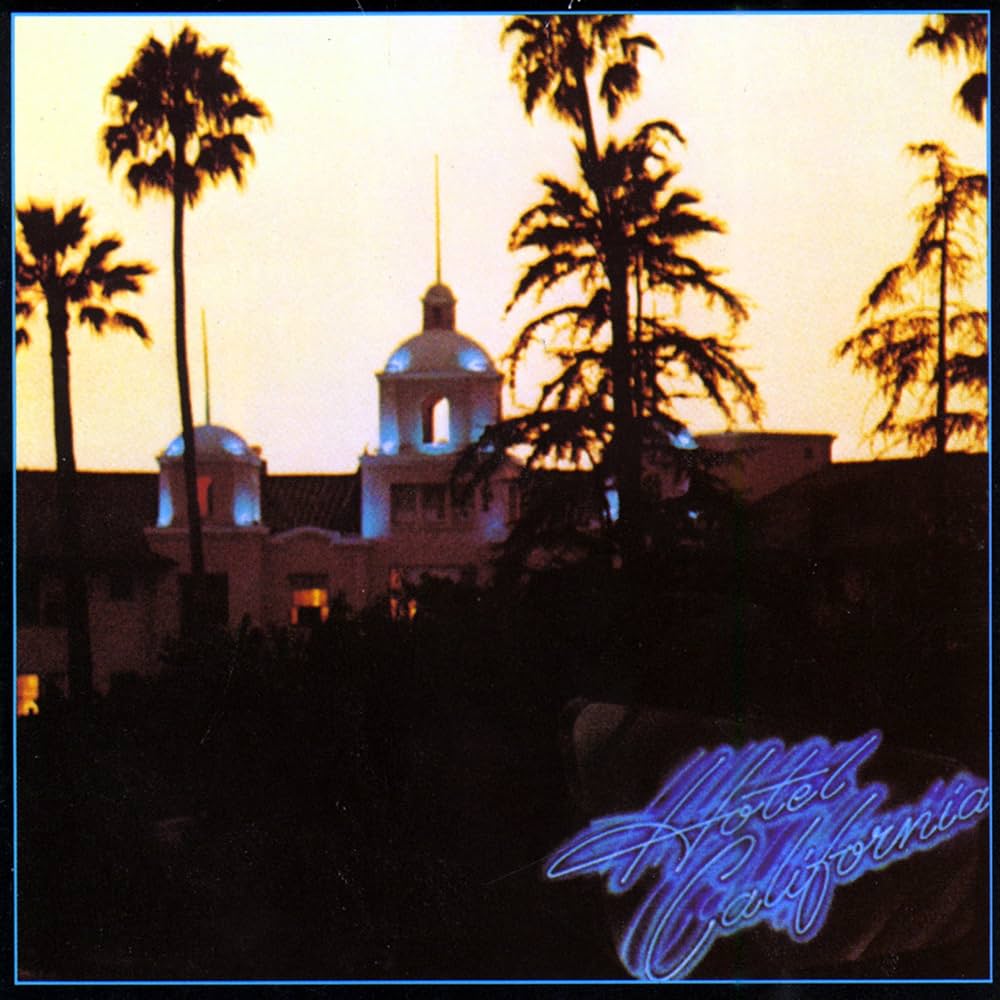
Released in December 1976, the Eagles’ landmark fifth studio album, Hotel California, stands as the definitive defining document of 1970s American rock, capturing the exact moment the hopeful countercultural idealism of the previous decade curdled into cynical, sun-drenched disillusionment. Following the massive commercial breakthrough of their 1975 self-titled greatest hits collection, the Los Angeles quintet—Don Henley, Glenn Frey, Don Felder, Joe Walsh, and newly arrived bassist Timothy B. Schmit—retreated to the studio with producer Bill Szymczyk to craft a meticulously polished, conceptually unified statement on the dark side of the American Dream. Through a brilliant blend of Laurel Canyon harmony, country-rock lyricism, and increasingly aggressive, guitar-driven classic rock, the band created a cultural touchstone that dissected the hollow decadence of Hollywood, the corrupting nature of fame, and the spiritual emptiness of modern materialism.
The album opens with its legendary title track, “Hotel California,” an eerie, hypnotic masterpiece that instantly established the record’s overarching theme of inescapable entrapment. Propelled by Don Felder’s instantly recognizable flamenco-inspired acoustic intro and anchored by a mysterious, cinematic lyrical narrative concerning a luxury resort where you can check out any time you like but can never leave, the song operates as a brilliant allegory for the hedonistic music industry and the loss of innocence in Southern California. The track builds to an unforgettable, explosive twin-lead guitar duel between Felder and Joe Walsh, cementing its status as one of the greatest compositions in recorded history. This nocturnal atmosphere bleeds seamlessly into “New Kid in Town,” a slick, mid-tempo pop-rock meditation on the fleeting nature of celebrity and the ruthless cycle of pop stardom. Co-written by Frey, Henley, and J.D. Souther, the track’s lush vocal harmonies and silky electric piano arrangements mask a bitter undercurrent of anxiety, capturing the nervous dread of being replaced by the next fresh face in town.
As the record progresses, it balances its sharp cultural critiques with moments of raw vulnerability and hard-edged rock grit, beginning with “Life in the Fast Lane.” Driven by Walsh’s jagged, funk-infused main guitar riff, the song tells the cautionary tale of a wealthy, jaded couple hurtling toward self-destruction on a cocaine-fueled joyride through Los Angeles, perfectly marrying driving rock energy with cynical moral observation. This darker edge is immediately contrasted by “Wasted Time,” a sweeping, grand ballad dominated by Henley’s bruised, soulful vocal delivery and a lush, cinematic string arrangement that evokes the melancholic morning-after reality of broken relationships and squandered potential. The emotional weight of the first side is neatly bookended by a brief, graceful instrumental reprise of “Wasted Time,” which acts as a sorrowful orchestral bridge leading the listener across to the record’s equally compelling second half.
The vinyl’s flip side opens with “Victim of Love,” a straightforward, blues-drenched rocker that injects a dose of gritty guitar muscle back into the tracklist, driven primarily by Felder’s aggressive fretwork and Henley’s raspy, impassioned delivery. Following this high-energy excursion, the album shifts into the poignant, western-flavored acoustics of “Pretty Maids All in a Row,” a haunting, piano-and-synthesizer-laced ballad sung by Walsh that reflects on aging, regret, and the inevitable passage of time with heartbreaking sincerity. The penultimate track, “Try and Love Again,” penned by Bernie Leadon in one of his final contributions before departing the group, offers a breezy, upbeat counterweight of optimism and emotional resilience, featuring gorgeous vocal interplay that harkens back to the band’s earlier country-rock roots.
The monumental journey finally culminates with “The Last Resort,” an epic, seven-minute narrative masterpiece penned by Henley and Frey that broadens the album’s scope from personal decadence to manifest destiny and environmental destruction. Chronicling the tragic history of American expansion and the despoilment of paradise from the pristine shores of Hawaii to the overdeveloped sprawl of the mainland, the song unfolds like a cinematic tragedy over a gently cascading piano and swelling pedal steel. As the final acoustic chords ring out, Hotel California leaves an indelible mark, enduring not merely as a masterclass in studio craftsmanship and vocal arrangement, but as a haunting, timeless monument to the shadows lurking behind the California sun.
This post has already been read 94 times!