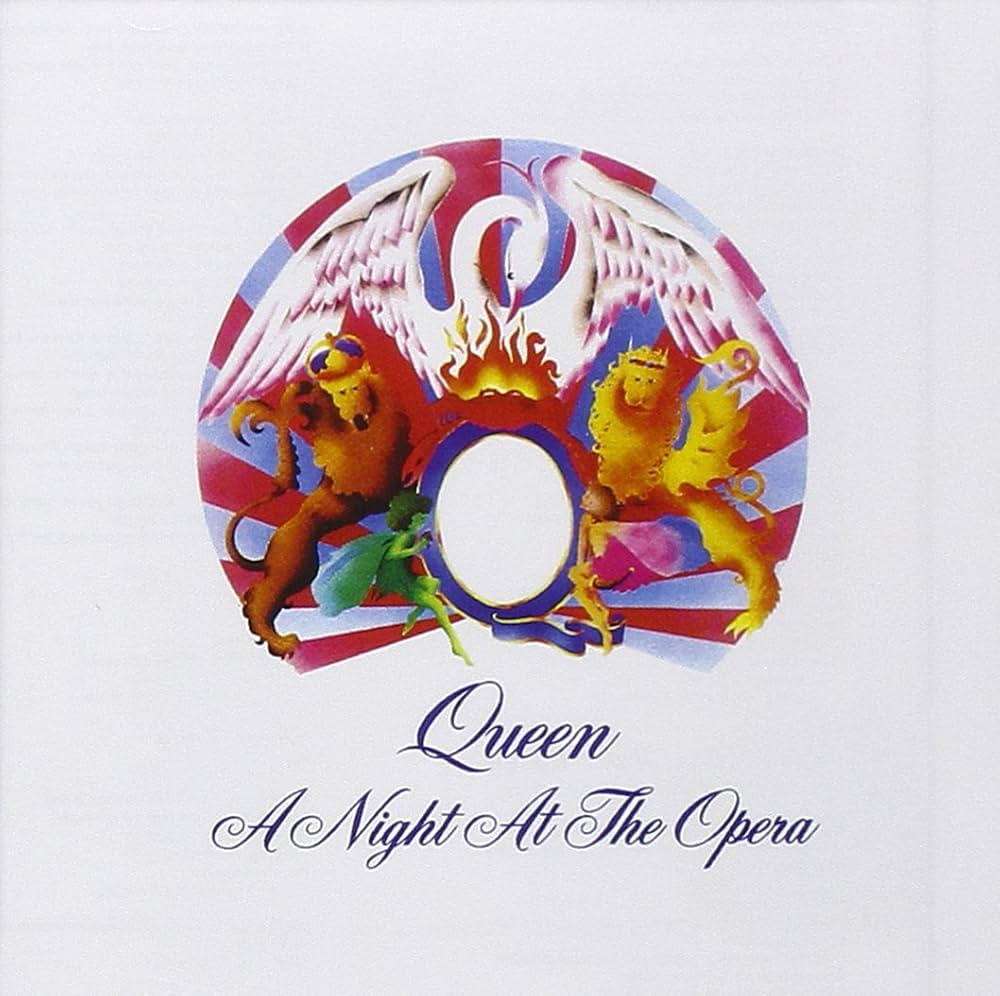
Released in November 1975, Queen’s fourth studio album, A Night at the Opera, stands as a monumental triumph of unbridled artistic ambition, opulent production, and virtuosic musicianship. Following the breakthrough success of Sheer Heart Attack, the British quartet—Freddie Mercury, Brian May, Roger Taylor, and John Deacon—were given unprecedented creative freedom and a generous recording budget, which they utilized to construct the most expensive and elaborate rock album ever made up to that point. Co-produced by Roy Thomas Baker and the band, the record fearlessly shatters genre boundaries, seamlessly weaving heavy metal crunch, vaudeville pop, British music hall, progressive art-rock, and grand opera into a single, cohesive masterwork. Rather than playing it safe, Queen doubled down on their penchant for sonic maximalism, resulting in an ageless classic that redefined the very limits of what a rock band could achieve in a recording studio.
The album opens with “Death on Two Legs (Dedicated to…),” a venomous, blistering theatrical attack directed at the band’s former management. Driven by Mercury’s aggressive, cascading piano intro and May’s howling, heavily distorted guitar work, the track establishes an immediate atmosphere of high-stakes drama and emotional intensity. This dark theatricality transitions seamlessly into the breezy, acoustic-driven pop of “Lazing on a Sunday Afternoon,” a charmingly whimsical music-hall pastiche that showcases Mercury’s vocal versatility and the band’s knack for nostalgic British humor. The tempo and texture shift dramatically with “I’m in Love with My Car,” a heavy, gasoline-fueled rocker penned and sung by drummer Roger Taylor. Featuring authentic revving engine sound effects and May’s thunderous, stadium-shaking guitar riffs, the track serves as a roaring tribute to petrol-head culture and automotive obsession, anchoring the album’s first act with pure, unadulterated rock power.
As the record progresses, it uncovers its softer, deeply romantic core through masterpieces like “You’re My Best Friend” and “Love of My Life.” Written by bassist John Deacon, the former is an infectious, sparkling pop gem propelled by a soulful Wurlitzer electric piano and soaring three-part vocal harmonies that became an instant radio staple. Conversely, “Love of My Life” is a breathtakingly tender, acoustic ballad dominated by May’s delicate harp-like guitar stylings and Mercury’s devastatingly vulnerable vocal performance. The acoustic intimacy of the mid-section is further enhanced by Deacon’s “39,” a whimsical, folk-inflected sci-fi narrative about space exploration and time dilation that features intricate acoustic picking and a charming collective vocal arrangement that highlights the band’s brilliant folk-rock sensibilities.
The second half of the vinyl journey embraces even grander sonic adventures, beginning with the playful, jazz-inflected “Sweet Lady” and the multi-layered epic “The Prophet’s Song.” Clocking in at over eight minutes, “The Prophet’s Song” is a progressive rock tour de force featuring sweeping choral vocal canons recorded using innovative multi-tracking techniques, complex apocalyptic lyrics, and May’s earth-shattering guitar work utilizing a toy koto. This monumental buildup paves the way for the album’s undisputed crown jewel: “Bohemian Rhapsody.” Defying every conventional rule of the music industry regarding track length, lack of a chorus, and abrupt stylistic shifts, Mercury’s operatic suite moves fluidly from a-cappella introspection through an introspective ballad, a manic, operatic explosion of Galileo references, and a blistering heavy metal climax before gently winding down. It remains one of the most daring and brilliant compositions in human musical history.
The record finally closes with “God Save the Queen,” May’s majestic, multi-tracked instrumental guitar arrangement of the British national anthem that had previously served as the triumphant climax to their live shows. A Night at the Opera ultimately endures because it represents the absolute pinnacle of uncompromised creative vision, capturing four extraordinary musicians operating at the absolute peak of their powers to create an immortal masterpiece of rock history.
This post has already been read 98 times!