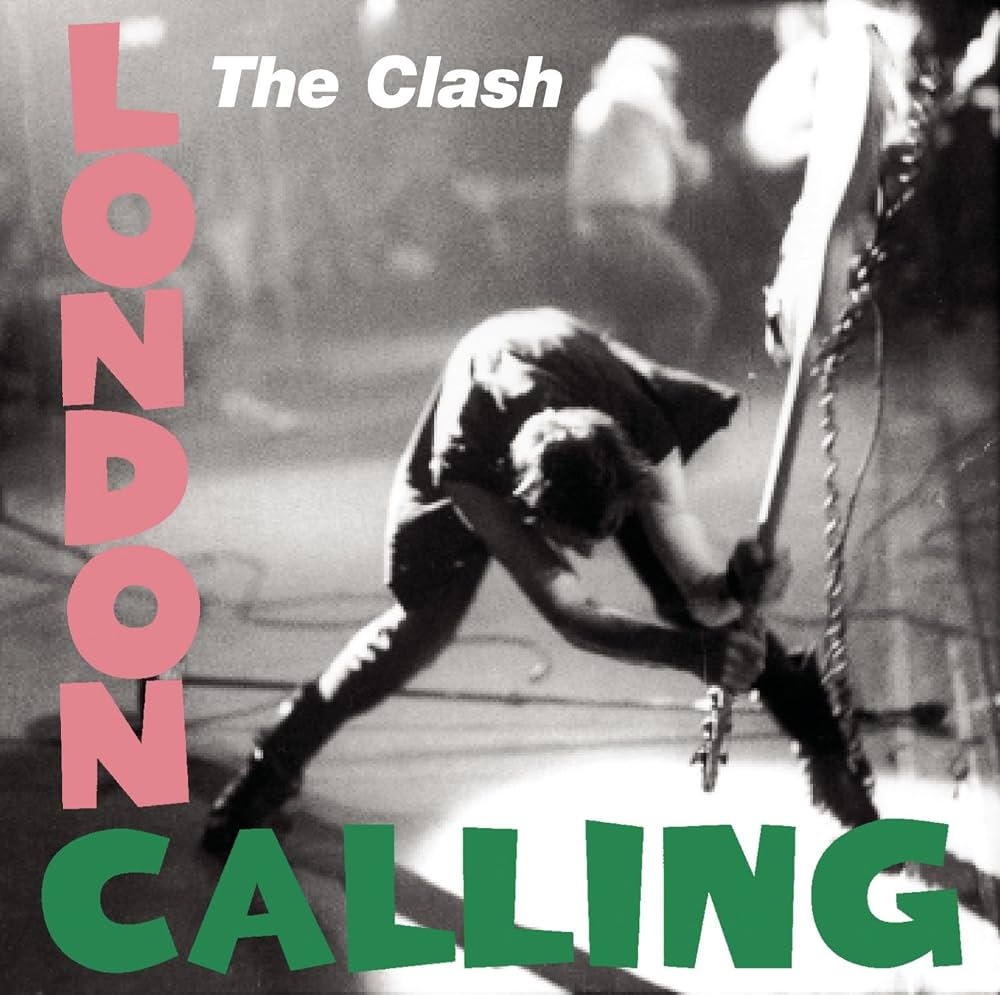
Released in December 1979, London Calling is one of those rare albums that transcends its era and its genre. While punk rock had exploded just a few years earlier with raw energy and anti-establishment attitude, many critics believed the movement had already peaked. The Clash responded not by making a louder or faster punk album, but by creating a sprawling double LP that embraced rock, reggae, ska, jazz, R&B, rockabilly, pop, and soul without losing an ounce of its rebellious spirit.
The result was nothing short of revolutionary. Joe Strummer, Mick Jones, Paul Simonon, and Topper Headon expanded the definition of what punk could be while delivering one of the most ambitious albums in rock history. Every song feels urgent, every performance sounds inspired, and every stylistic detour serves the larger vision rather than distracting from it.
More than four decades later, London Calling remains a benchmark for artistic ambition, proving that political conviction, musical diversity, and unforgettable songwriting can coexist on a single record.
Album Overview
Produced by Guy Stevens, London Calling captures The Clash at the absolute peak of their creativity. Instead of limiting themselves to the stripped-down aggression that defined early punk, the band embraces an astonishing range of influences while maintaining a cohesive identity.
Across 19 tracks, listeners encounter reggae grooves, ska rhythms, driving rock anthems, soulful ballads, rockabilly throwbacks, and even touches of jazz. Despite the variety, the album never feels scattered because every song shares the band’s unmistakable energy and social awareness.
Joe Strummer’s passionate vocals, Mick Jones’ melodic guitar work, Paul Simonon’s rock-solid bass playing, and Topper Headon’s exceptional drumming combine to create one of the finest ensembles in rock history. Each musician contributes equally to the album’s success, allowing London Calling to feel like a true band effort rather than the vision of a single songwriter.
Running over 65 minutes, the album never overstays its welcome. Its pacing is remarkable, balancing explosive rockers with quieter moments that deepen its emotional impact.
Songwriting
The songwriting throughout London Calling is extraordinary.
The title track opens the album with one of the greatest songs ever written. “London Calling” combines apocalyptic imagery, unforgettable melodies, and a thunderous bass line to create an anthem that remains startlingly relevant decades later.
“Brand New Cadillac” injects high-octane rockabilly energy into the album, while “Jimmy Jazz” explores jazz and reggae influences with effortless confidence.
“Spanish Bombs” ranks among Joe Strummer’s finest lyrical achievements, blending history, politics, and emotion into one beautifully crafted song.
“The Guns of Brixton,” written and sung by Paul Simonon, delivers a haunting reggae-infused warning about police brutality and urban unrest. Its atmosphere remains as powerful today as it was upon release.
The playful “Wrong ‘Em Boyo” pays tribute to ska traditions, while “Death or Glory” reflects on idealism, compromise, and growing older without becoming cynical.
Then there is “Train in Vain.” Originally added to the album at the last minute, it became one of The Clash’s biggest hits. Mick Jones’ soulful vocal performance and irresistible melody provide the perfect conclusion to an already astonishing record.
Throughout the album, The Clash demonstrates that political songwriting can be intelligent, emotional, and endlessly entertaining.
Performance
Every member of The Clash delivers a career-defining performance.
Joe Strummer’s vocals overflow with conviction. He may never have possessed a technically polished voice, but few singers communicate passion and urgency more effectively. Every lyric feels lived rather than merely performed.
Mick Jones proves equally impressive as both guitarist and vocalist. His melodic instincts provide an essential counterbalance to Strummer’s intensity, while his guitar playing effortlessly shifts between punk, reggae, and rockabilly styles.
Paul Simonon’s bass playing forms the backbone of the album. His deep understanding of reggae gives many songs their distinctive groove, while his songwriting contribution on “The Guns of Brixton” stands among the album’s finest moments.
Topper Headon may be the album’s secret weapon. His drumming displays remarkable versatility, moving effortlessly between punk, funk, reggae, and rock rhythms with extraordinary precision and feel.
The chemistry between all four musicians is exceptional. Despite the album’s stylistic diversity, the band always sounds completely unified.
Production
Guy Stevens’ production is beautifully imperfect.
Rather than aiming for sterile precision, Stevens captures the raw excitement of a band playing together in the studio. The performances retain a loose, spontaneous quality that perfectly complements the music.
The guitars remain powerful without overwhelming the rhythm section, while the bass and drums receive enough space to showcase their remarkable interplay. Vocals sound immediate and emotional rather than overly polished.
Given the album’s wide range of musical styles, maintaining sonic consistency could have been difficult. Instead, Stevens creates a warm, cohesive sound that allows every experiment to feel like a natural extension of The Clash’s identity.
The production continues to sound vibrant and alive decades after its release.
Standout Tracks
“London Calling”
A towering achievement and one of the greatest opening tracks in rock history. Its unforgettable bass line, urgent lyrics, and explosive performance define the entire album.
“Spanish Bombs”
Beautifully written and emotionally rich, this song demonstrates Joe Strummer and Mick Jones at their songwriting peak.
“The Guns of Brixton”
Paul Simonon’s reggae masterpiece remains one of the most influential and atmospheric songs The Clash ever recorded.
“Clampdown”
An electrifying anthem examining conformity, power, and resistance through one of the album’s most powerful performances.
“Train in Vain”
An irresistible blend of rock and soul featuring one of Mick Jones’ finest vocal performances and one of the band’s most memorable melodies.
Weak Points
Finding meaningful flaws in London Calling is difficult.
At 19 songs, the album occasionally feels overwhelming simply because of its scope. A handful of tracks, such as “Lover’s Rock” or “Four Horsemen,” are sometimes overshadowed by the monumental classics surrounding them rather than standing out on their own.
Additionally, listeners expecting a straightforward punk album may initially be surprised by the record’s extensive stylistic experimentation. Those genre shifts, however, are ultimately one of the album’s defining strengths.
These are extremely minor observations about an album whose ambition is matched by its execution.
Legacy
London Calling is widely regarded as one of the greatest albums ever recorded, and with good reason.
It shattered expectations of what punk music could become, proving that the genre could absorb virtually any musical influence without losing its identity. Countless artists across alternative rock, indie rock, punk, ska, Britpop, and even hip-hop have cited it as a foundational influence.
The album’s themes—political uncertainty, social inequality, cultural change, and personal resilience—remain strikingly relevant. Its willingness to challenge conventions while remaining deeply accessible has inspired generations of musicians to take creative risks.
Beyond its influence, London Calling endures because of its songwriting. Nearly every track has become a fan favorite, and many have entered the canon of classic rock. From the iconic album cover, inspired by Elvis Presley’s debut LP, to the fearless musical experimentation inside the sleeve, every aspect of the record has become legendary.
Today, London Calling is celebrated not only as The Clash’s masterpiece but as one of the defining achievements in the history of popular music.
Final Score: 10/10
London Calling is an extraordinary artistic triumph that expands the possibilities of rock music without sacrificing passion, urgency, or accessibility. Brilliant songwriting, inspired performances, adventurous production, and breathtaking stylistic range combine to create a double album that never loses focus or momentum. Every listen reveals new details, every song contributes to the larger vision, and its influence continues to shape popular music decades later. Bold, timeless, and endlessly rewarding, London Calling deserves its place among the greatest albums ever recorded.
This post has already been read 87 times!