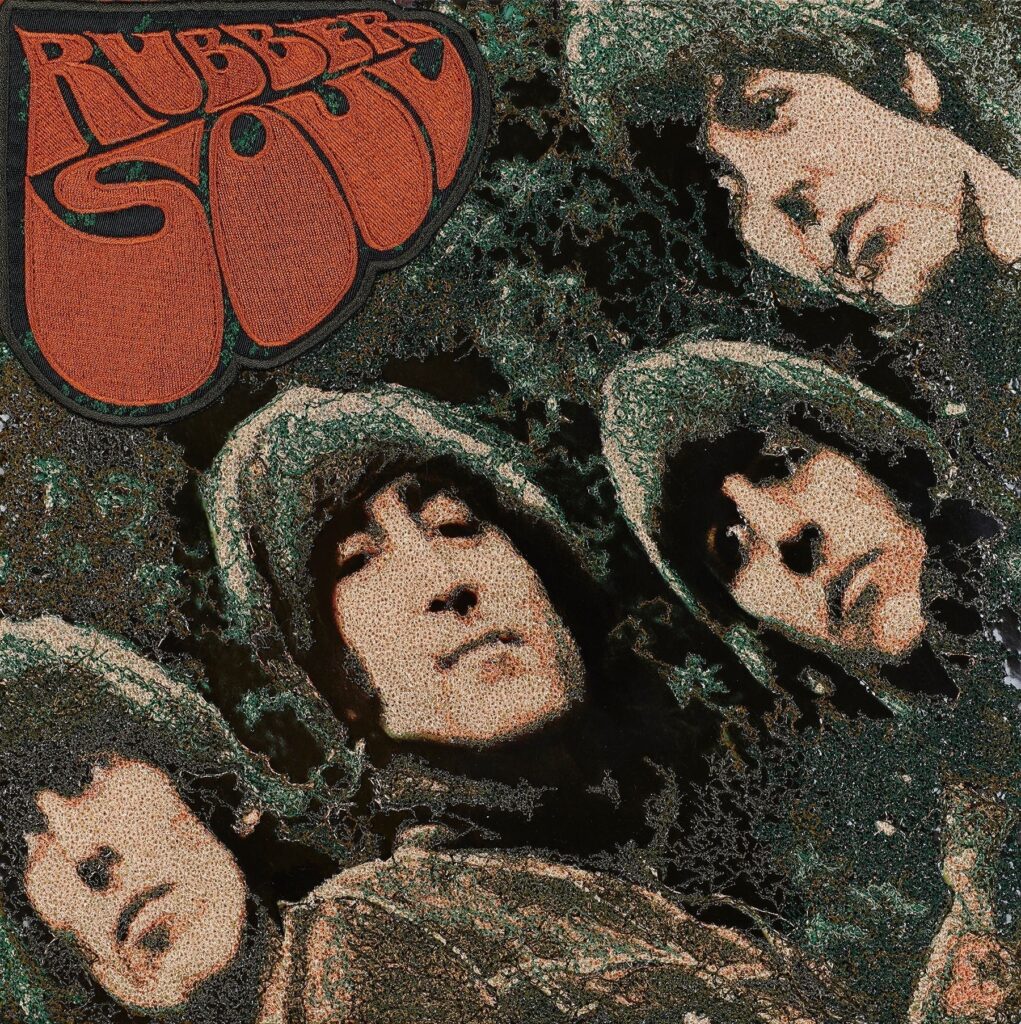
If A Hard Day’s Night proved The Beatles were exceptional songwriters, Rubber Soul proved they were exceptional album artists.
Released at the end of 1965, Rubber Soul marks one of the most important turning points in popular music. Up to this point, albums were still largely viewed as collections of songs built around a few hit singles. The Beatles had already been raising the bar, but Rubber Soul was different. It felt purposeful. Every song contributed to a larger mood, every arrangement reflected growing musical ambition, and the record played like a unified artistic statement rather than simply the latest release from the world’s biggest band.
Just as importantly, it captured a group growing up in public. The carefree romance of earlier records gives way to introspection, uncertainty, satire, and emotional complexity. Folk music, soul, country, and classical influences begin to appear alongside the band’s familiar pop instincts, creating an album that sounds simultaneously accessible and remarkably sophisticated.
It isn’t merely one of the greatest Beatles albums—it helped redefine what a rock album could be.
Album Overview
Released in December 1965, Rubber Soul arrived during an astonishing creative streak. The Beatles had already released six studio albums in less than three years, yet instead of running out of ideas, they were becoming more adventurous with every recording session.
The influence of Bob Dylan is evident in the increasingly thoughtful lyrics, while the emerging folk-rock movement—ironically inspired in part by A Hard Day’s Night—feeds back into the band’s evolving sound. George Harrison expands the group’s musical vocabulary through the use of the sitar on “Norwegian Wood (This Bird Has Flown),” introducing many Western listeners to Indian instrumentation for the first time.
Despite these new influences, Rubber Soul never abandons melody. Every experiment serves the songs rather than existing for its own sake.
The result is an album that feels warm, intimate, and endlessly replayable.
Songwriting
This is where Rubber Soul separates itself from nearly every pop album released before it.
John Lennon and Paul McCartney had always written memorable melodies, but here they begin exploring more nuanced emotional territory. Relationships become complicated rather than idealized. Characters possess flaws. Narrators question themselves instead of simply declaring love.
Lennon’s songwriting reaches a new level throughout the album.
“Norwegian Wood (This Bird Has Flown)” tells an ambiguous story filled with wit, subtlety, and emotional complexity unlike anything the band had attempted previously.
“Nowhere Man” is one of Lennon’s first truly introspective masterpieces, turning alienation into universally relatable art.
“In My Life” stands among the greatest songs ever written, balancing nostalgia, gratitude, and quiet melancholy with extraordinary elegance.
McCartney contributes equally impressive material.
“Michelle” combines French phrases with beautiful melody to create one of the album’s most distinctive moments.
“I’m Looking Through You” transforms romantic disappointment into infectious folk-pop.
“You Won’t See Me” showcases McCartney’s gift for disguising emotional frustration beneath irresistible melodies.
Even George Harrison’s “Think for Yourself” demonstrates his rapidly developing confidence as a songwriter.
Remarkably, there isn’t a weak composition anywhere on the record.
Performance
The Beatles sound completely transformed.
John Lennon’s vocals carry greater emotional depth than ever before, ranging from biting sarcasm to heartbreaking vulnerability.
Paul McCartney continues to establish himself as one of rock’s finest singers while simultaneously revolutionizing bass playing. His melodic bass lines no longer simply support the songs—they actively shape them.
George Harrison arguably makes his biggest leap forward on Rubber Soul. His guitar work becomes increasingly inventive, while his exploration of Indian music would soon influence not only The Beatles but much of popular music.
Ringo Starr remains the ideal drummer for the group. His tasteful playing never demands attention yet constantly enhances each arrangement through subtle creativity.
The vocal harmonies are among the finest of the band’s career, sounding effortless while masking extraordinary precision.
Perhaps most importantly, the group performs with absolute confidence. They know exactly what kind of band they want to become.
Production
George Martin’s production reaches a new level of sophistication.
Although the elaborate studio experimentation of Revolver and Sgt. Pepper still lay ahead, Rubber Soul demonstrates a growing willingness to use the recording studio as a creative tool.
Acoustic guitars shimmer with warmth, electric guitars remain crisp without becoming harsh, and vocal layering grows increasingly sophisticated.
The introduction of new instruments—including Harrison’s sitar and various keyboard textures—expands the band’s sonic palette without overwhelming the songs.
The stereo mix has historically generated debate among fans, but regardless of version, the album’s warmth and clarity remain impressive for 1965.
Martin deserves enormous credit for allowing increasingly ambitious arrangements while preserving the intimate atmosphere that defines the record.
Standout Tracks
“Drive My Car” opens the album with swagger, combining clever lyrics, an unforgettable riff, and one of McCartney’s finest early bass performances.
“Norwegian Wood (This Bird Has Flown)” remains one of the defining songs of the decade, introducing the sitar to mainstream pop while telling one of Lennon’s most sophisticated early stories.
“Nowhere Man” captures feelings of isolation with startling honesty, wrapped inside glorious three-part harmonies.
“Michelle” is elegant, melodic, and beautifully understated, demonstrating McCartney’s remarkable melodic instincts.
“Girl” features one of Lennon’s most emotionally compelling vocal performances, balancing longing with quiet resignation.
“I’m Looking Through You” transforms heartbreak into irresistibly catchy folk-rock.
“In My Life” is arguably the emotional centerpiece of the album and one of the greatest songs ever written. Its timeless melody, reflective lyrics, and George Martin’s baroque-inspired piano solo combine to create pure musical perfection.
Weak Points
Finding genuine weaknesses is extremely difficult.
Compared to later Beatles masterpieces like Revolver and Abbey Road, Rubber Soul remains relatively restrained in its studio experimentation. Some listeners may prefer the more adventurous production techniques of those later records.
A handful of songs, while excellent, don’t quite reach the transcendent heights of the album’s biggest classics. The overall consistency is extraordinary, but tracks like “Wait” and “Run for Your Life” are generally considered less essential than the album’s many masterpieces.
The closing track, “Run for Your Life,” has also attracted criticism over the years for its possessive and threatening lyrical perspective. While it reflects a fictional narrator rather than an endorsement of those attitudes, it feels noticeably less mature than much of the album surrounding it.
These remain minor blemishes on an otherwise exceptional record.
Legacy
Few albums have had a greater impact on popular music.
Rubber Soul inspired countless artists to approach albums as cohesive artistic statements rather than simple collections of songs. Among those deeply influenced was Brian Wilson, whose admiration for the album directly inspired the creation of Pet Sounds, which in turn motivated The Beatles to create Sgt. Pepper’s Lonely Hearts Club Band. That remarkable creative dialogue permanently changed the course of rock music.
The album also helped establish folk rock as a dominant force while introducing new instrumental textures and increasingly sophisticated lyrical themes into mainstream pop.
Perhaps its greatest achievement, however, is demonstrating how seamlessly artistic growth can occur without sacrificing accessibility.
Every song remains immediately enjoyable.
Every listen reveals something new.
Very few albums balance innovation and pure listening pleasure so effortlessly.
Final Score
10.0/10
Rubber Soul is one of the defining masterpieces of the 1960s and one of the most influential albums ever recorded. Its remarkable songwriting, flawless performances, warm production, and groundbreaking artistic ambition transformed expectations of what a pop album could achieve. Under a stricter scoring scale, this comfortably earns a perfect score—not simply because of its historical importance, but because it remains an endlessly rewarding listening experience whose brilliance has never diminished.
This post has already been read 100 times!