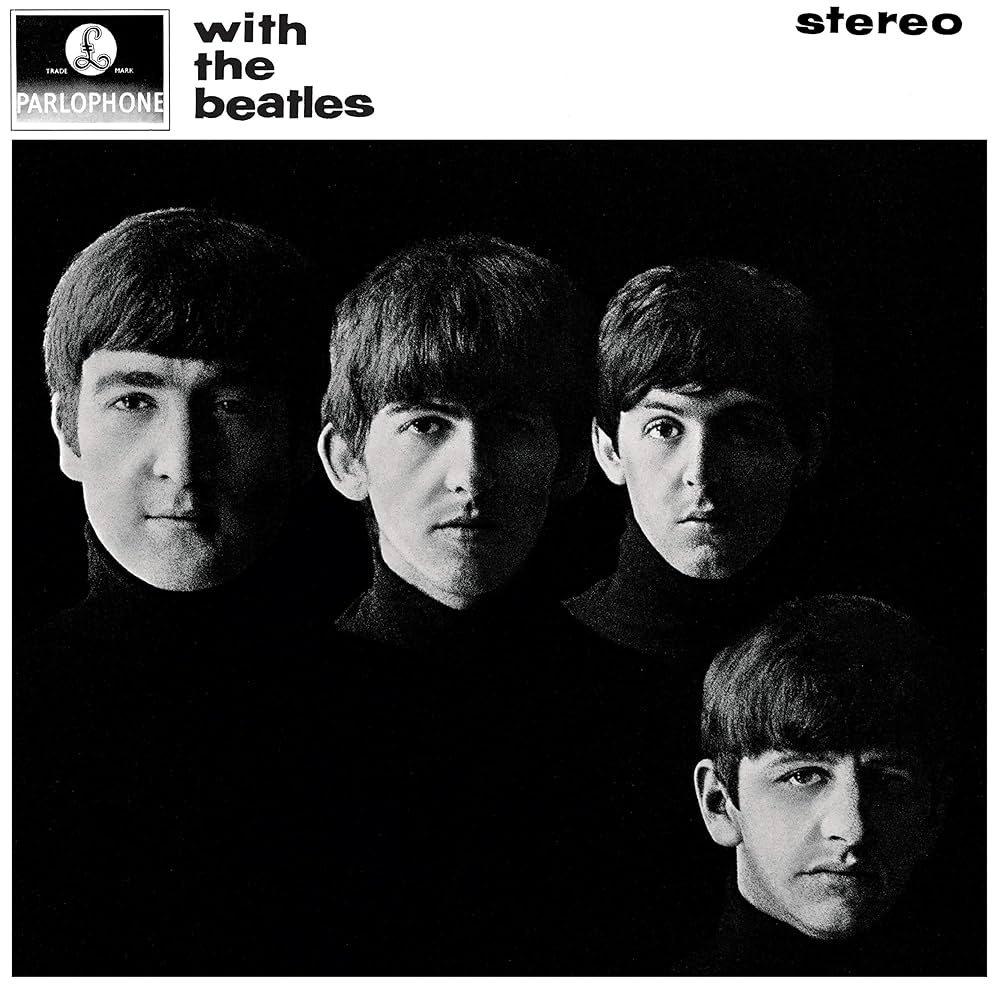
Success can be a difficult thing to follow, but The Beatles barely paused long enough to acknowledge it. Just eight months after releasing their groundbreaking debut Please Please Me, the band returned with With the Beatles, an album that demonstrated their remarkable growth as musicians, songwriters, and performers. Released in November 1963, it arrived at the height of Beatlemania in Britain, with screaming fans, sold-out concerts, and unprecedented media attention following the group everywhere they went.
Rather than simply repeating the formula of their debut, With the Beatles showcases a tighter, more confident band. Their harmonies are stronger, the performances more assured, and the songwriting noticeably more ambitious. While the album still relies heavily on American rhythm and blues, Motown, and rock and roll covers, Lennon and McCartney’s original compositions begin to occupy a more prominent role, offering a glimpse of the revolutionary songwriting partnership that would soon redefine popular music.
Although it is often overshadowed by later masterpieces like Rubber Soul, Revolver, and Sgt. Pepper’s Lonely Hearts Club Band, With the Beatles remains one of the strongest early albums of the rock era. It captures the sound of a band rapidly evolving from exceptional performers into extraordinary artists.
Album Overview
One of the most striking aspects of With the Beatles is its confidence.
The frantic excitement of Please Please Me is still present, but it has become more controlled.
The band sounds completely comfortable playing together.
Years of performing marathon sets in Liverpool and Hamburg had forged an almost telepathic chemistry between the four musicians.
That experience shines throughout the album.
Like its predecessor, the record mixes original material with carefully selected cover songs.
However, the originals now stand comfortably alongside the American classics that inspired them.
Rather than merely imitating artists like Smokey Robinson, Chuck Berry, and the Marvelettes, Lennon and McCartney begin transforming those influences into something distinctly their own.
The album also highlights the Beatles’ democratic nature during this period.
John Lennon, Paul McCartney, George Harrison, and Ringo Starr all contribute memorable vocal performances, giving the record a variety that many contemporary groups lacked.
It remains a joyous celebration of rock and roll before the band’s ambitions expanded into more experimental territory.
Songwriting
While Lennon and McCartney would later produce some of the greatest songs in popular music history, With the Beatles demonstrates just how quickly they were developing.
“It Won’t Be Long” opens the album with infectious energy, clever call-and-response vocals, and melodic sophistication that already exceeds much of the group’s earlier work.
“All I’ve Got to Do” introduces a more relaxed, soulful atmosphere inspired by Smokey Robinson while showcasing John’s increasingly expressive songwriting.
“All My Loving” remains one of Paul’s earliest masterpieces. Its unforgettable melody, driving rhythm, and optimistic spirit helped establish him as one of pop music’s finest melodic writers.
“Don’t Bother Me,” George Harrison’s first recorded composition, may not reach the heights of Lennon and McCartney’s work, but it represents an important milestone. Its darker mood hints at the songwriter Harrison would eventually become.
“Not a Second Time” impressed critics with harmonic sophistication that few expected from a young rock band, while “Hold Me Tight” demonstrates the group’s growing confidence even if it falls slightly below the album’s strongest material.
The cover songs remain equally important.
“Please Mister Postman” transforms the Marvelettes’ Motown hit into a thrilling rock performance.
“You Really Got a Hold on Me” beautifully captures the emotional subtlety of Smokey Robinson’s original.
“Money (That’s What I Want)” closes the album with one of John Lennon’s most ferocious vocal performances.
Together, the originals and covers create an album that celebrates American music while announcing the arrival of an unmistakably British voice.
Performance
The Beatles sound considerably tighter here than they did on Please Please Me.
John Lennon’s vocals dominate many of the album’s highlights.
His raw power on “Money” remains one of the finest rock performances of the era, while his more restrained singing on “All I’ve Got to Do” demonstrates growing versatility.
Paul McCartney continues emerging as an exceptional vocalist.
His performance on “All My Loving” perfectly balances technical precision with youthful enthusiasm, while his bass playing grows increasingly inventive throughout the record.
George Harrison contributes some of his finest early guitar work.
His tasteful solos never overpower the songs, but they consistently add melodic character and rhythmic drive.
Ringo Starr deserves enormous credit as well.
His drumming remains deceptively simple yet remarkably effective.
Every fill serves the song.
Every beat feels natural.
He provides exactly the foundation the band requires without drawing unnecessary attention to himself.
Most importantly, the vocal harmonies have become even stronger.
Few groups of the era blended voices with such effortless precision.
Production
Produced by George Martin, With the Beatles benefits from cleaner, fuller production than the band’s debut.
Recorded over several sessions rather than a single marathon day, the album allows the group slightly more room to refine performances while preserving their live energy.
The sound remains relatively simple by later Beatles standards.
Guitars sit prominently.
Vocals remain clear.
Rhythm section stays tight.
There are few studio tricks.
Instead, Martin wisely allows the strength of the performances to carry the record.
The now-iconic Robert Freeman cover photograph perfectly complements the music.
Its striking black-and-white portrait remains one of the most influential album covers in rock history, reflecting the band’s growing confidence and sophistication.
Standout Tracks
Although the album contains very few weak moments, several songs stand among the finest recordings of the Beatles’ early career.
“All My Loving” is one of Paul’s first indisputable classics. Its flawless melody, infectious rhythm, and joyful energy make it one of the defining pop songs of the early 1960s.
“It Won’t Be Long” opens the album with remarkable confidence, showcasing the band’s increasingly sophisticated songwriting and vocal arrangements.
“Please Mister Postman” transforms a Motown classic into one of the Beatles’ greatest cover performances, fueled by John’s passionate lead vocal.
“You Really Got a Hold on Me” captures the emotional subtlety of Smokey Robinson’s songwriting while allowing the Beatles’ harmonies to shine.
“Money (That’s What I Want)” closes the album with explosive intensity. Lennon’s vocal performance alone makes it one of the greatest rock covers ever recorded.
Weak Points
While With the Beatles represents a significant step forward, it occasionally reveals its transitional nature.
Several originals, particularly “Little Child” and “Hold Me Tight,” lack the memorable melodies and lyrical sophistication that would soon become routine for Lennon and McCartney.
The reliance on cover songs also reflects an era before the Beatles fully embraced writing entire albums of original material.
Additionally, listeners familiar only with the band’s later experimental masterpieces may find the musical arrangements relatively straightforward.
These observations hardly diminish the album’s quality.
Instead, they highlight just how much further the Beatles would soon travel creatively.
Legacy
With the Beatles cemented the group’s status as Britain’s biggest band and laid the foundation for the international phenomenon that would soon follow.
Its success proved that Please Please Me had not been a fluke.
More importantly, it demonstrated that Lennon and McCartney possessed songwriting abilities capable of competing with the American artists who had inspired them.
The album also accelerated the shift away from singles-driven rock and toward the album as an artistic statement.
Although later Beatles records would push that idea much further, With the Beatles represents an important early step.
Today, it stands as one of the strongest sophomore albums in rock history.
It may lack the groundbreaking experimentation of the band’s later classics, but it captures the exhilarating sound of four young musicians improving at an astonishing pace.
That alone makes it essential listening.
Final Score: 9/10
With the Beatles is a remarkable sophomore effort that builds confidently upon the promise of the band’s debut while revealing the extraordinary artistic growth that would soon change popular music forever. Stronger songwriting, tighter performances, improved production, and infectious enthusiasm combine to create one of the finest rock and roll albums of the early 1960s.
While a handful of songs hint at the limitations of the Beatles’ pre-Rubber Soul era, the album’s highlights remain timeless. Classics like “All My Loving,” “It Won’t Be Long,” and “Money (That’s What I Want)” continue to rank among the defining recordings of Beatlemania.
Overshadowed only by the astonishing masterpieces that followed, With the Beatles remains an essential chapter in the story of the world’s greatest band and a vibrant reminder of the excitement that first made millions fall in love with their music.
This post has already been read 73 times!