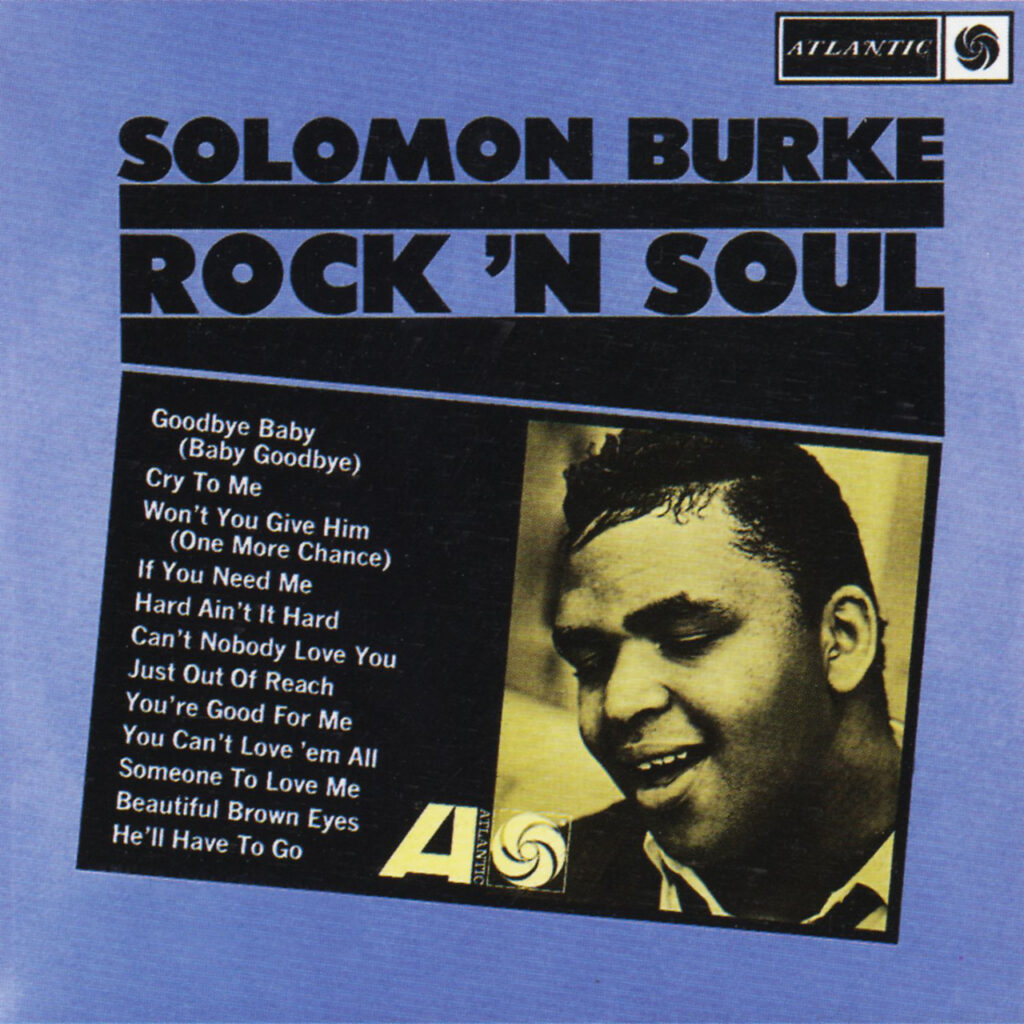
Few singers have ever possessed a voice as commanding, versatile, or emotionally overwhelming as Solomon Burke. Often referred to as the “King of Rock and Soul,” Burke never achieved the crossover fame of contemporaries like Otis Redding, Sam Cooke, or Ray Charles, yet his influence on soul, rock, country, and rhythm and blues is impossible to overstate. His rich baritone, gospel upbringing, and remarkable interpretive abilities helped define soul music during its formative years, inspiring generations of artists from Van Morrison and Elvis Costello to Bruce Springsteen and The Rolling Stones.
Released in 1964, Rock ‘n Soul captures Burke during the most creative period of his career. Working with Atlantic Records, he had developed a sound that effortlessly fused gospel passion, country storytelling, rhythm and blues grooves, and sophisticated pop arrangements into something uniquely his own. Rather than relying on vocal acrobatics alone, Burke excelled through emotional honesty. Every performance felt lived-in, whether he was celebrating love, pleading for forgiveness, or confronting heartbreak.
Unlike many soul albums of the era, Rock ‘n Soul functions as more than a collection of singles. It presents a complete portrait of one of popular music’s greatest vocalists, combining unforgettable originals with inspired interpretations that reveal Burke’s extraordinary ability to make every song sound as though he had written it himself.
It remains one of the defining soul albums of the 1960s.
Album Overview
What immediately stands out about Rock ‘n Soul is its warmth.
The album never sounds rushed.
Every arrangement breathes.
Every performance unfolds naturally.
Burke possesses the confidence to let songs develop at their own pace rather than forcing emotional climaxes.
The record moves comfortably between uptempo rhythm and blues, heartfelt ballads, gospel-inspired soul, and country-influenced storytelling without ever feeling stylistically scattered.
That flexibility reflects Burke himself.
Long before genre crossover became fashionable, he ignored musical boundaries.
Country melodies.
Church harmonies.
Blues phrasing.
Pop accessibility.
Everything becomes part of the same musical conversation.
The production consistently supports Burke’s remarkable voice without overwhelming it.
Strings appear when appropriate.
Horn sections add excitement.
Rhythm sections provide irresistible grooves.
Yet every arrangement ultimately serves the singer rather than competing with him.
That balance gives the album remarkable cohesion.
Songwriting
Although Burke performs material from numerous writers, his gift for interpretation makes every song feel intensely personal.
“Cry to Me” remains the album’s emotional centerpiece.
Its simple premise of offering comfort to someone experiencing heartbreak becomes something profoundly moving through Burke’s nuanced delivery.
“Just Out of Reach (Of My Two Open Arms)” beautifully combines country songwriting with soul emotion, demonstrating Burke’s remarkable ability to bridge musical traditions that were often kept separate during the early 1960s.
“If You Need Me” unfolds with quiet confidence, relying on emotional sincerity rather than dramatic excess.
“You Can’t Love ‘Em All” introduces humor without sacrificing emotional authenticity, showing another side of Burke’s personality.
“Down in the Valley” allows his gospel roots to shine, transforming a traditional folk song into something deeply spiritual.
Throughout the album, Burke consistently elevates excellent material through subtle phrasing and emotional intelligence.
He understands that great singing begins with understanding the story behind the lyric.
Every performance reflects that philosophy.
Performance
This is, quite simply, one of the finest vocal performances ever captured on a soul album.
Solomon Burke’s voice possesses extraordinary depth.
His baritone remains rich without becoming heavy.
Powerful without sounding forced.
Warm without sacrificing clarity.
Unlike many singers who rely primarily on volume, Burke masters dynamics.
He whispers.
He pleads.
He gently caresses melodies.
Then, almost effortlessly, fills the room with astonishing emotional force.
“Cry to Me” demonstrates his remarkable restraint.
Rather than overwhelming the song with vocal fireworks, Burke gradually builds emotional intensity through careful phrasing.
“If You Need Me” reveals his gift for conversational singing.
Every line feels like genuine communication rather than performance.
Even on the album’s more energetic tracks, Burke never sacrifices control.
His gospel background remains evident throughout.
Every phrase carries the authority of someone accustomed to commanding a congregation.
That spiritual foundation gives his secular material unusual emotional depth.
Few vocalists have ever sounded this natural.
Production
Atlantic Records perfected a distinctive soul sound during the 1960s, and Rock ‘n Soul represents one of its finest examples.
The production remains elegant without becoming ornate.
Horn arrangements add excitement.
Strings provide warmth.
Pianos and guitars establish sturdy rhythmic foundations.
Nothing distracts from Burke’s voice.
The recording captures remarkable intimacy despite employing relatively large ensembles.
Listeners feel close enough to hear every subtle inflection in Burke’s performance while still experiencing the full richness of the accompanying musicians.
Decades later, the production continues to sound vibrant.
Its tasteful arrangements avoid many of the excesses that eventually dated later soul recordings.
Everything remains focused on emotional communication.
That simplicity has aged beautifully.
Standout Tracks
Although the album maintains exceptional consistency throughout, several performances stand among the finest recordings of Burke’s remarkable career.
“Cry to Me” is an undisputed soul classic. Burke’s compassionate vocal performance transforms heartbreak into hope through one of the most emotionally generous recordings of the decade.
“If You Need Me” perfectly demonstrates Burke’s gift for understated emotional expression, balancing vulnerability with quiet confidence.
“Just Out of Reach (Of My Two Open Arms)” brilliantly bridges country and soul, anticipating the genre-blending approach that countless artists would later embrace.
“You Can’t Love ‘Em All” injects welcome humor and swagger while maintaining the album’s consistently high musical standards.
“Down in the Valley” showcases Burke’s gospel roots through a moving interpretation that highlights the remarkable emotional range of his voice.
Weak Points
Finding significant weaknesses proves difficult.
The album occasionally favors consistency over experimentation, remaining comfortably within established soul traditions rather than attempting the stylistic innovations that would emerge later in the decade.
Some listeners may also wish for more original compositions, as Burke’s greatest strength here lies in interpretation rather than songwriting.
Additionally, because the arrangements consistently prioritize elegance and restraint, listeners expecting the explosive intensity of later Southern soul recordings may initially find portions of the album relatively subdued.
These are minor observations.
The album succeeds precisely because it refuses unnecessary excess.
Legacy
Rock ‘n Soul helped establish Solomon Burke as one of Atlantic Records’ defining artists and demonstrated that soul music could draw equally from gospel, country, rhythm and blues, and pop without sacrificing authenticity.
Its influence stretches across multiple genres.
Country singers admired Burke’s storytelling.
Rock musicians embraced his emotional directness.
Soul vocalists studied his phrasing.
Artists from The Rolling Stones and Tom Petty to Elvis Costello and Van Morrison have acknowledged Burke’s enormous influence.
Although he never achieved the sustained commercial success enjoyed by some of his contemporaries, his artistic reputation has only grown with time.
Today, Rock ‘n Soul stands as one of the essential soul albums of the 1960s and perhaps the finest showcase for one of the greatest voices popular music has ever produced.
Final Score: 9.5/10
Rock ‘n Soul is a magnificent showcase for Solomon Burke’s extraordinary gifts as both a singer and interpreter. Every performance radiates warmth, compassion, and emotional honesty, supported by tasteful production and consistently excellent material.
While the album rarely seeks to reinvent soul music, it perfects many of the qualities that made the genre so enduring. Burke’s rich baritone, effortless phrasing, and gospel-infused emotional depth elevate every song, transforming even familiar material into something uniquely personal.
Few vocal albums communicate feeling with such grace and authenticity. Rock ‘n Soul remains one of the defining soul records of the 1960s and a timeless reminder that sometimes the greatest innovation is simply singing the truth better than anyone else.
This post has already been read 73 times!