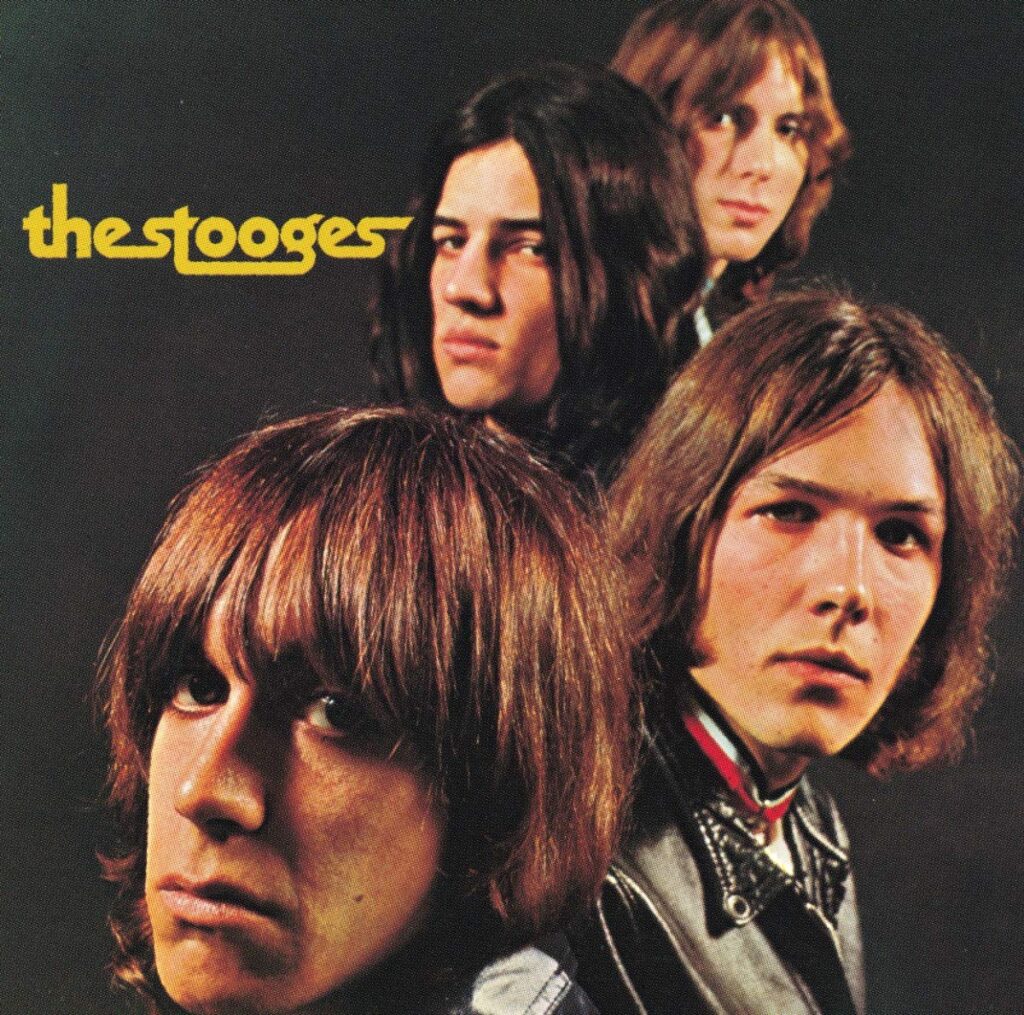
The late 1960s produced some of rock’s most ambitious and elaborate recordings. Bands were filling albums with orchestras, extended solos, philosophical lyrics, and increasingly sophisticated studio techniques. Then the Stooges arrived and seemed determined to tear all of it down. Their self-titled debut, released in 1969, stripped rock music back to its most primal elements—simple riffs, pounding rhythms, relentless repetition, and the unhinged presence of Iggy Pop.
At first, the album confused critics and sold poorly. Many reviewers dismissed it as crude, repetitive, or even incompetent. Time has been remarkably kind to The Stooges. What once sounded primitive now sounds visionary. The band’s minimalist attack anticipated punk rock by nearly a decade while also influencing garage rock, alternative rock, grunge, and countless other genres.
Produced by John Cale of the The Velvet Underground, the album captures a group that cared little for polish or technical virtuosity. Instead, they focused entirely on energy, attitude, and atmosphere.
The result remains one of the most influential debut albums in rock history.
Album Overview
The Stooges is built on simplicity, but that simplicity is deceptive.
The songs are often constructed around just a handful of chords and repetitive grooves, yet the band’s relentless intensity gives them tremendous power. Rather than constantly changing direction, the music locks into hypnotic rhythms that gradually become overwhelming.
The album moves confidently between aggressive rockers and slower, darker pieces, creating an atmosphere that feels simultaneously dangerous and strangely hypnotic.
One of its greatest strengths is its refusal to compromise. The Stooges never attempt to soften their sound for commercial appeal. Every performance feels raw, immediate, and completely committed.
Although later punk bands would play faster and heavier, few captured the same unsettling combination of menace, swagger, and raw excitement found throughout this record.
Songwriting
The songwriting emphasizes feel over complexity.
“1969” opens the album with one of rock’s great statements of youthful boredom and frustration. Built around a simple riff and unforgettable chorus, it immediately establishes the band’s identity.
“I Wanna Be Your Dog” is arguably the defining song of the album. Its repetitive piano figure, crushing guitar riff, and hypnotic rhythm create an atmosphere unlike anything heard in rock music at the time.
“No Fun” transforms teenage alienation into an infectious garage rock anthem that would later become a staple of the punk movement.
The slower “We Will Fall” ventures into experimental territory, building tension through repetition and eerie textures.
Lyrically, the album avoids poetic complexity in favor of blunt emotional honesty. The songs express boredom, desire, rebellion, and alienation with remarkable directness.
Their simplicity has proven to be one of the album’s greatest strengths.
Performance
The performances are gloriously raw.
Iggy Pop delivers one of the most charismatic debut vocal performances in rock history. His voice constantly shifts between detached cool, sneering sarcasm, and barely controlled aggression, perfectly matching the band’s uncompromising sound.
Ron Asheton’s guitar playing is equally essential. Rather than emphasizing technical skill, he builds unforgettable riffs that rely on texture, repetition, and sheer power.
Scott Asheton’s drumming is steady and forceful, while Dave Alexander’s bass playing anchors the grooves with remarkable confidence.
John Cale’s occasional contributions, particularly the haunting piano on “I Wanna Be Your Dog,” add an unexpected layer of tension without softening the band’s attack.
Every performance feels dangerous, as though it could collapse into chaos at any moment.
Production
John Cale’s production deserves enormous credit.
Rather than attempting to clean up the band’s rough edges, he embraces them. The recording preserves the group’s raw energy while still providing enough clarity for every instrument to make its impact.
The guitars sound thick and abrasive, the rhythm section remains powerful, and Iggy Pop’s vocals occupy the center of the mix without excessive studio manipulation.
Compared with many heavily produced albums released in 1969, The Stooges feels refreshingly direct.
Its relatively sparse production has helped the album age remarkably well, allowing its intensity to remain undiminished more than fifty years later.
Standout Tracks
The album contains several songs that became foundational recordings for punk rock.
“I Wanna Be Your Dog” is the undisputed masterpiece. Its unforgettable riff, relentless groove, and unforgettable atmosphere make it one of the greatest rock songs ever recorded.
“No Fun” remains a garage rock classic, balancing humor, frustration, and infectious energy.
“1969” perfectly captures youthful dissatisfaction with remarkable economy, while “Little Doll” closes the album with a fitting burst of raw emotion.
Even the more experimental “We Will Fall” contributes meaningfully to the album’s unique identity.
Weak Points
Although The Stooges is enormously influential, it is not without imperfections.
Its deliberate reliance on repetition occasionally causes a few songs to feel less developed than later Stooges material.
The production, while perfectly suited to the music, may sound sparse to listeners accustomed to more layered rock recordings.
Additionally, the experimental “We Will Fall” slightly interrupts the momentum established by the surrounding tracks, even if it remains an interesting artistic detour.
These are relatively modest criticisms of a record whose originality more than compensates for its rough edges.
Legacy
Few debut albums have had a greater long-term influence than The Stooges.
Although it achieved only modest commercial success upon release, it became one of the cornerstones of punk rock and alternative music.
Its influence extends to artists including Ramones, Sex Pistols, Nirvana, Sonic Youth, and countless garage rock revival groups.
More importantly, the album permanently expanded the definition of what rock music could be. It proved that attitude, conviction, and raw emotion could matter far more than technical perfection.
Today, The Stooges is universally recognized as one of the most important debut albums in rock history and one of the true birthplaces of punk.
Final Score
9.5/10
The Stooges is a revolutionary debut that forever altered the course of rock music. Its primitive power, unforgettable riffs, fearless performances, and uncompromising attitude created the blueprint for punk years before the genre had a name. While a handful of songs are less fully realized than the band’s later classics, the album’s influence, originality, and sheer intensity make it one of the essential records of the late 1960s and one of rock’s greatest debuts.
This post has already been read 74 times!